Tag Archives: Continuous line drawing

Phormium New Zealand Flax continuous line drawing.

Phormium, New Zealand Flax. Mick Burton, continuous line artist.

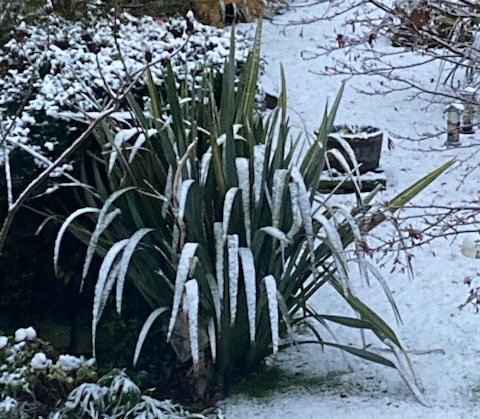
We have just had snow from Storm Burt and it weighed down some of the sword-like leaves of our sturdy Phormium.  Here is the photo below.

Phormium, after snow weighed down the leaves. Photo Mick Burton, continuous line artist..

I considered that the mixture of curved drooping leaves and straight upright leaves would make a good contrasting straight and curved overlapping continuous line. 

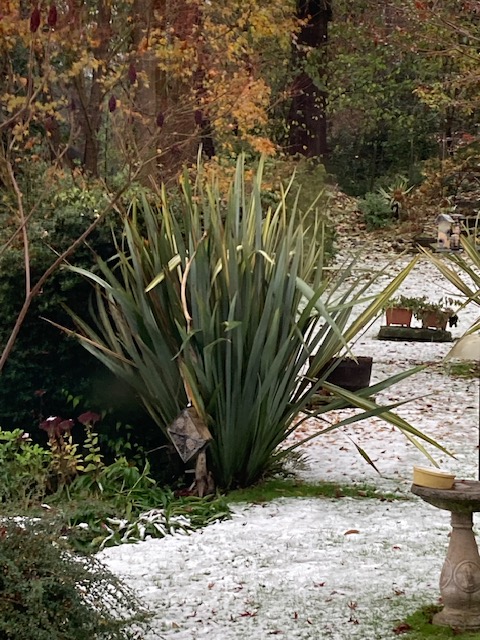
As soon as the snow went, the leaves sprang back upright again.  The leaves are pretty rigid and I prune them with a hack saw.

After the snow melted the sword-like leaves returned to straight up. Photo Mick Burton, continuous line artist.

Captain Cook and Joseph Banks recorded the plant in New Zealand in 1770.  The Museum of New Zealand states that “Russia, the main supplier of sailcloth and rope for the Royal Navy, had restricted sales to England and Cook considered the New Zealand flax as and alternative for making these vital supplies.”

We had good fox tracks in the snow this time.  In one direction it was a single line of spaced prints and in the other it was pairs of prints spaced out.

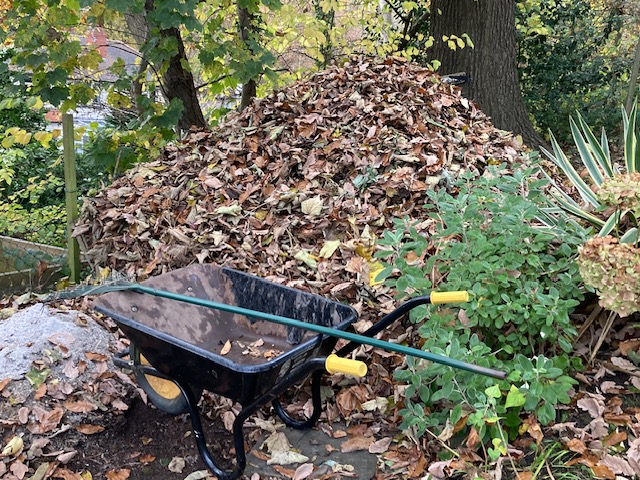
Before the snow came, I had raked up all the leaves and produced our biggest pile yet, for the first stage of producing soil from leaf mould.  It is far bigger than the pen I built for leaves.  Of course, some are blown in from Gledhow Valley Woods.

Largest leaf pile to date. Photo Mick Burton, continuous line artist.

As the leaf pile has spilled across the slab path up the garden I was interested to see what the Fox did when using the path – would it go round?  Nope, it staggered over the right hand side of the pile.

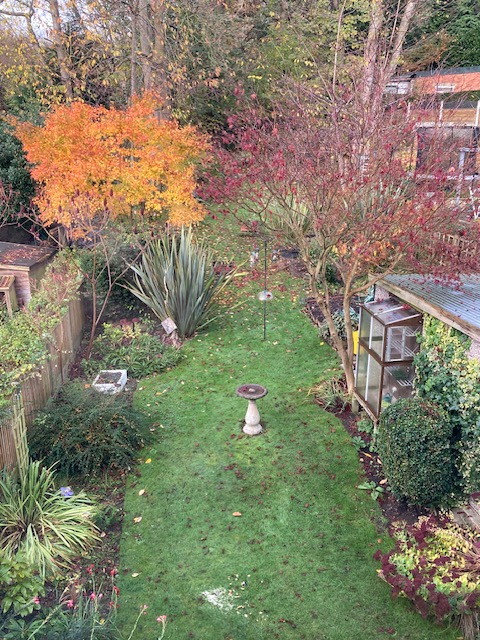
One strange thing every year is the the Red leaved Acer drops its leaves before all the other trees and the Bronze leaved Acer is usually the last.

Red leaved Acer next to the garage drops leaves long before the bronze leaved one on the left. Photo Mick Burton, continuous line artist.

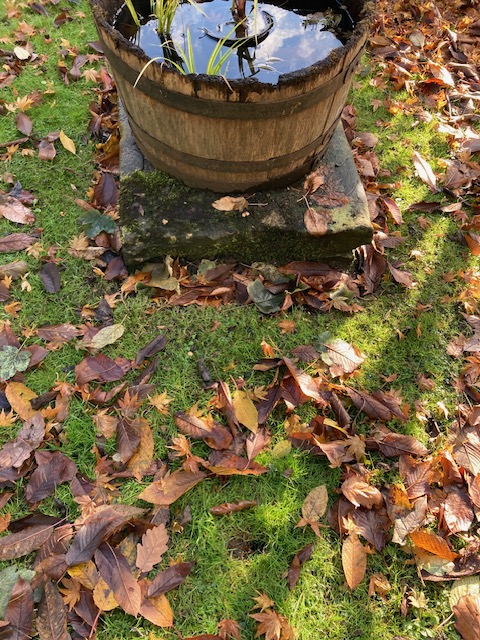
In the lawn, under the leaves I found that the Bumble Bee hole was still there.  The hole is near the bottom of the photo below.  On the internet it says that the holes are in use for a few months and then not used again, as the queen builds a new one next year.

Bumble Bee hole in the lawn. Photo Mick Burton, continuous line artist.

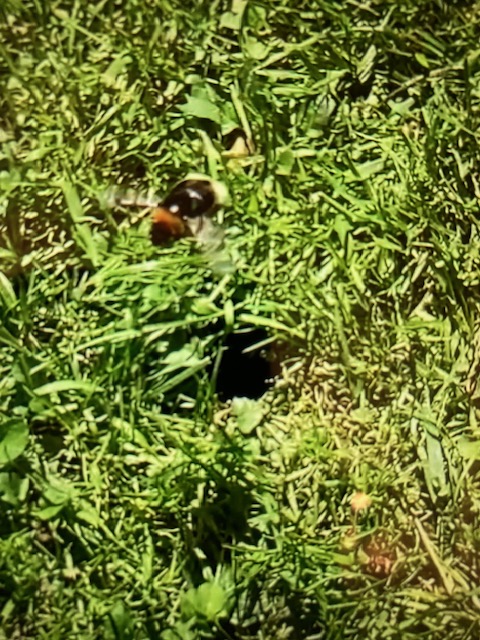
When I first spotted the hole in the lawn in late May there was a Bee just emerging from it.  The black patch at the very bottom of the photo is the shadow of the bee.

Bumble bee leaving the nest hole in the lawn. Photo Mick Burton, continuous line artist.

I first found out about Bees nesting in the ground when I was digging the tiers in the bank at the top of the garden. I became aware that an increasing number of bees were circling around me.  It was just couple of Bumble Bees at first then all sorts of sizes of bees, some appearing to be similar to hive bees, flying around me.  I realised that I must have disturbed their nest and so I stopped the digging for the day.  The next day I came to look and there was a new hole in the bank and bees coming out, so I just abandoned my digging for the summer.


Terrified Army Horses Gallop through London.

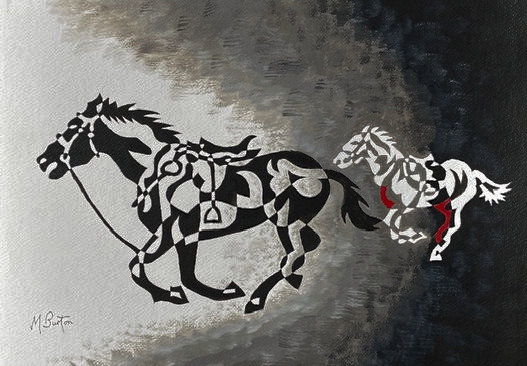
Terrified Army Horses. Continuous line with colour. Mick Burton.

Seven Army horses and six riders were on an exercise in Kensington in April 2024, to help them get used to traffic and other noises in the City.  Near Hyde Park Corner at 8.30am the horses were frightened by a slab of concrete being dropped by Builders.  Four Army personnel were thrown from their horses and five horses dashed off into rush hour traffic.  Three soldiers had non-life threatening injuries.

There were collisions with vehicles which caused injuries to some of the horses and one horse hit a cyclist who was injured and taken to hospital.  Two horses were eventually apprehended almost six miles away at Limehouse by Police officers.  That evening, all horses were being cared for by vets.

I later read that it was two or three months before the horses were considered fully fit to patrol again.

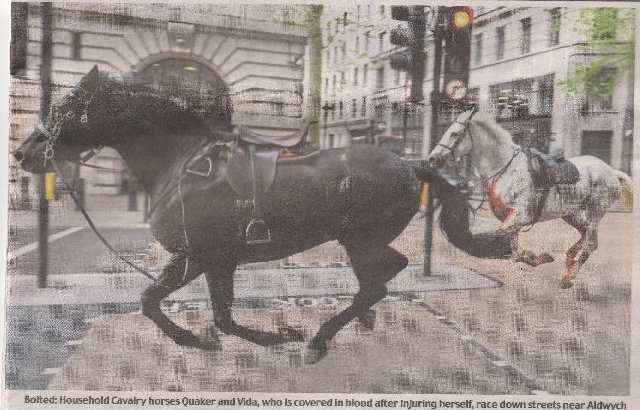
The Daily Mail article included the following photograph, which I used as the basis for my continuous line drawing of two of the horses.

Daily Mail photograph 25.4.24. “Two panic-stricken horses, one of them bloodied, gallop across Central London.”  Photograph, Jordan Pettitt / PA Wire.

Whenever I have drawn horses before, I have used the general shape and structure of the animal to provide the design and I have never included a rider.  

Harrogate and Nidderdale Art Club – Autumn Exhibition 2023

Colour Sequence on Continuous Line Drawing

Of course there are no riders this time because they had been thrown off, but I decided that it was important to include the saddle, harnesses etc.

Regarding adding colour to the drawing, in the painting at the top of the post, I decided to use the fact the one horse was black and the other white.  Having a dark background to the right highlights the white horse.  The blood on the white horse produced the Black, White and Red combination I have used several times before. 

It occurred to me that the impression was like portraying “A bat out of Hell”, which could reflect how these poor horses felt.

Continuous line drawing of Terrified Horses in London. Mick Burton.

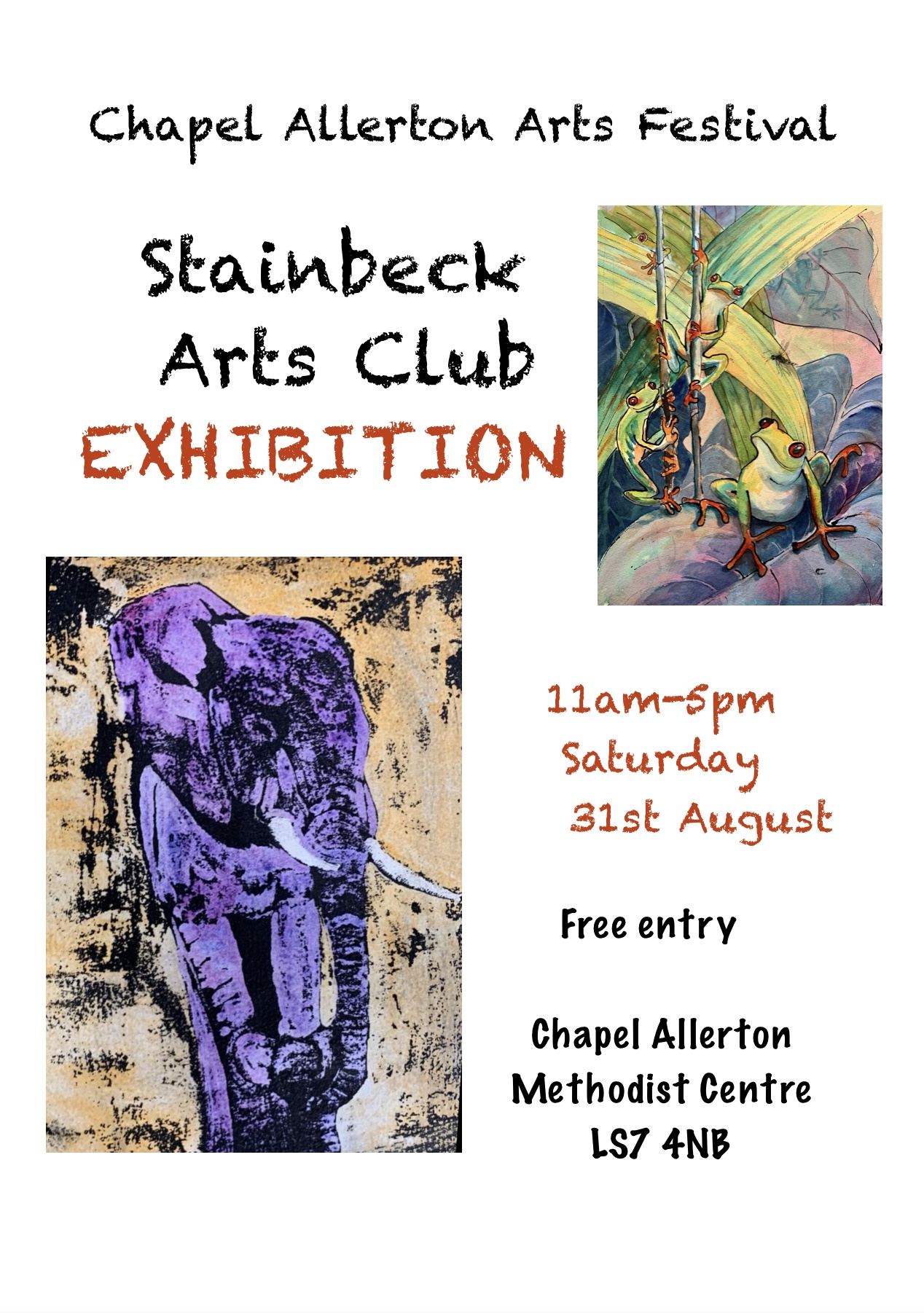
These two pictures are to be exhibited at the  Stainbeck Arts Club Annual Exhibition on Saturday 31 August 2024 at Chapel Allerton Methodist Centre, Leeds, LS7 4NB.  This is part of the Chapel Allerton Arts Festival.

Stainbeck Arts Club Exhibition, 31 August 2024, Chapel Allerton Arts Festival, Leeds.


Continuous Line Portrait with Colour Sequence.

Continuous Line Portrait “Colourful Musician” by Mick Burton.

This is the second Colour Sequence portrait that I have completed, the first being of “Barry” 10 years ago which had a shorter range of colours.

As usual, I have worked out the natural range of levels running through the drawing and I can choose which end of the range to allocate Red and then Blue at the other end of this 6 colour sequence.  You may ask why the end of the sequence is in an eye coloured Red in some of my pictures of Animals (eg. Hen and Iguana).  The answer is that when I draw continuous line eyes there is a final loop (or even a loop within a loop), which can extend the range of colours if it is already at the end of the existing range (orange in this case).

Normally, only one eye is visible from a side-on view of most of my animals.  I do not then have the situation where the other eye can be at the other end of the colour range.  In the “Colourful Musician” I have ended up with totally different coloured eyes.  Fortunately, the portrait is of a Surrealist painter who is happy with this outcome.

I do not mind either, because continuous line drawing produces its own three dimensional appearance naturally.  Conventional Artists may regard my drawings as very technical, but I can argue that they use perspective and shadows in their art, which I regard as technical, and I get by without using either.  The head in this painting has a natural rounded appearance and the “Blue” eye side implies shadow.

Sometimes I have had to alter the lines to ensure that both eyes are the same colour, which I did with Nessie the cockapoo painting.

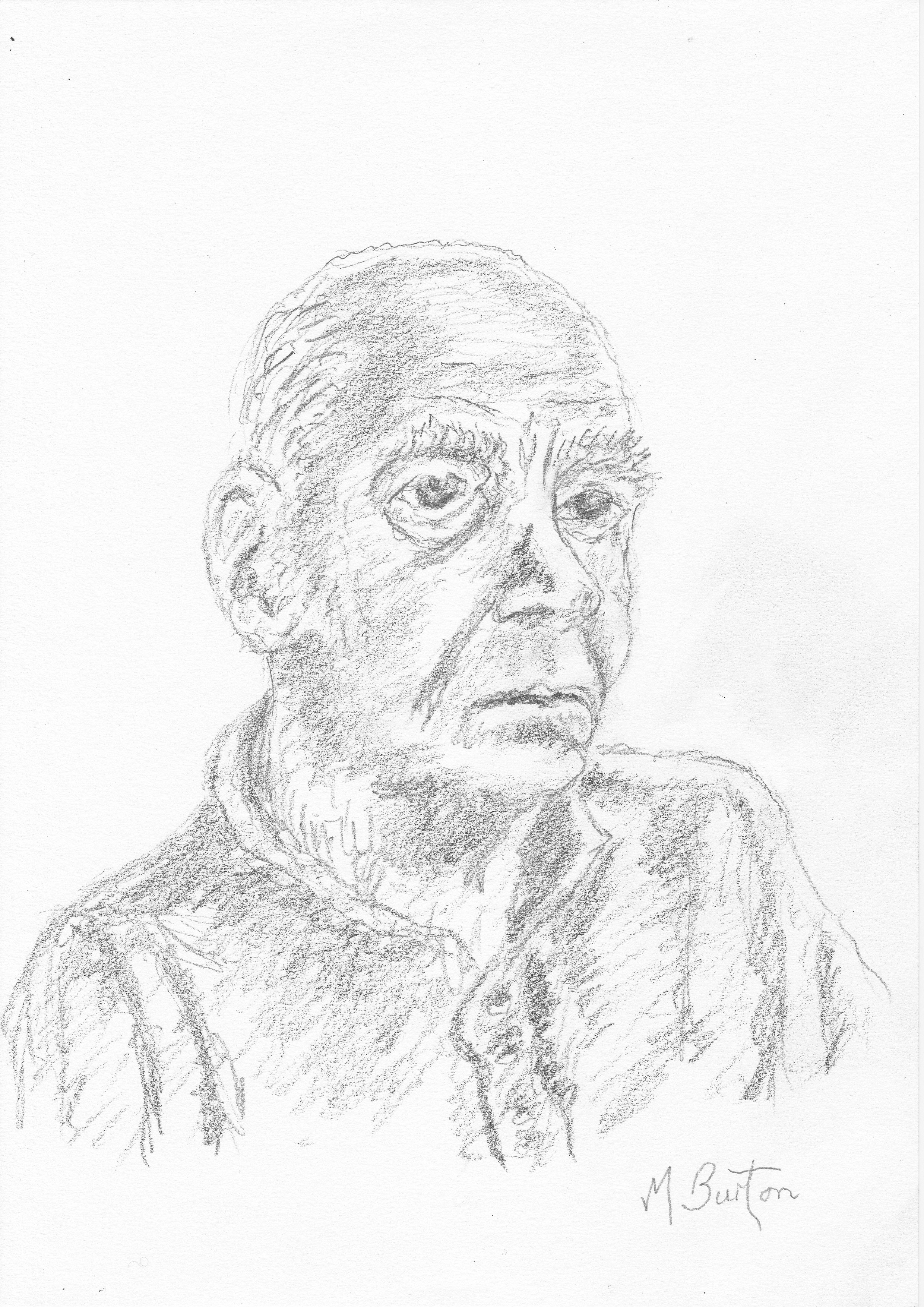
The “Colourful Musician” painting only came about after we had one of those sketch a fellow member sessions at Harrogate and Nidderdale Art Club, this one being run by Chairman Steve Walmsley who also announced that I would sketch him.

Sketch of Steve at Harrogate and Nidderdale Art Club. Mick Burton, continuous line artist.

Someone asked if I would do more work on my sketch and I said that it may turn into a Continuous Line Drawing.  Steve said “If you do, then I want all your colours”.  So I took a photo of him for added reference.

Steve Walmsley, Chairman of Harrogate and Nidderdale Art Club. Mick Burton, continuous line artist.

I produced a Single Continuous Line portrait using Over and Under lines before I went onto the colour version above.

“Surrealist Artist” Continuous Line Drawing by Mick
Burton.

Steve has his own unique approach to colour in his pictures, which are increasingly Digital Art.  You can view his full range of Surrealism, Abstractions, Landscapes, Portraits and Digital Art on his website www.steven-walmsley.pixels.com.

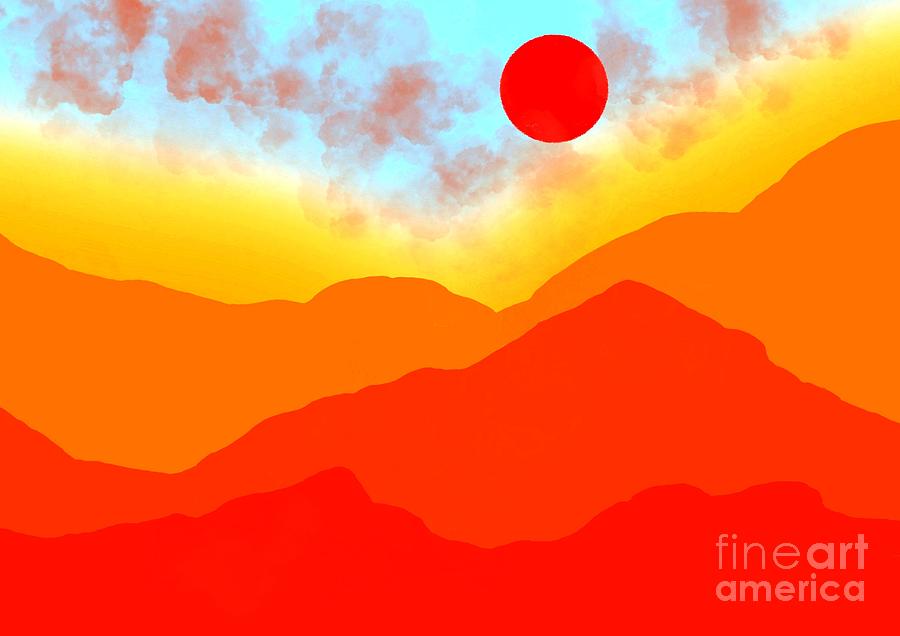
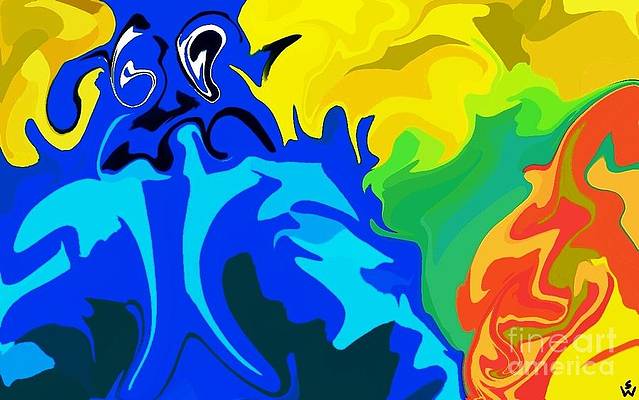
I particularly like the following pictures he has created.  The first one is acrylic and the rest are all digital art.

“Self Portrait with Sax” by Steve Walmsley, Surrealist Artist.


“Desert” by Steve Walmsley, Surrealist Artist.


“Neanderthal” by Steve Walmsley, Surrealist Artist.


“The Cruel Sea” by Steve Walmsley, Surrealist Artist.


“Reflections” by Steve Walmsley, Surrealist Artist.


“The Waterwheel” by Steve Walmsley, Surrealist Artist.

Harrogate and Nidderdale Art Club – Autumn Exhibition 2023

Harrogate and Nidderdale Art Club – Autumn Exhibition 2023. Ripley Town Hall, 25-26 November 2023.

Harrogate and Nidderdale Art Club hold two exhibitions a year, Spring and Autumn.  The club has over 60 members and meets on Thursday evenings at Harrogate Grammar School during terms.  There are visiting demonstrators or talks at about half of meetings.

I will be exhibiting 7 pictures at the Autumn Exhibition, including two continuous line drawings of animals based upon photographs.

Daniel, Queen Elizabeth’s favourite Windsor Grey carriage horse, in 2017 when he retired to the Horse Trust.  Mick Burton, continuous line artist.

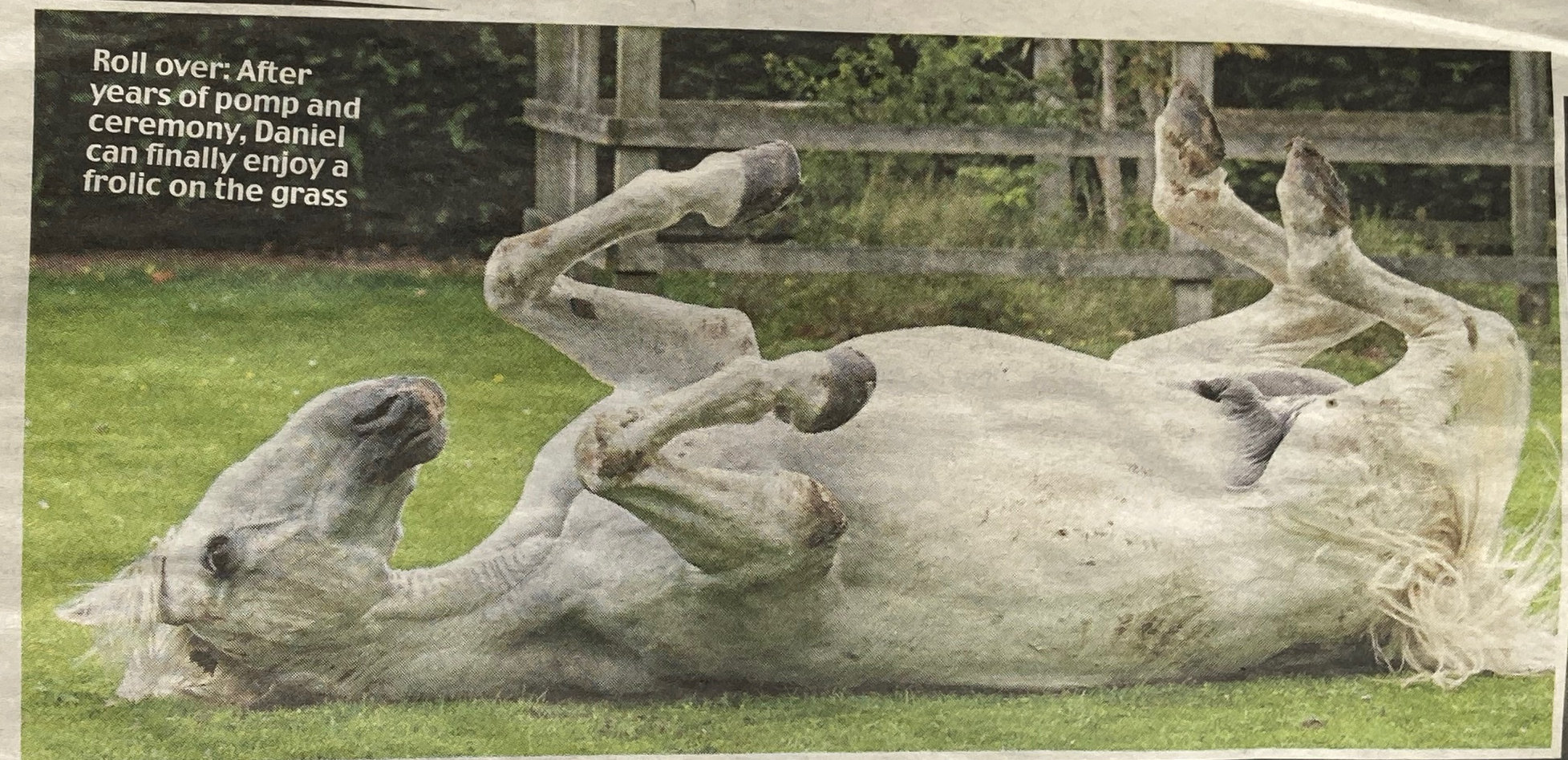
I have always liked shire horses and I based this continuous line drawing on a photograph in the Daily Mail article by Lucy Holden on 3 August 2017.  Danial, retired Royal carriage horse, is romping around in the paddock at Horse Trust.  I have added “fluffy feet”.

My main reason for producing this drawing is the memory of taking my kids to Bradford Industrial Museum and seeing the shire horses arrive back from a procession in full regalia around Bradford.  The staff suggested that we watch the horses when they were released into the paddock after a hard days work.  The horses immediately started dashing around, prancing and rolling on the ground and leaping up again.  We were shocked, surely these heavy animals would break something!

Here is a photograph of Daniel having a roll at the Horse Trust.

Daniel the Royal carriage horse having a roll in the Horse Trust paddock. Daily Mail, Lucy Holden article, 3 August 2017.

Daniel was Queen Elizabeth’s favourite carriage horse for 15 years up to his retirement in 2017 at the age of 22.  His face appeared on a Royal Mail stamp in 2014 and a life size bronze sculpture of him, and another of colleague Storm, appear to trot across the grass on the roundabout near the Long Walk in Windsor. Sculptor Robert Rattray, who was commissioned by residents to celebrate the Diamond Jubilee in 2012, said “Daniel is an old stalwart and rather cantankerous”.

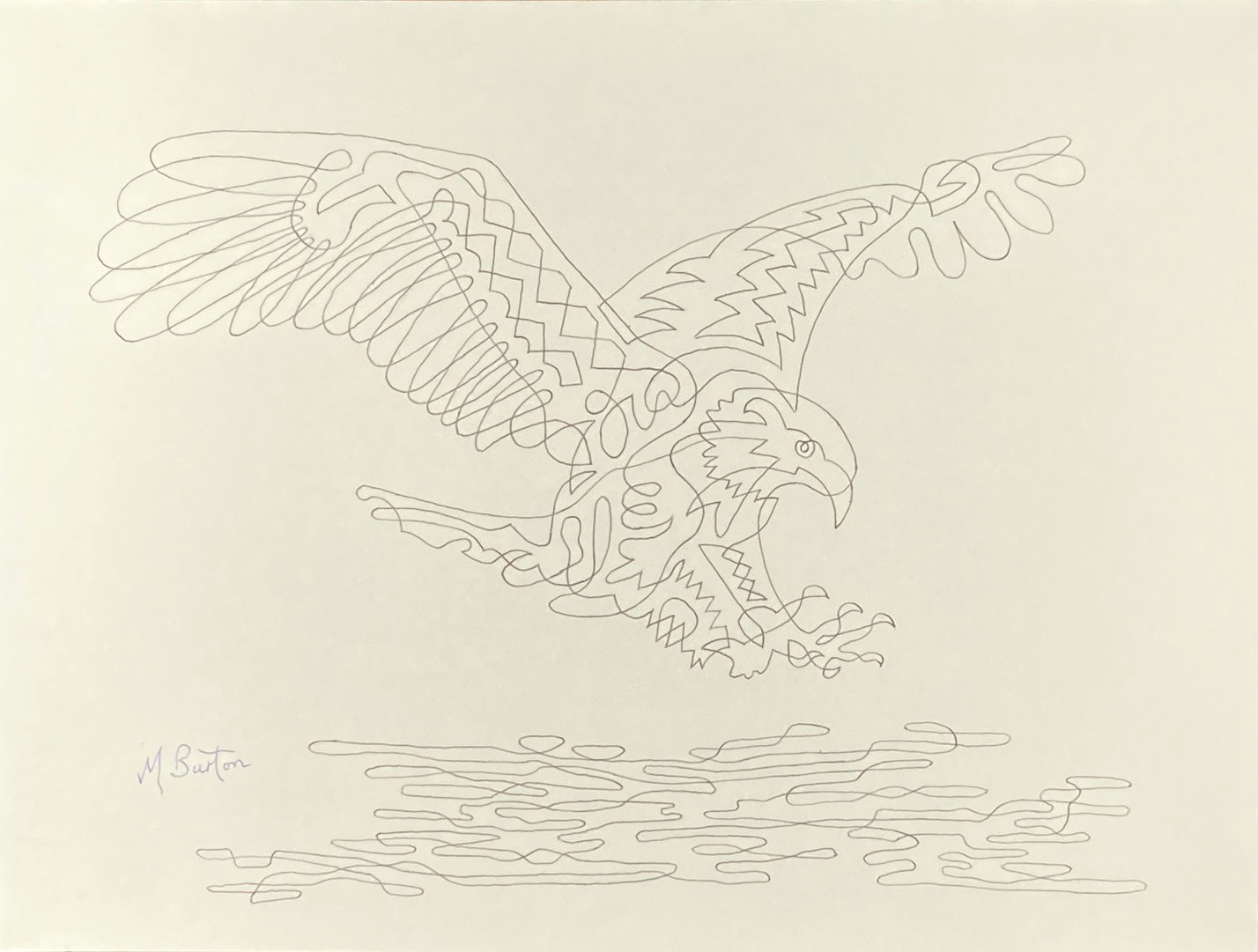
Bald Eagle, swooping down for a fish. Mick Burton, continuous line Artist.

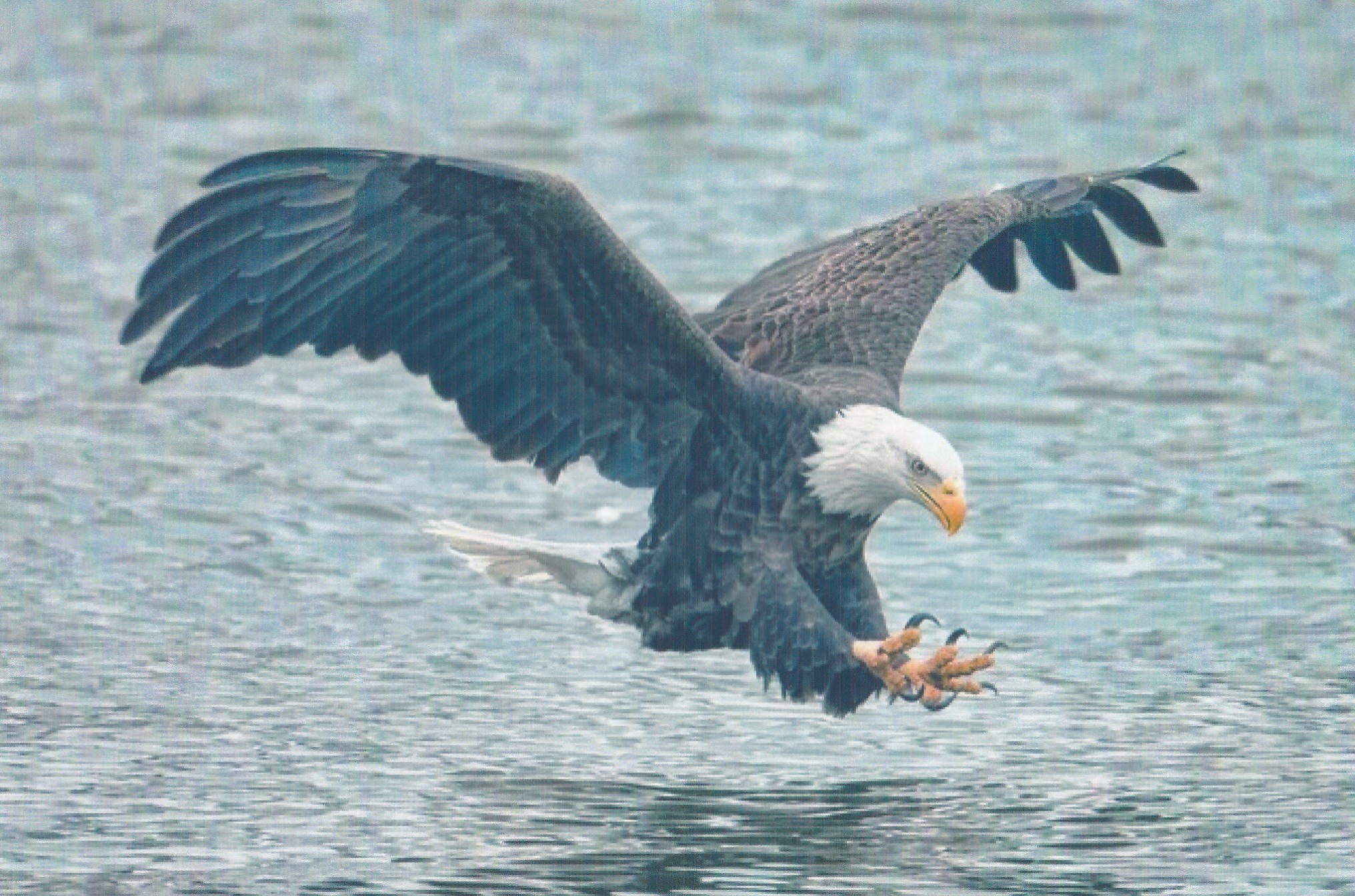
I based this continuous line drawing of a Bald Eagle on a Getty Image shown below.  I found that progressing overlapping loops worked well with the feathers.

Bald Eagle, Getty Image.

I also did a preliminary drawing in pen and colour pencil.

Bald Eagle in pen and coloured pencil. Mick Burton, continuous line artist.


Continuous Line Drawing in Colour by Logan Clarke.

Logan's continuous line hen.

Continuous line Hen by Logan Clarke. Mick Burton post.

Logan contacted me a couple of months ago, saying that he was in Year 7 at a school in Derbyshire and that his Art Teacher had asked his class to complete a homework project based upon my art.

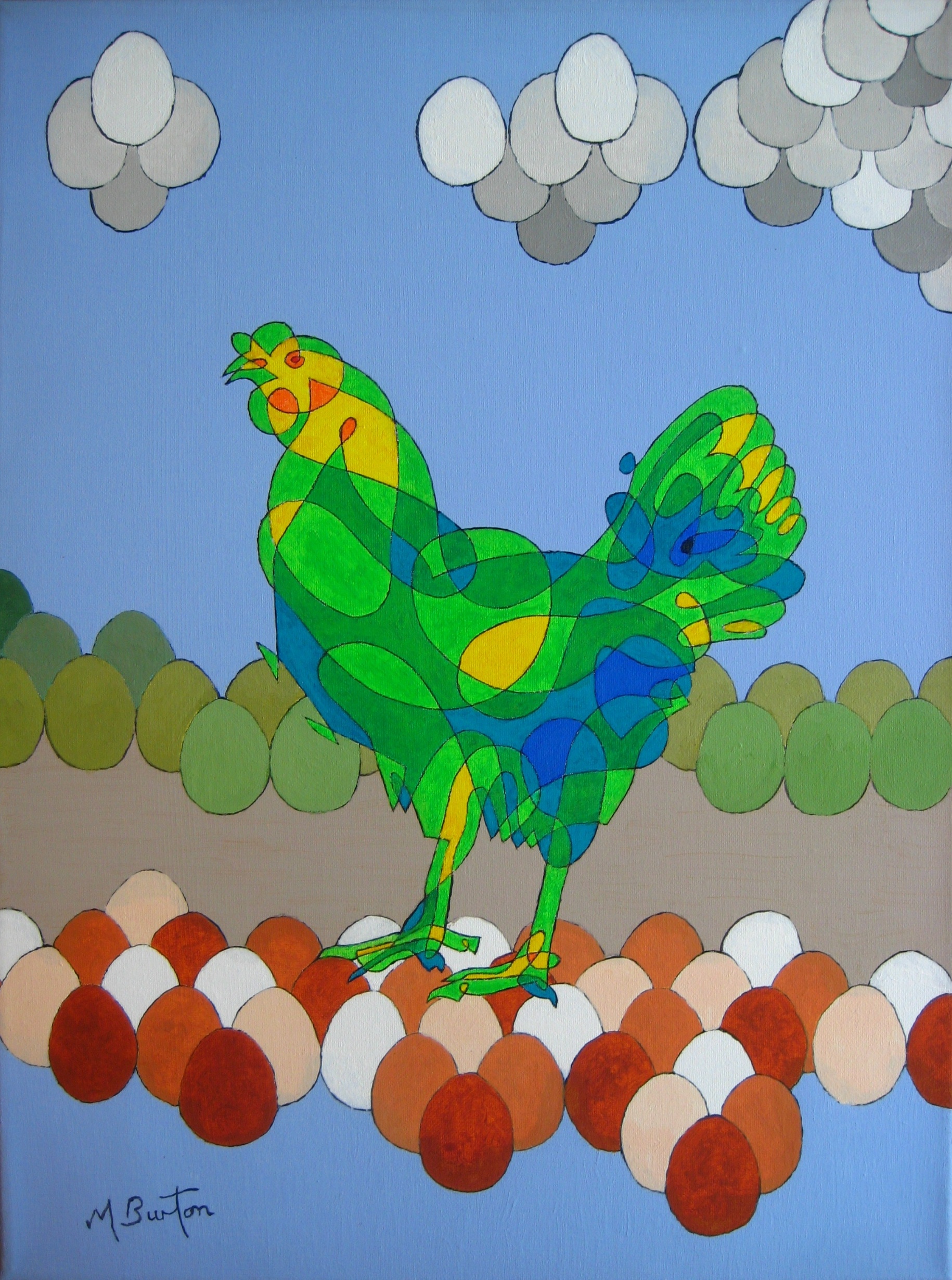
He liked the Rhino that I had featured recently (which was done by a member of Pateley Bridge Art club during a workshop) and my Hen with eggs, which I show below.  He asked for some advice on how I do my continuous line drawings.

Harriet’s Busy day. Single continuous line drawing with colour sequence. Background based on eggs. Mick Burton, 2012.

I sent Logan a short write up on my approach to Continuous Line Drawing and he later sent me his marvellous coloured drawing of his own hen invention, shown at the top of this post.  He has used a range of colours which go well together and the yellows are placed in a very balanced way.  He shows the vibrancy and character of the hen.

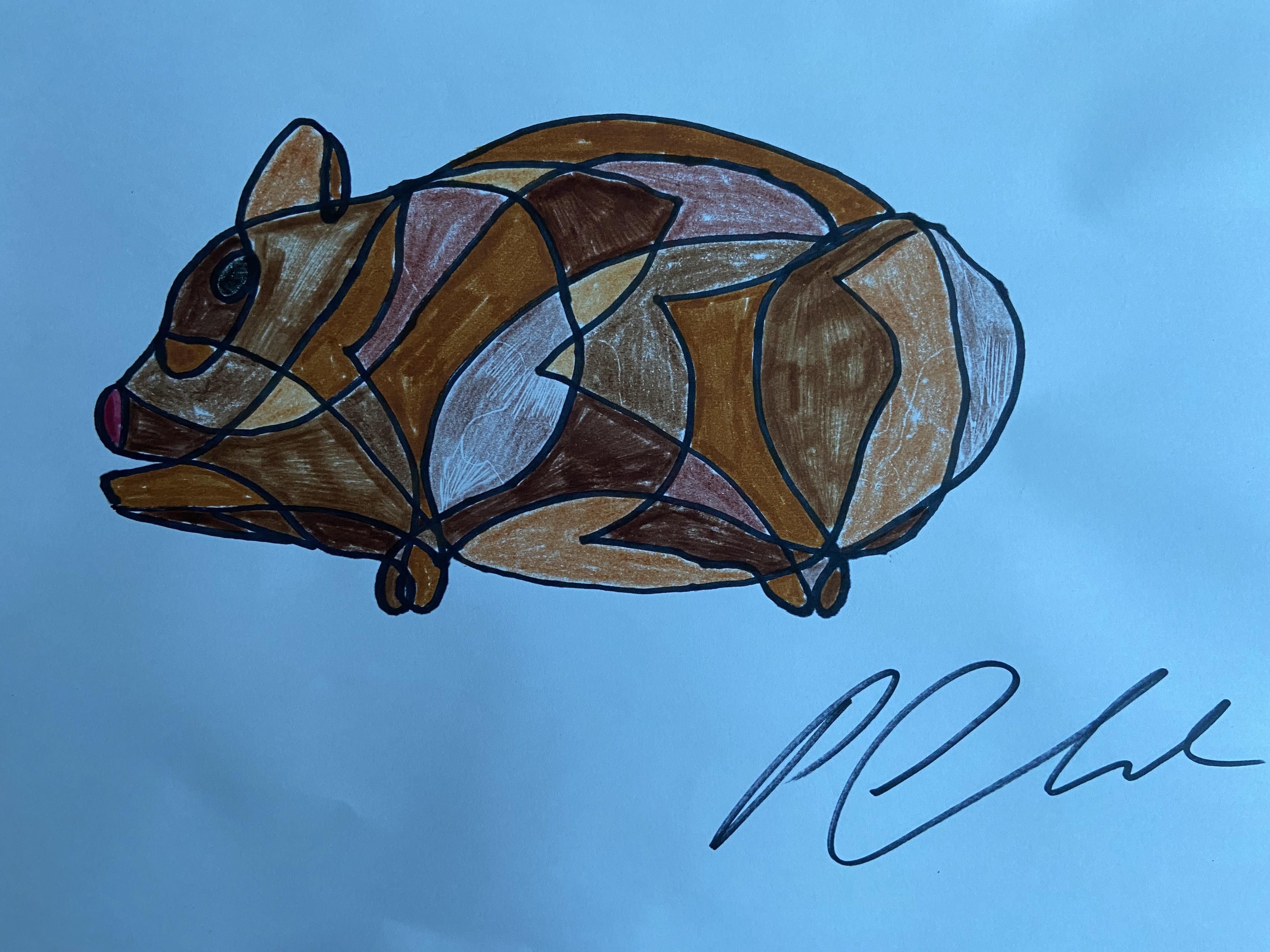
Logan’s Dad Paul also had a go at a continuous line Guinea Pig which I show below.

Logan’s Dad Paul Clarke’s continuous line guinea pig. Mick Burton post.

This is an excellent compact drawing with solid balanced colours.  I can imaging this animal bulldozing its way through the straw.

Logan had said that he was due to visit York on holiday and he was looking forward to doing a drawing of York Minster.  I said that I would like to see the result.  Here it is.

York Minster, drawing by Logan Clarke. Mick Burton post.

I mentioned to Logan that I have an ancestor, Thomas Mace a 17th century composer, who said in his book on music that he was at a service in the Minster during the Civil War when York was under siege by Cromwell’s soldiers.  He described how a small missile from a gun smashed through a high window and bounced off several pillars inside before hitting the floor.  Made me think of a pin ball machine.


Winding Number Man, continuous line drawing.

Winding Number Man. Continuous line drawing with colour sequence. Mick Burton.

In 1972, at the same time as I was experimenting with winding number lines such as in Petrol Polluted Puddle (see my post of 24.11.2014),       Winding Number Theory and Continuous Line Drawing

I drew Winding Number Man, which involved looping around in the same direction from start to finish.

Winding Number Man. Continuous line with alternate overdraw. Mick Burton.

If I had done this in a concentrated area, like the close spiral I used in Petrol Polluted Puddle, I would have had a long single series of overlapping colours.  However, as I progressed around the head, body, legs and arms of the man I avoided too many overlaps.  As I gained new overlaps, previous ones fell away.

The longest sequence of colours is six, whereas with PPP the real sequence is 19.  I could not cope with one sequence of colours that long, with only slight changes between each one, so I used a repeat rainbow sequence which provided the puddle effect I wanted.

The shorter single sequence of colours on the Winding Line Man gives him the form and density I required.

All along I had in mind something similar to the Michelin Man who advertised the tyres.  Here is a recent representation.

Michelin Man logo. Creative Review.

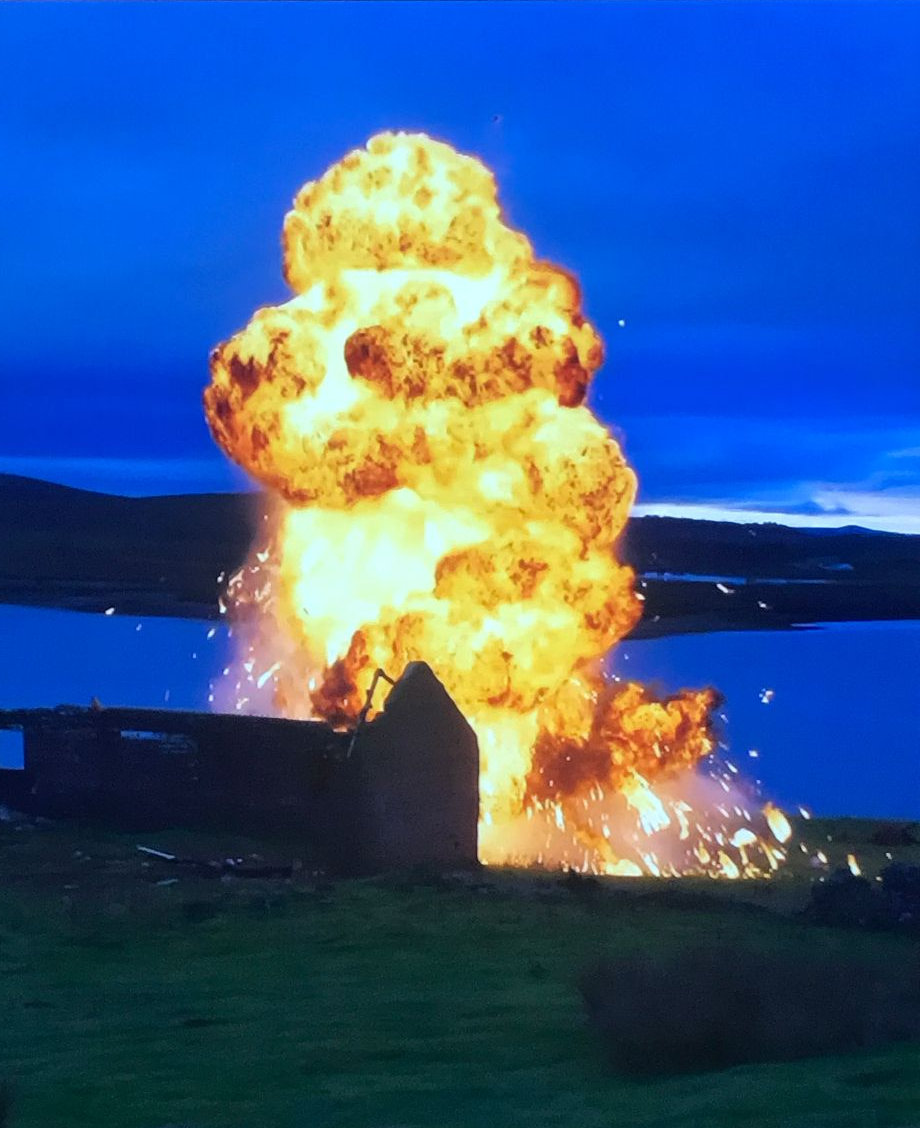
Strangely, I was remined to get on with this blog when watching the new Shetland TV series, where Detective Sergeant  “Tosh” McIntosh was trapped inside a caravan which was about to explode.  I paused the TV in the middle of the explosion and the freeze frame flame looked a bit like the Michelin Man.

Shetland explosion looks like the Michelin Man. End of Episode 3, Series 7.

Watch Episode 4 to see what happened to Tosh.

Pateley Bridge Art Club Continuous Line Drawings

Pateley Bridge Art Club member’s single continuous line Rhino with internal pattern.

I was at Pateley Bridge Art Club earlier this month with a Demonstration and Workshop for the members.  They have covered the evening in their News Blog with a report by Charles Mellor, which included 16 examples of members’ pictures.  You can find the report at >      https://www.pateleybridgeartclub.org      .

I include here an additional three pictures by members which illustrate how you can devise an internal pattern which represents aspects of the subject.  Members could base their initial attempt at a continuous line, or lines, on a subject of their choosing or one or more of several faint outlines provided by myself.

I demonstrated how the basic ongoing line can involve curves, loops, angles, etc. taking in parts of the outline itself and involving where possible a novel pattern for that subject.  At the same time there is a need to leave spaces for the line to return to the start.  I said that members were free to use rubbers to correct their drawings or have more than one continuous line in their picture to get used to the process.

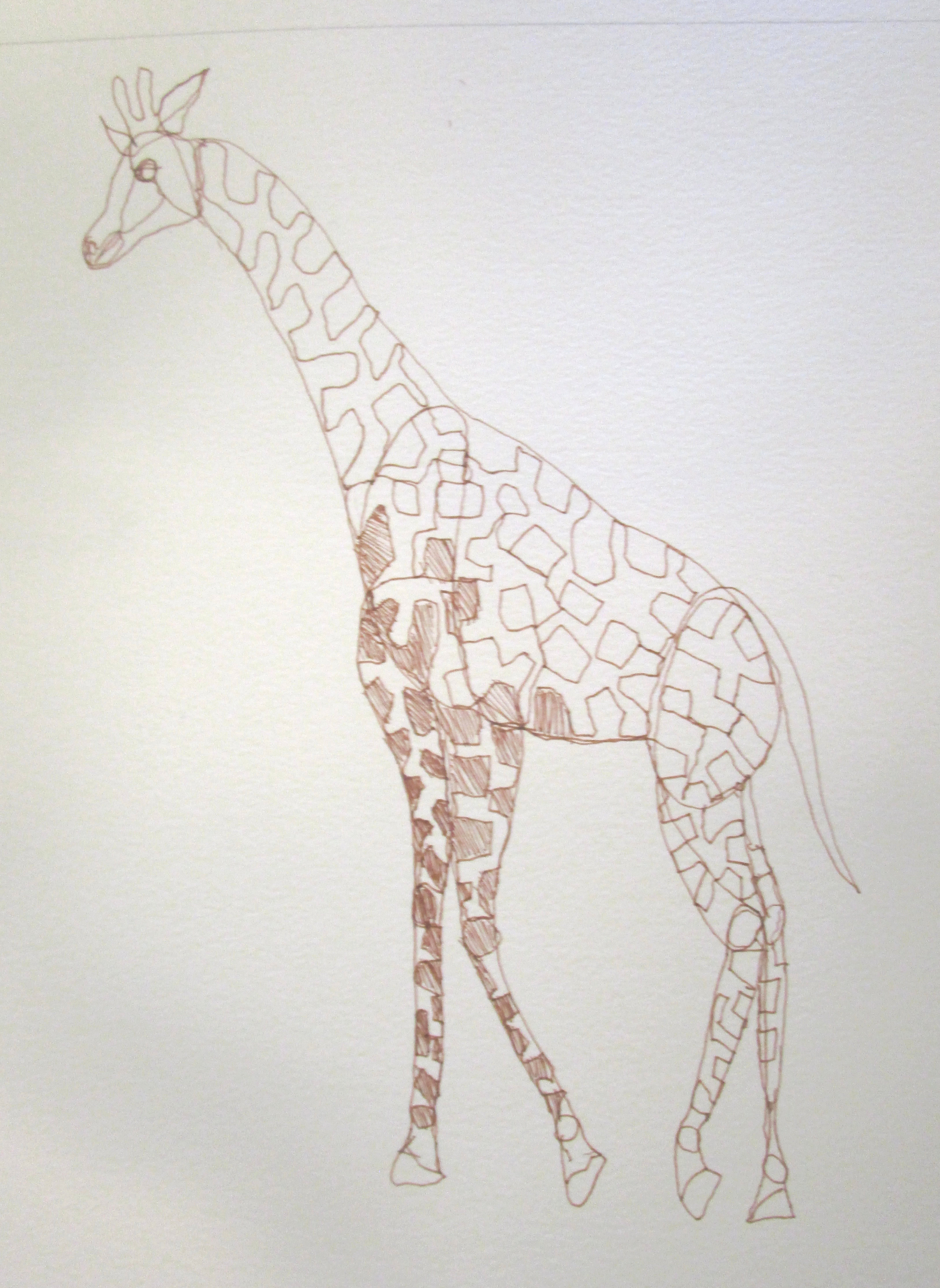
One member drew a Giraffe which incorporated some of the distinctive inner pattern of that animal.

Giraffe by Pateley Bridge Art Club member, showing inner pattern.

My third example is a Zebra where the member has included the famous stripes.

Head of a Zebra, by Pateley Bridge Art Club member.

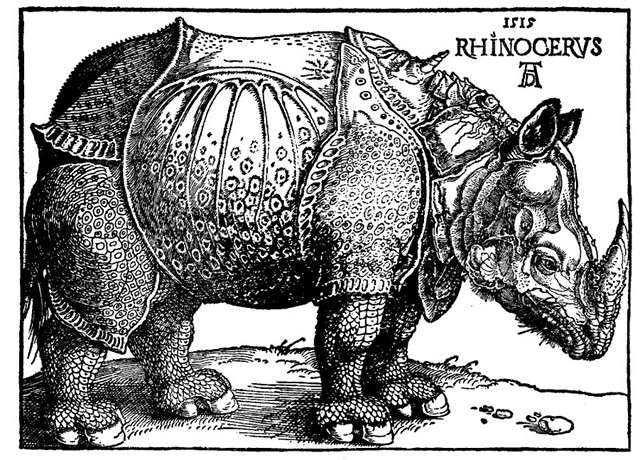
The Rhinoceros above has a good inner pattern reflecting the armour plating appearance of the animal.  It reminds me of the woodcut by Albrecht Durer, who was amongst the first artists to portray this animal.

Rhinoceros woodcut by Albrecht Durer in 1515.

And that’s not all.  The Pateley Bridge member’s Rhino at the top of this post has a clear single continuous line and includes two specific features I have used in the past which appear in pictures which I displayed on the evening but may, or may not, have have influenced the drawing of this Rhino –

a.  The Rhino’s left eye is depicted by a gap in the outline, similar to my Panther’s right eye below, where I show only the pupil of the right eye.   

Association of Animal Artists Annual Competition Winner !

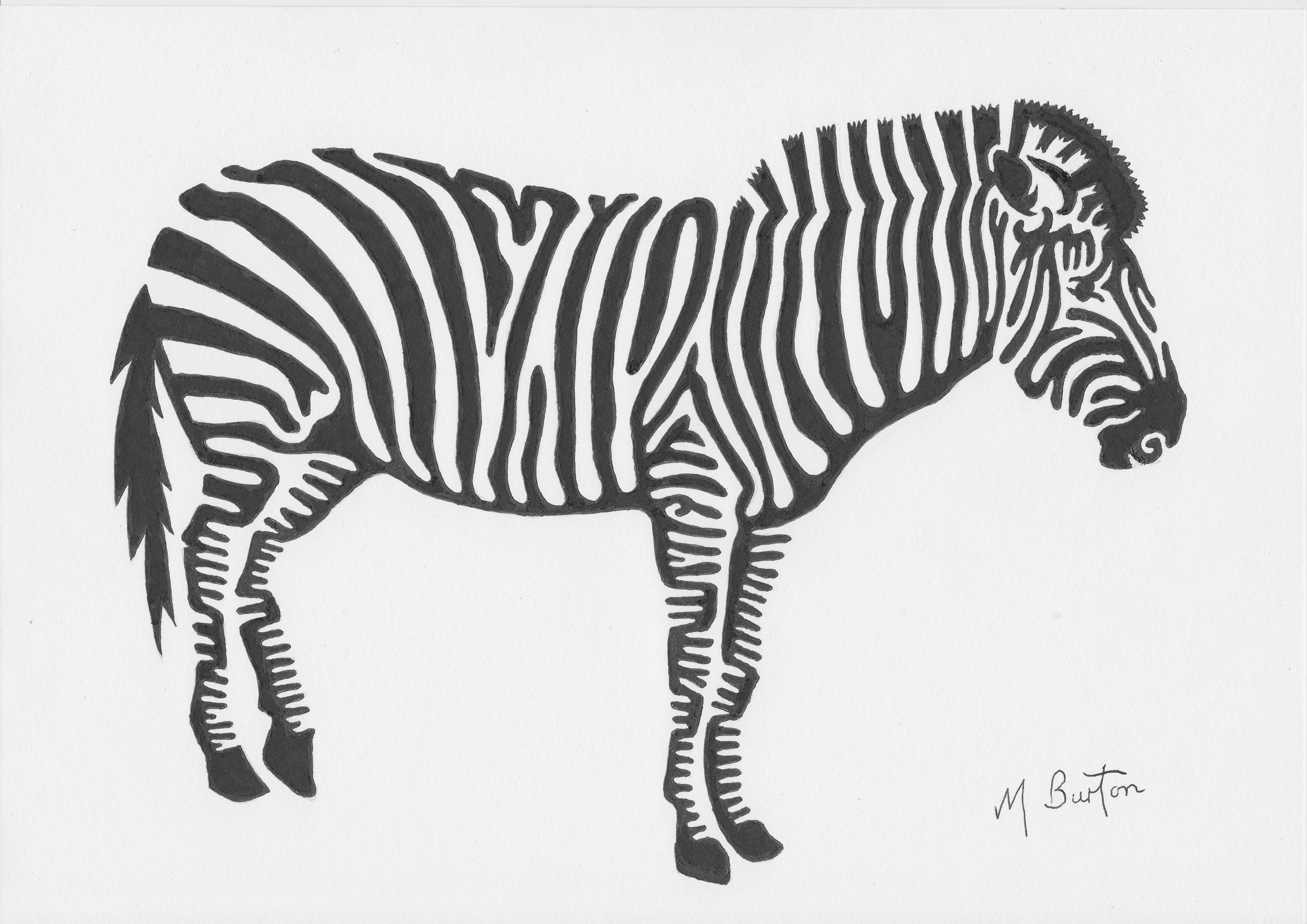
b.  The Rhino’s armour pattern involves the outside running into the interior of the animal, similar to my Zebra below.


Continuous line Zebra without crossover lines.

Continuous Line Zebra

I have requested that the Pateley Bridge member, who did the Rhino, copies the line and then applies alternate shading to highlight the “inside outside” effect.  If not I may have to do it myself.

Picasso was certainly aware of this “inside outside” situation.  At my Demonstrations I pass around Picasso’s book “One-liners” which has 50 pictures.  Most have the line starting at one end and then stopping on completion elsewhere, but there are several which are single continuous lines.  The last two pen drawings in the book are as follows.

Picasso “Studies for Mercury”. Picasso’s One Liners. Artisan, 1997.

On the left, the head, arms, body and legs are all inside the single continuous line.  At first glance it is the same on the right, but in fact there is no “inside”.

The Sunbathing Foxes are back in Gledhow Valley.

IMG_5567

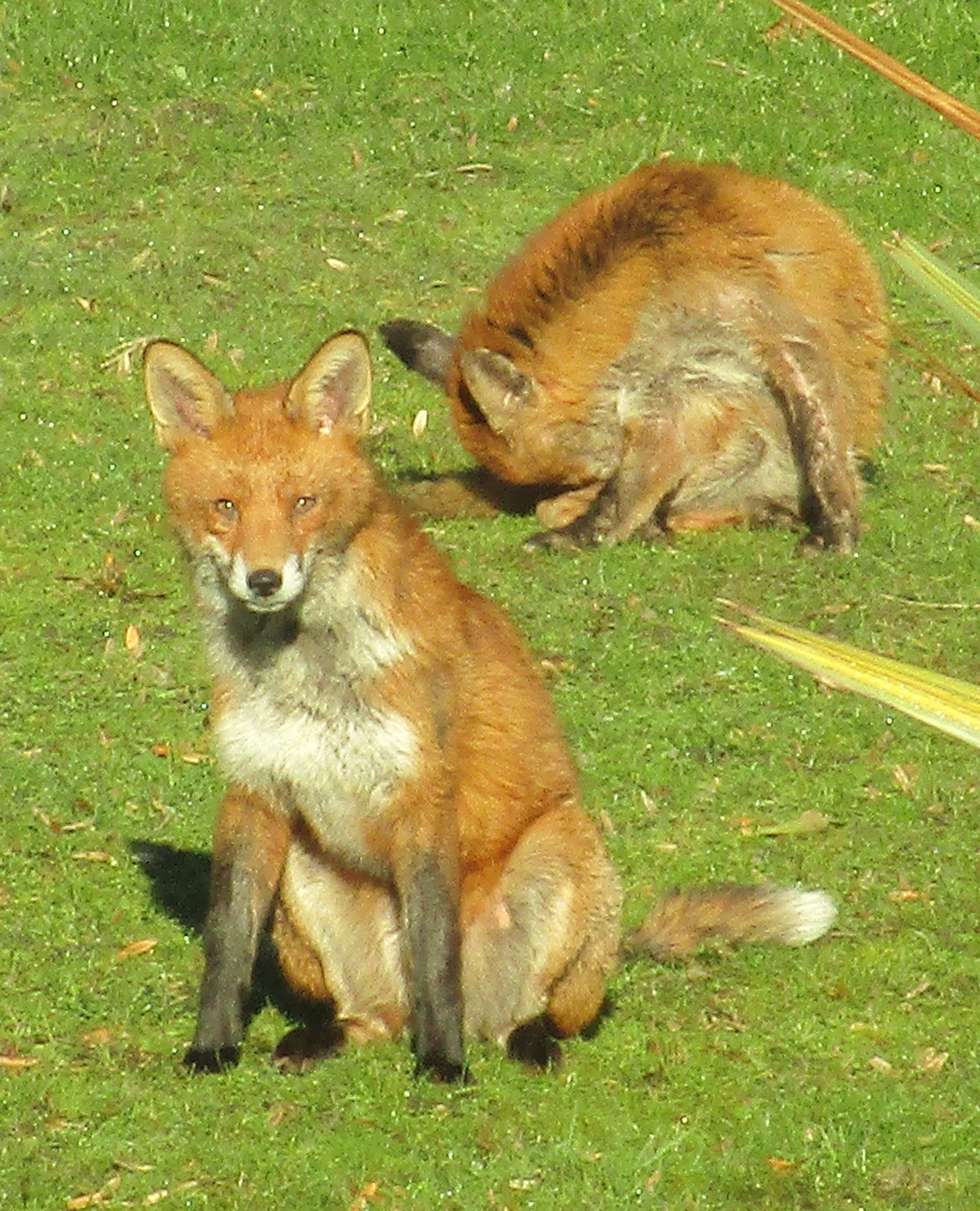
Two foxes sunbathing in my garden in Gledhow Valley on 15 February 2019.  Photo by Mick Burton, continuous line artist, Leeds, Yorkshire.

This burst of warm spring weather is bringing out the foxes just about every day. These two spent about 30 minutes wandering around, sitting and just relaxing.

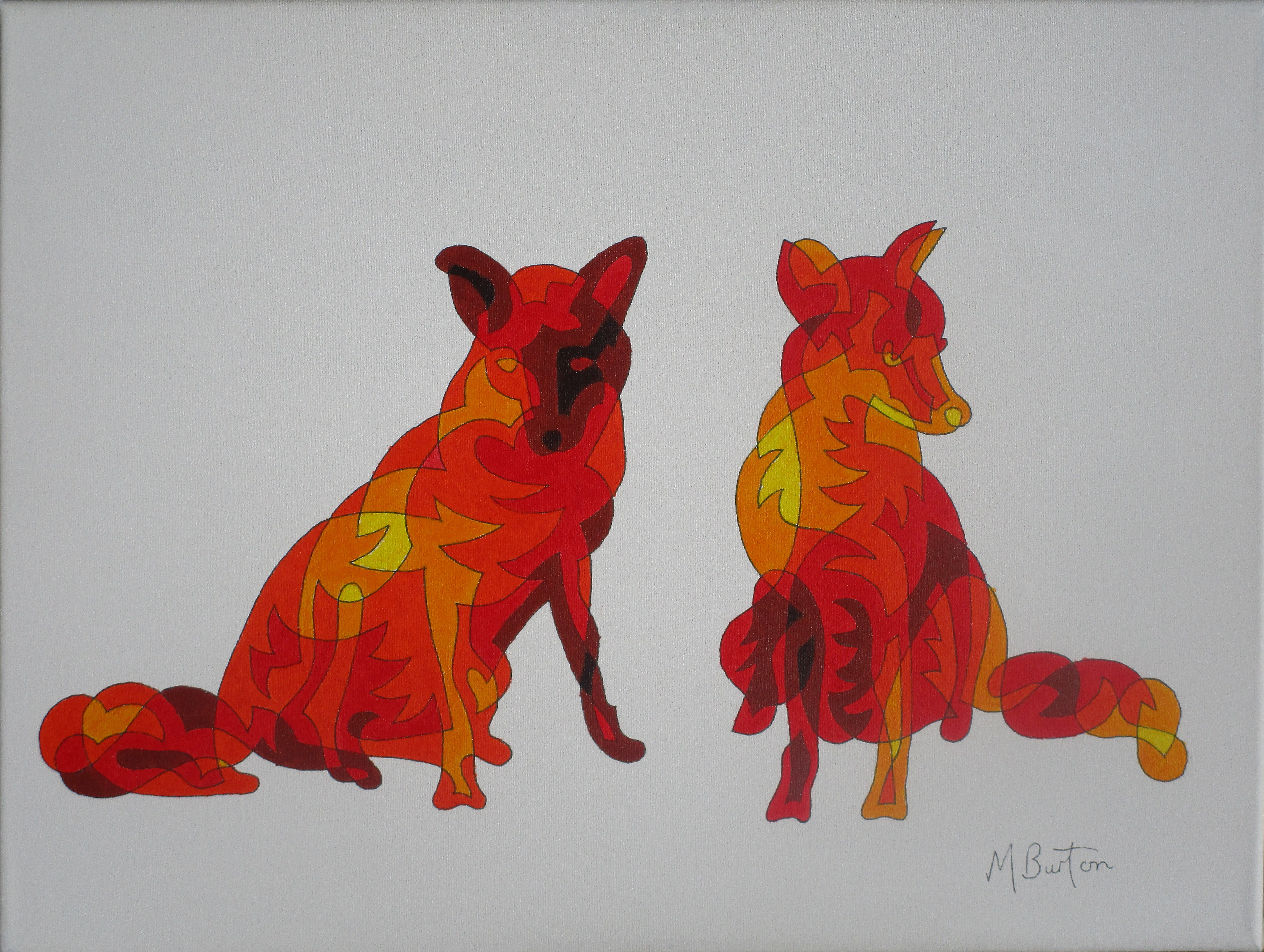
Not too different to the painting which I did of a couple doing similar things a couple of years ago.

IMG_4534 Best - Copy

My single continuous line painting of two foxes sunbathing a couple of years ago.   Mick Burton, continuous line artist, Leeds, Yorkshire.

The first time I saw foxes in Gledhow Valley was in the late 1970’s, when I lived near the middle of the valley and brought the dog to this end of the woods, above the Well House, and spotted a pair of cubs playing.

To see more animals go to the Friends of Gledhow Valley Woods website    http://www.fgvw.co.uk      .

Colour Sequence Application to Continuous Line Drawings by Mick Burton – demonstration continued.

img_5140 - copy

Clyde the Elephant, single continuous line with colour sequence by Mick Burton.

This is the continuation post covering my demonstration and workshop at Harrogate and Nidderdale Art Club on 6 December 2018.

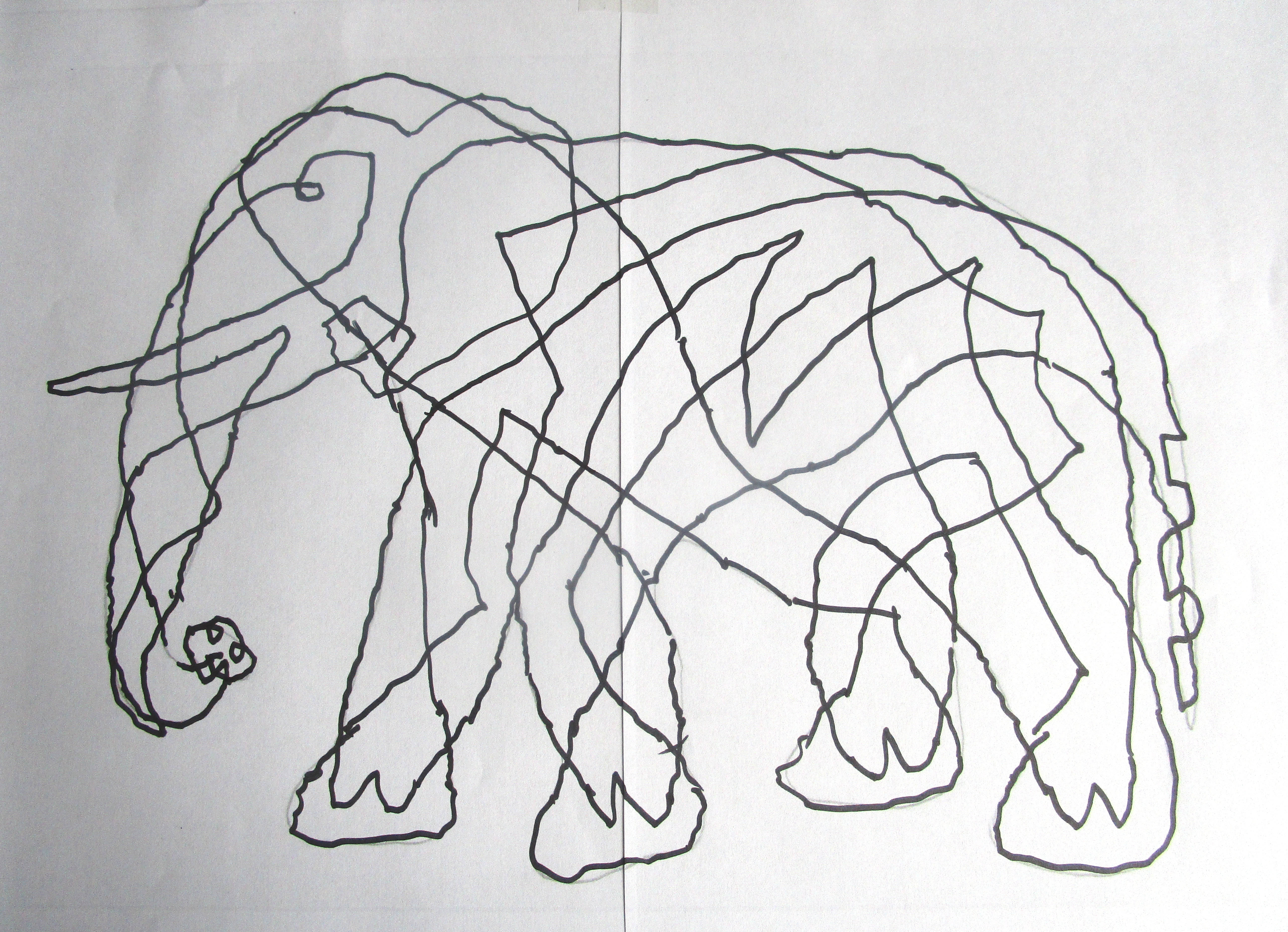
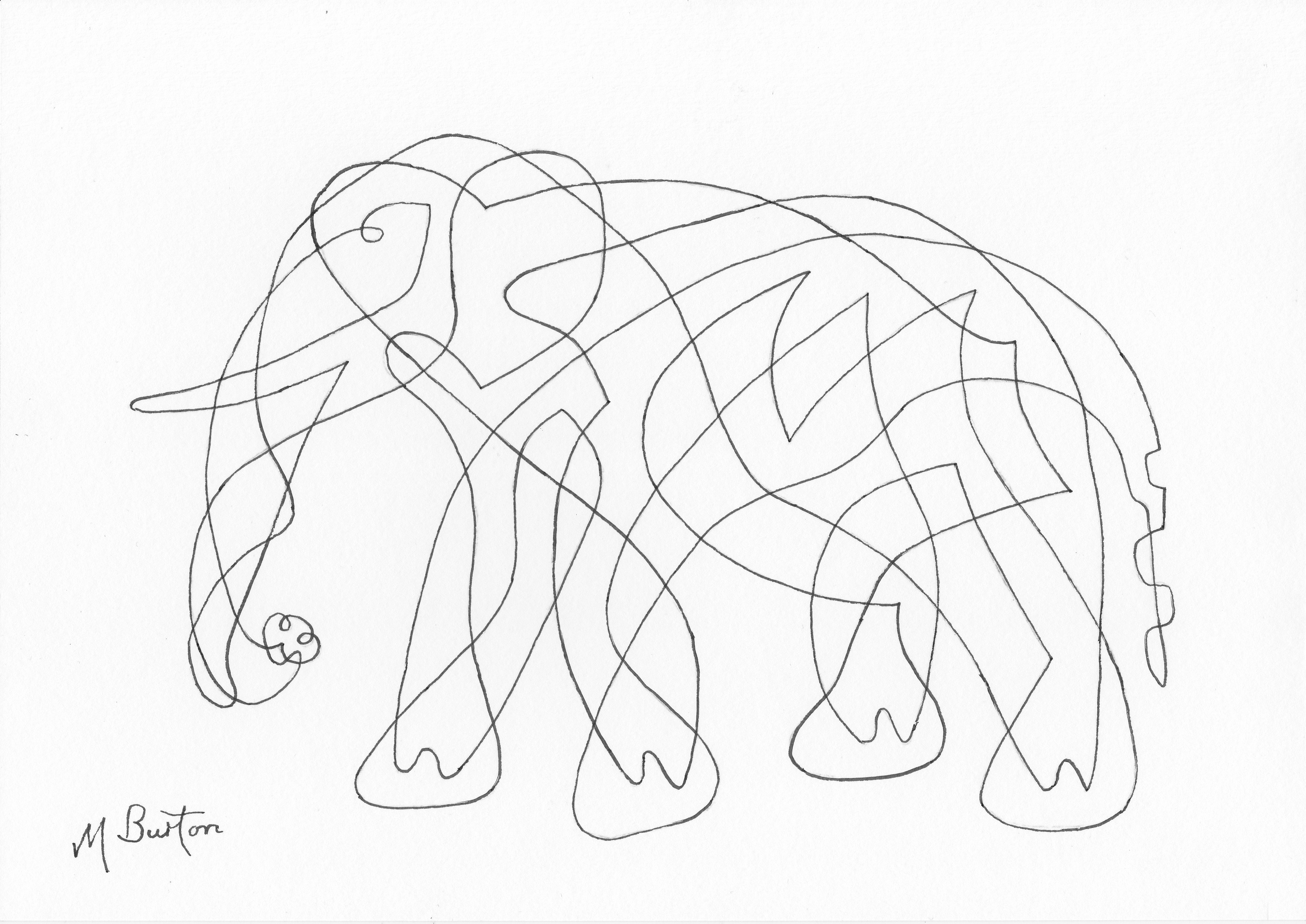
Here is a reminder of my marker pen attempt at a continuous line elephant.
IMG_4950

Demonstration of a Single Continuous Line Elephant, initial drawing, at Harrogate and Nidderdale Art Club by Mick Burton, on 6 December 2018.

At home later I followed the line/s around and found that there was more than one line and I needed to do one or two diversions to correct that.  As the pattern at the front of the neck has a sort of square which I needed to get rid of I used that region to also turn the drawing into a single line throughout.  With a bit of general smoothing of arcs all round I arrived at the following revised elephant.
img_20190108_0002

Revised single continuous line elephant.    Mick Burton, Leeds Artist.

The next stage was to apply my Colour Sequence to the lines, which I completed in the last few days.  The result is shown at the top of this post.

To explain the process I use, and how it works, I will briefly go through the illustrations which I used later on in the Demonstration at Harrogate and Nidderdale Art Club.

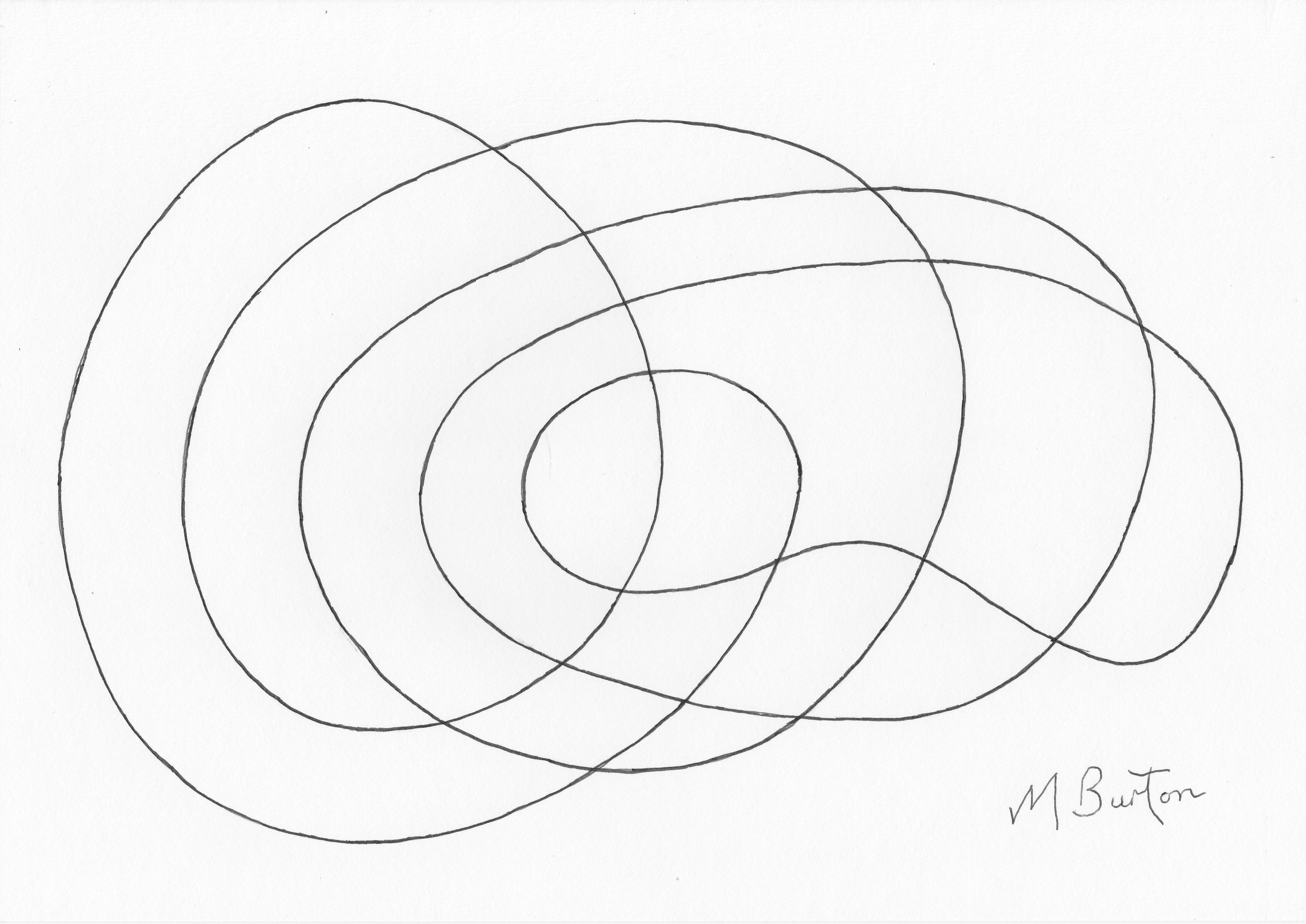
We start by drawing a winding line in an anticlockwise direction.
anticlock 1 line

Stage 1. Single line drawn anticlockwise.   Mick Burton explains colour sequence.

Then, starting on an outside section of line, overdraw in red alternate sections of line.  This results in three different continuous line sections bounded by a red line.

anticlock 2 alt overdraw

Stage 2. Overdraw in red missing alternate sections.   Mick Burton explains colour sequence.

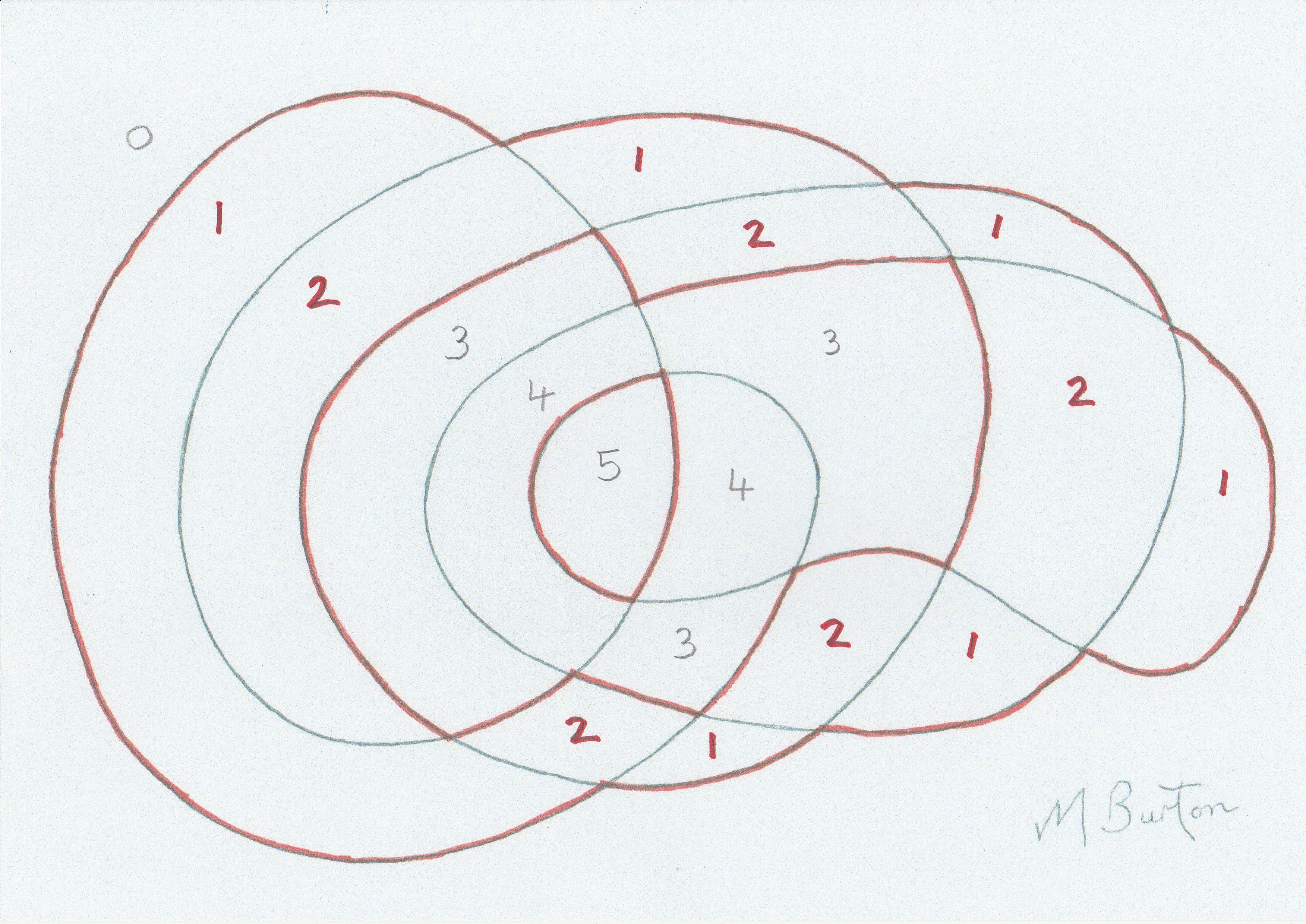
We can now number all the areas to indicate where the colours in the sequence go.  Call the outside 0 and number through the sections to 5 in the middle.  You will see that each channel between red lines has alternately numbered areas.
anticlock 3 number alloc

Stage 3. Number the areas in sequence from the outside (being 0) to the middle (being 5). Mick Burton explains colour sequence.

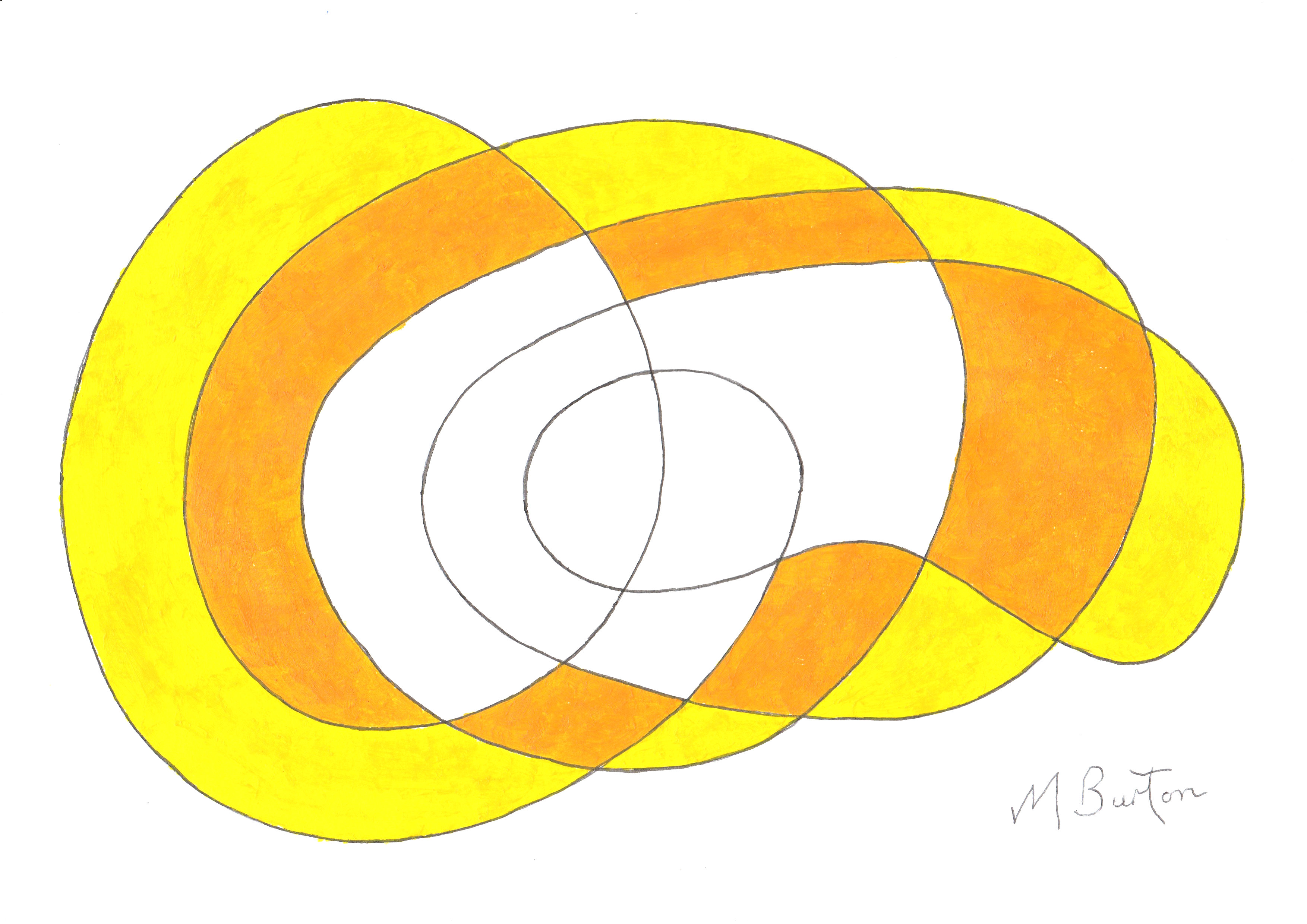
I have already decided on a sequence of colours to use, running from light tones to darker and from yellow to red.  First apply yellow and gold alternately throughout the outer corridor.
anticlock 4 first alt colours - copy

Stage 4. Paint alternate colours within the outer corridor. Mick Burton explains Colour Sequence.

Paint in the next two colours from the sequence – orange (which looks reddish here) and red – alternately in the inner corridor.  You can see how the colours are lining up in natural sequence of tone and colour.
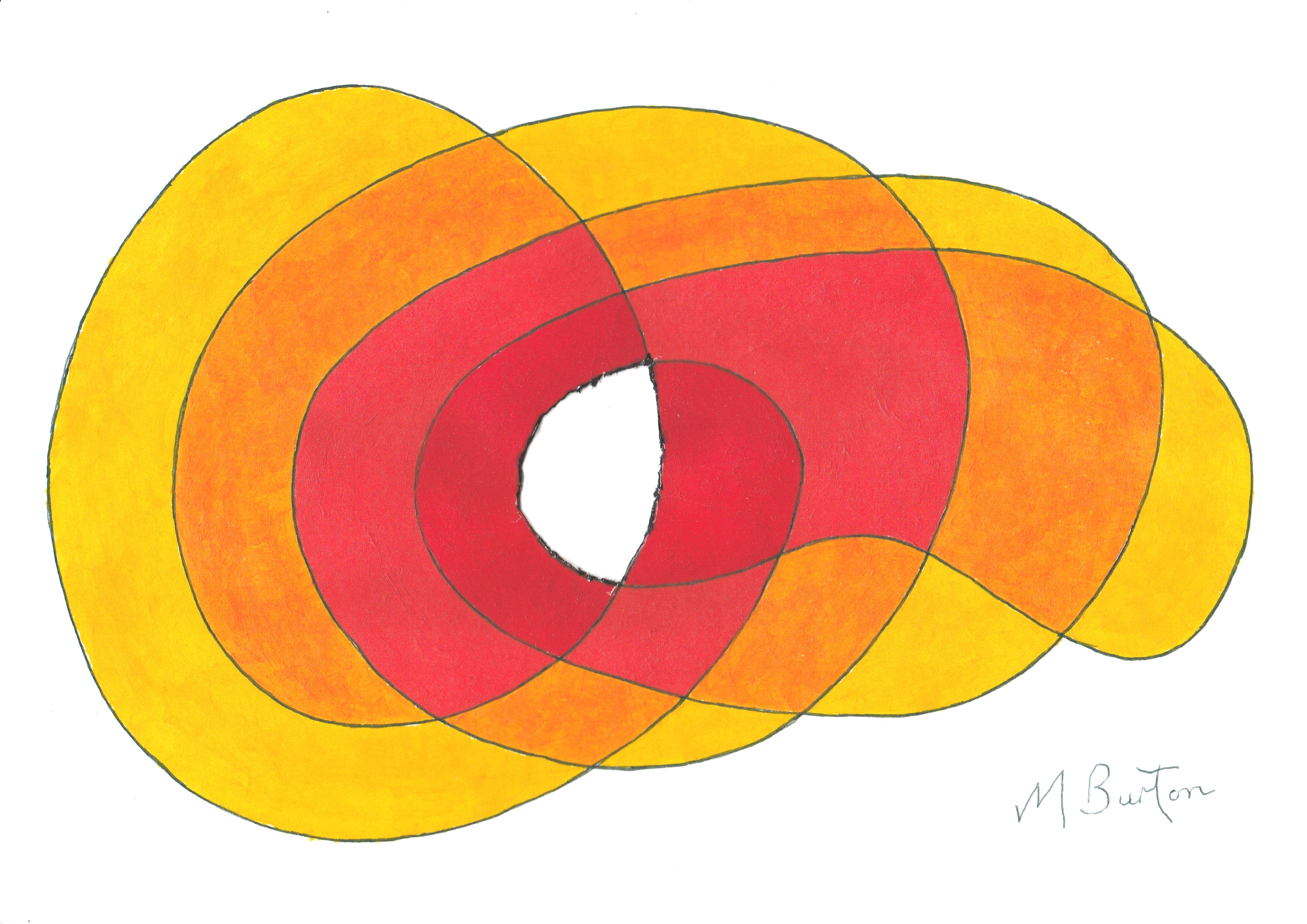
anticlock 5 second alt colours - copy

Stage 5. Paint second set of alternate colours (orange, which looks reddish here, and red) in the next corridor.   Mick Burton explains colour sequence.

Lastly, for our anticlockwise line we paint the central area (which has its own red line surrounding it).  The result is a simple set of sequences running from the outside to the middle.

anticlock 6 full colours

Stage 6. The last colour in the sequence (dark red) is added in the centre. Mick Burton explains colour sequence.

As you will have realised, each loop going over earlier parts of the drawing adds a level, like overlapping shadows or leaves on a tree looking darker as they overlap.  The direction of darker tones of colour in the sequence reflects this.

In more complex drawings, however, the sequences of colours can change direction.  To show this we need to have a different single continuous line.

Start drawing your line with two loops from the lower left in an anticlockwise direction as before.  When you reach the upper left change to doing three loops in a clockwise direction and then go back to the start by a line running underneath.
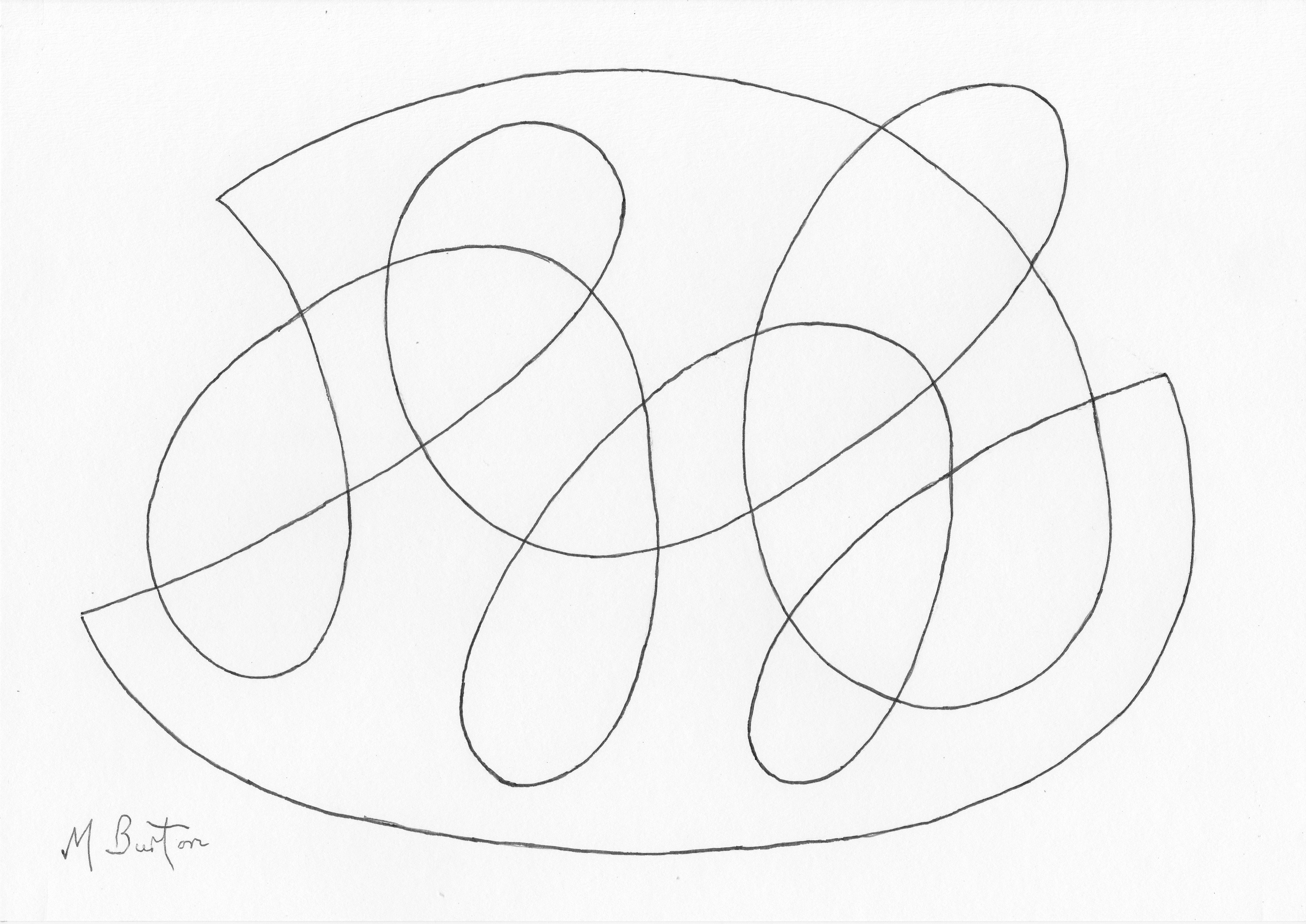
clock 1 line

Stage 7. Start drawing your line from the lower left in an anticlockwise direction doing loops and when you reach the higher left change to clockwise loops running back to the right. Then finish clockwise running underneath to the start. Mick Burton explains colour sequence.

Here is confirmation of the directions of the line, anticlockwise and clockwise, and how they change and run back over earlier lines.  We now have a more complex drawing for colouring.

clock 2 directions of line

Stage 8. Here is the completed single line with the directions shown – red for anticlockwise and blue for clockwise. Mick Burton explains colour sequence.

By applying alternate overdraw in red we split the drawing into corridors which look a bit more complicated than the simple anticlockwise drawing we did earlier.

clock 3 alt overdraw

Stage 9. Alternate overdraw in red splits the new drawing up into corridors for colouring. Mick Burton explains colour sequence.

When we number the areas, starting at 0 on the outside as before, we have plus numbers at the top of the drawing but minus numbers appear in the lower corridor.  When we follow the natural sequence of numbers downwards from 2 through 1 and 0 we hit -1 and -2.

clock 4 number alloc

Stage 10. Numbering from 0 on the outside as before we get minus numbers as well as plus. Mick Burton explains colour sequence.

After I had been doing my colour sequence for a few years I found out that mathematicians call this mix of anti and clock directions Winding Number Theory.  When you continue with loops in an anticlockwise direction you are adding levels of overlap and when you change to clockwise you start reducing levels.

We can now apply alternate colours yellow and red to the upper channel.

clock 5 first alt colours

Stage 11. First set of alternate colours in the upper channel on the complex drawing. Mick Burton explains colour sequence.

Then we can complete the positive colour direction.
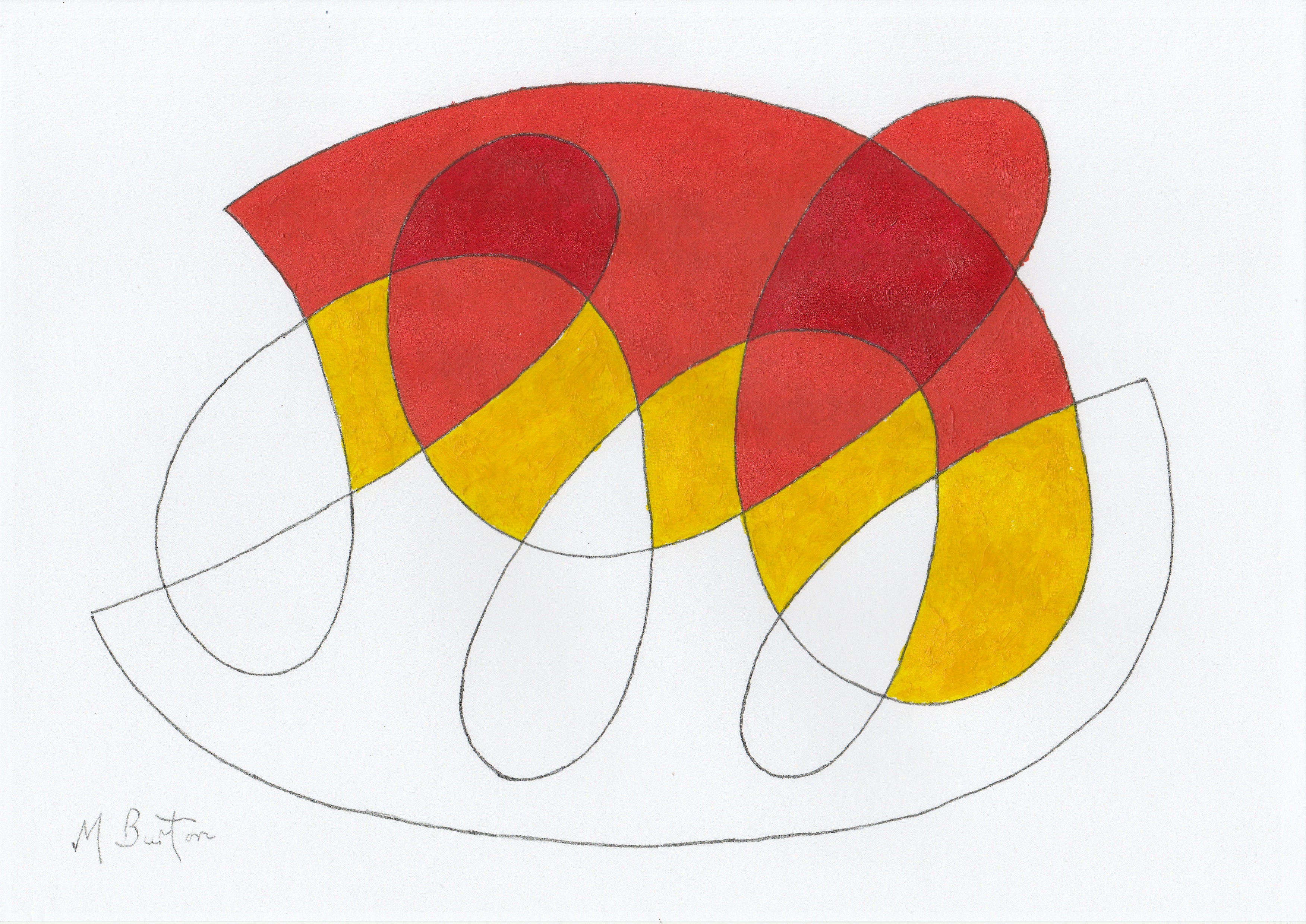
clock 6 last upward colour

Stage 12.  Completing the plus direction colours by adding dark red.   Mick Burton, continuous line artist.

Now looking at the lower colours, in the clockwise section of the drawing we add the final two colours alternately.
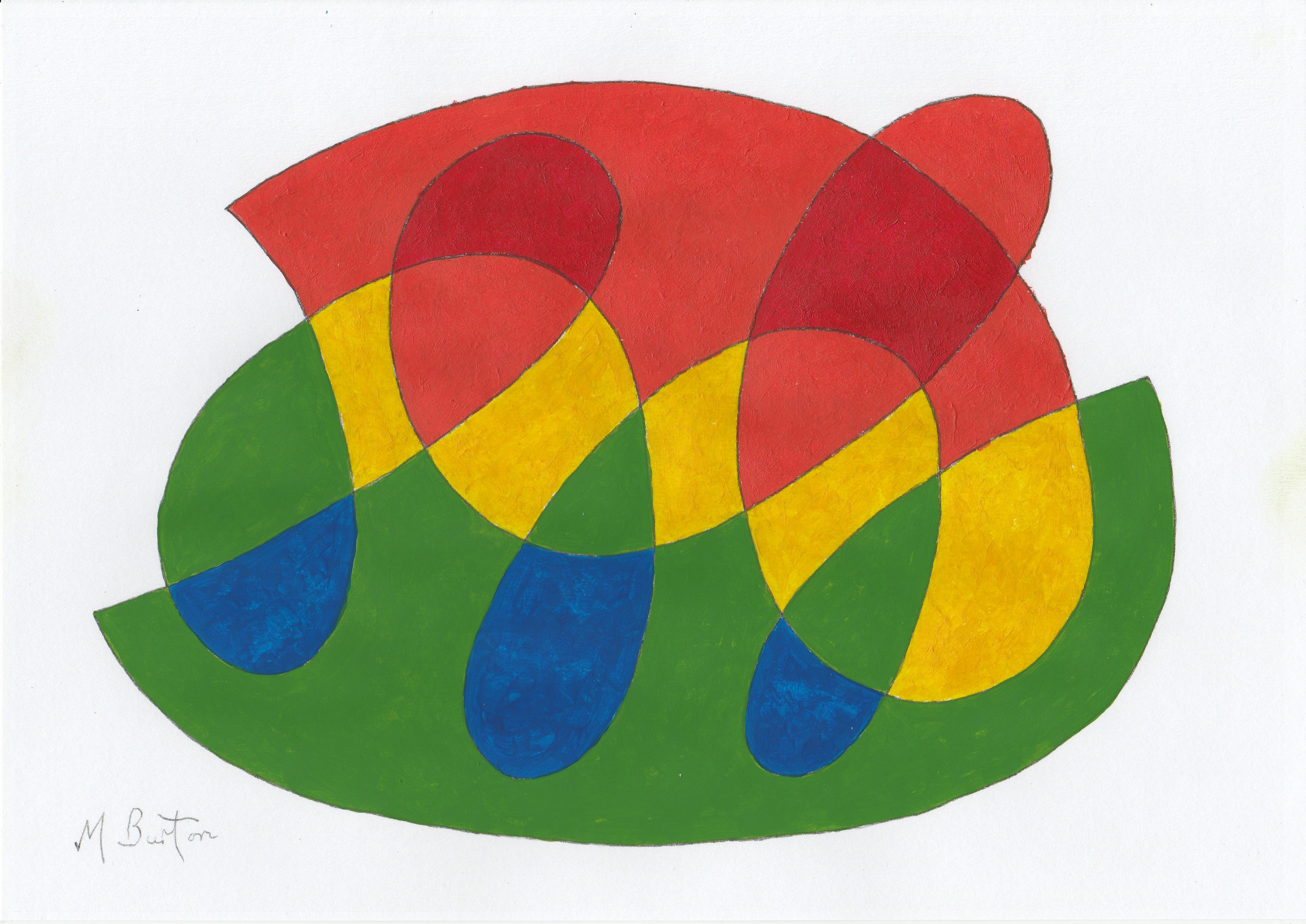
clock 7 downward colours

Stage 13.  Complete colour sequence on single continuous line drawn in both anticlockwise and clockwise directions. Mick Burton, Leeds artist.

So that is the basis of how I do my colour sequence.  

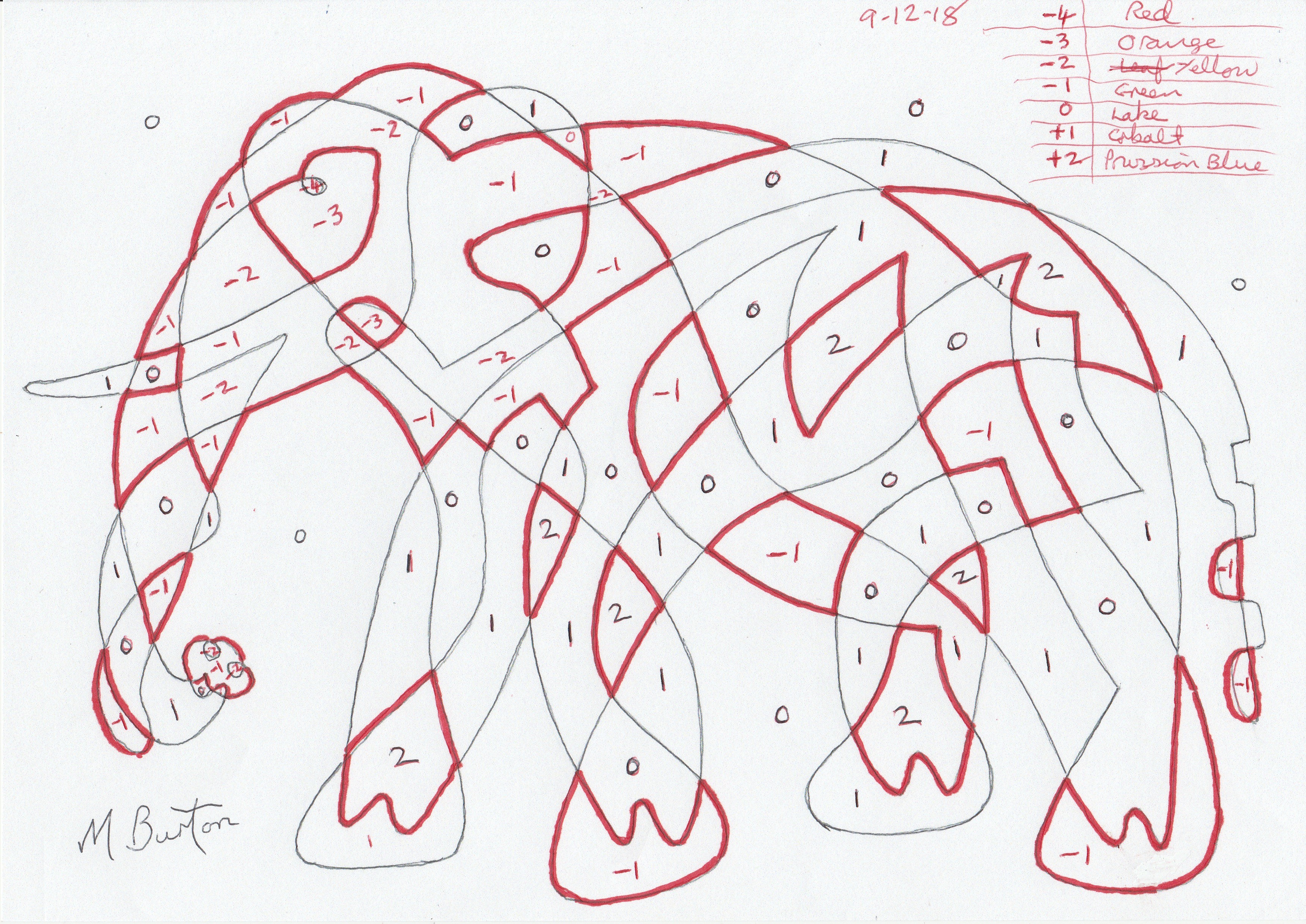
For my elephant, it is more complicated and I show below my sketch after doing the alternate overdraws to create the corridors of alternate colours and then numbered the colours throughout.
img_20190108_0001

Single continuous line elephant showing alternate overdrawn lines in red and colour numbering. The key to the colour sequence and numbering is shown. Mick Burton, continuous line artist.

I have shown the key to the colour sequence and numbering in the top right corner.  The colours can be employed in the opposite direction, of course, but with all my drawings the choice of which direction of sequence to adopt is not too difficult.  The darker colours fall lower down or on the main body of the animal and the more delicate red, orange and yellow mostly on the face. 

I only use red once, and that is on the eye.  This really reflects the greater detail on a face which extends the colour range.  Several of my colour sequence animals have the eye coloured by an end of range colour only used once in the drawing, eg. Iguana, Harriet the Hen and Olympic Lion.

The completed elephant, at the top of the post, has a story behind it.  I did the initial drawing in my demonstration to Harrogate and Nidderdale Art Club on 6 December 2018, which is the day my first grandson, Lucas, was born in Glasgow, son of Kate and Mark. 

I have decided to call the elephant Clyde after the famous Glasgow river.  Lucas can have a picture on his wall which is exactly as old as he is.    

St Gemma’s 40th Anniversary Arts Festival – 2018 Leeds Art Exhibition and Sale 2018

Mick-Burton-website - Copy

Mick Burton, continuous line drawing artist, one of 40 artists selected to exhibit in the Leeds Art and Photography Exhibition 2018 as part of the St Gemma’s 40th Anniversary Arts Festival.

The 2018 Leeds Art and Photography Exhibition and Sale takes place on 26 – 29 October 2018 at The Grammar School at Leeds as part of the St Gemma’s 40th Anniversary Arts Festival.

Last year there were about 170 artists exhibiting about 900 pictures and photographs. However, as it is the 40th anniversary of the charity, they have decided to give the 40 artists who have sold the most pictures in recent years the option of submitting more pictures and to specify their own presentation across two stands.
I have been fortunate enough to be invited and look forward to the exhibition.

You can check out the details on the initial website

https://events.st-gemma.co.uk/events/leedsartfestival

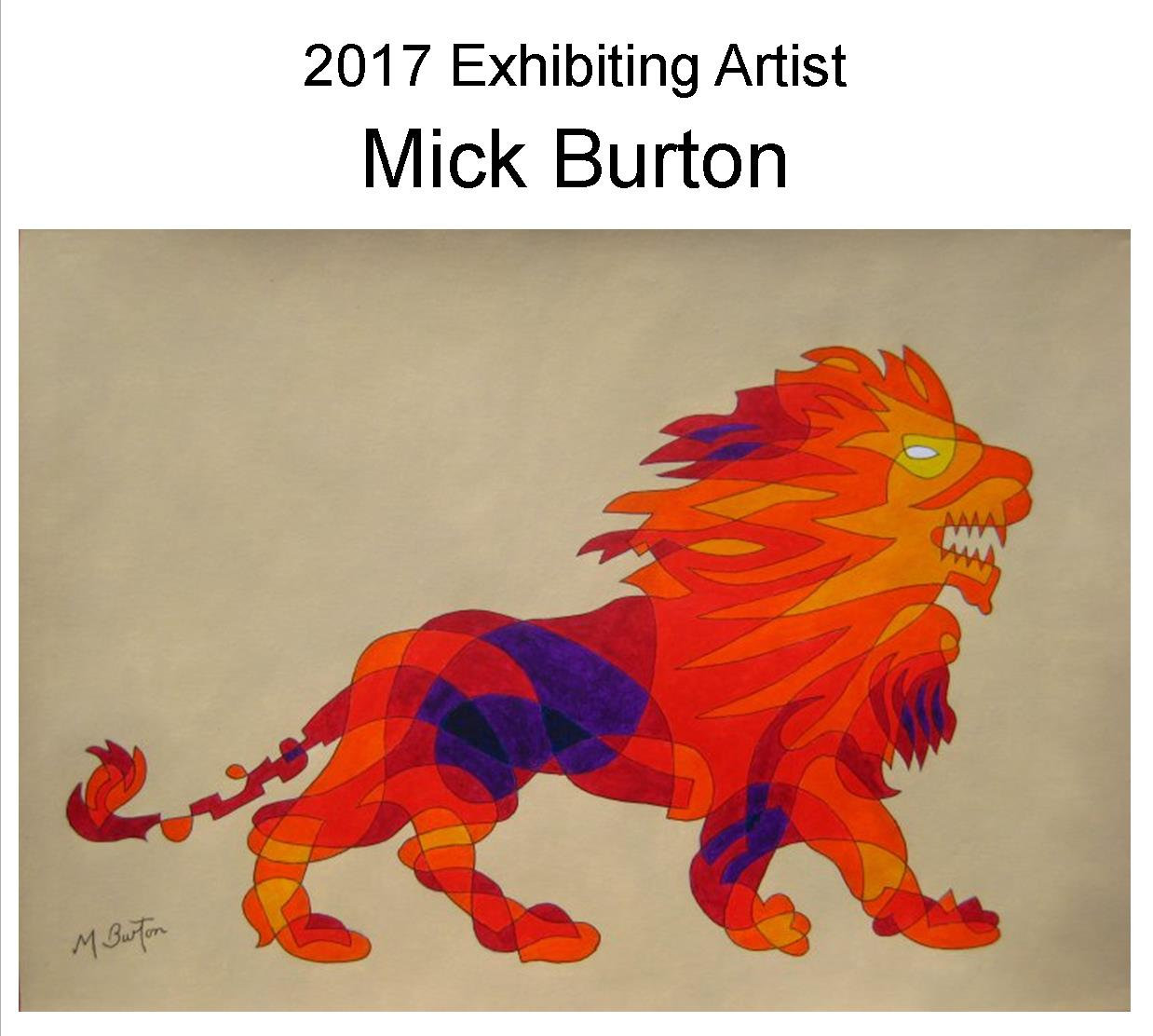
This also shows pictures by over 30 artists from the 2017 exhibition, including my “Leeds Olympic Lion” above.

I have also entered the “Secret Art Project” where you draw or paint on a post card and all the entries are displayed anonymously.  During and for a week after the exhibition the display is on the internet so people can bid for the cards.  They publicise various celebrities who St Gemma’s have asked to enter a picture card to help inflate the bidding.

Of course, using my continuous line style would be a bit of a “give away” so I have used another approach.  All will be revealed in a post after the event.