Category Archives: Animals

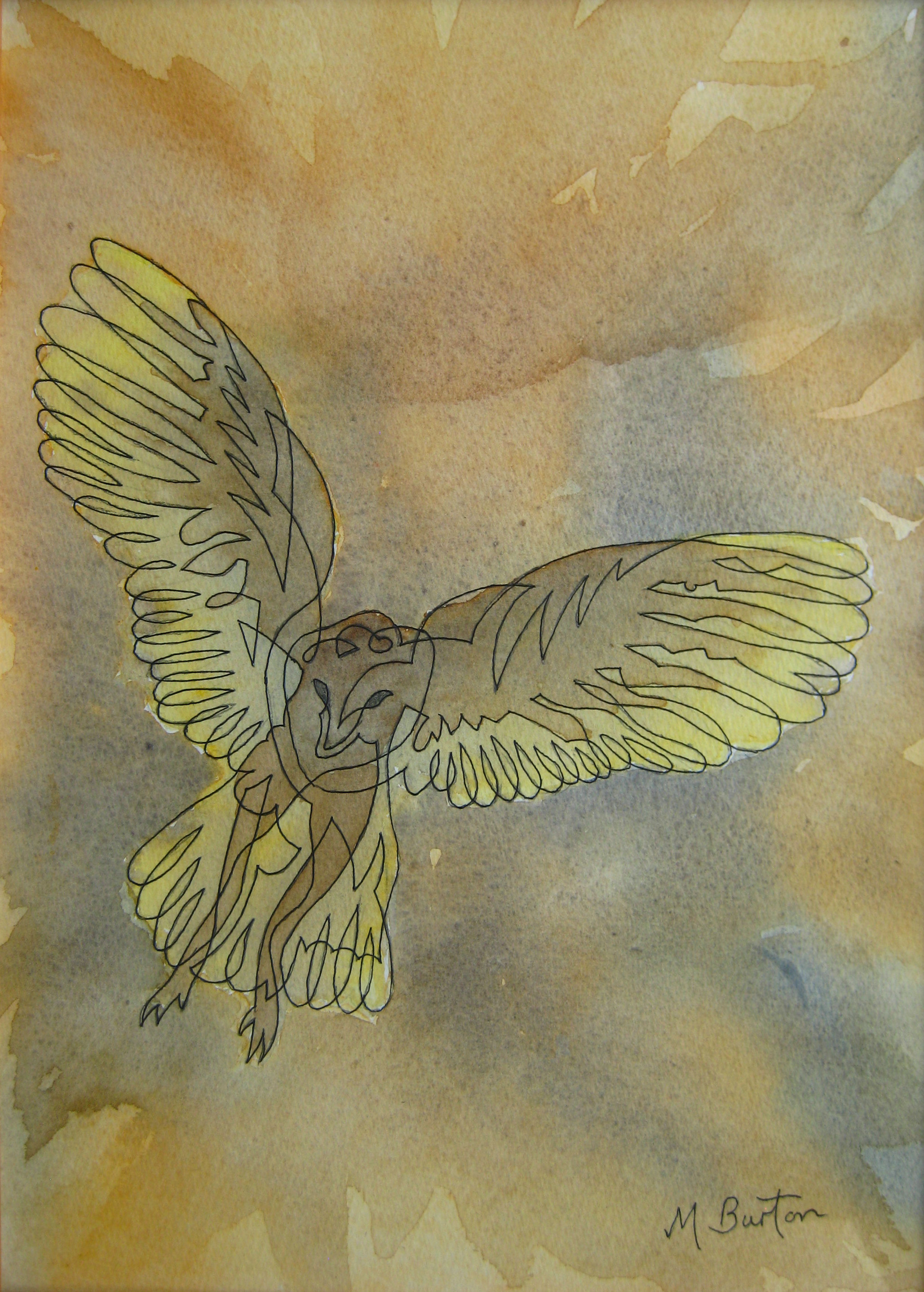
Barn Owl continuous line drawing at Harrogate and Nidderdale Art Exhibition

Continuous line drawing of Barn Owl onto Wet on Wet watercolour. Mick Burton.

Single continuous line drawing of Barn Owl onto Wet on Wet watercolour. Mick Burton continuous line artist, 2015.

This Barn Owl painting will be one of my eight pictures on display at  the Harrogate and Nidderdale Art Club Autumn Exhibition in Ripley Town Hall, near Harrogate, on 21 & 22 November 2015.  I then intend to submit it to the next Association of Animal Artists Exhibition.
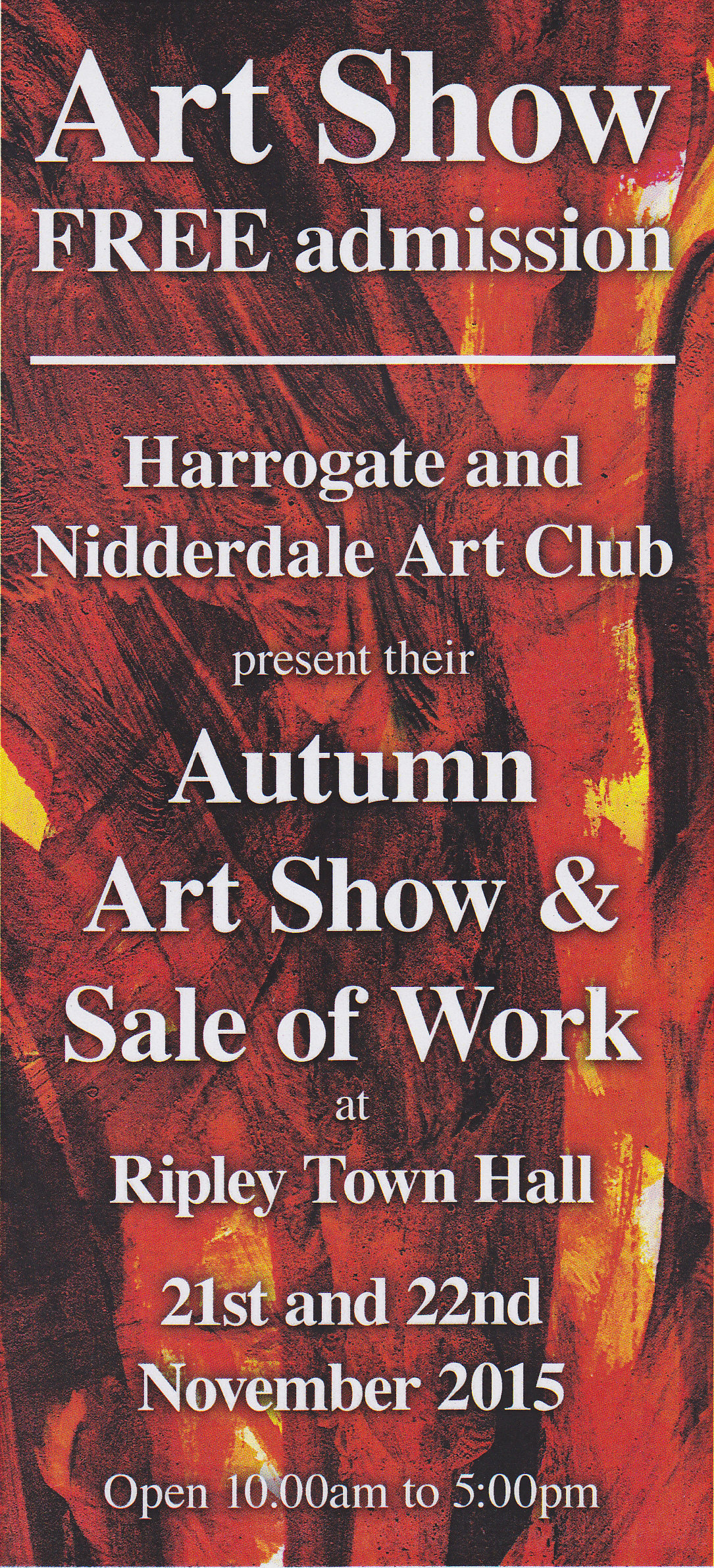
Harrogate and Nidderdale Art Club exhibition at Ripley Town Hall, near Harrogate, 21 & 22 November 2015.

Harrogate and Nidderdale Art Club exhibition at Ripley Town Hall, near Harrogate, 21 & 22 November 2015.

Visiting demonstrators at art clubs are amazingly varied and it is usually useful to attempt whatever they ask the club members to do.  I have done some workshops myself and appreciate the efforts of club members who really have a go at continuous line drawings, and associated things I show, even though to is unlikely that any of them will take up my technique as a main style.  Hopefully people can pick up things which can apply to other styles, such as building abstract patterns, using colour sequences, drawing key identifying parts of a subject and trying to manage a picture which sometimes appears to be drawing itself !

Charles Kelly from Bradford, who I have seen doing demonstrations before, came to Stainbeck Arts Club a couple of months ago and said he was doing a workshop this time.  Watercolour tends to be the most popular topic at art clubs, but Charles has a spectacular approach to “wet on wet” and this time we were doing it too.  Here is an example of his work from a demonstration to Alwoodley Art Group in 2013.

A Pair of Geese, painted by Charles Kelly in a demonstration at Alwoodley Art Group in 2013.

A Pair of Geese, painted by Charles Kelly in a demonstration at Alwoodley Art Group in 2013.

My usual style of strong lines and flat colours (acrylic or poster colour) are poles apart from watercolour but I always learn something.  I have to say that using a big brush to coat large proportions of the paper with water in advance (up to selected boundaries of course) and then squeezing brush loads of watercolour in dollops all over is a bit “hairy”.  Then picking up the paper and waving it about so that the colour swishes around, like tides on a beach, reminds me of relatives of mine “panning” for gold in Victoria in the 1850’s.

Charles had brought many reference pictures which we could use and I chose one of a barn owl.  I thought that I could do washes up to the outline of the owl and also within the owl and later put a continuous line on top which more or less matched the washes.  Here is a copy of the wash I did initially, helped by some tips from Charles along the way.
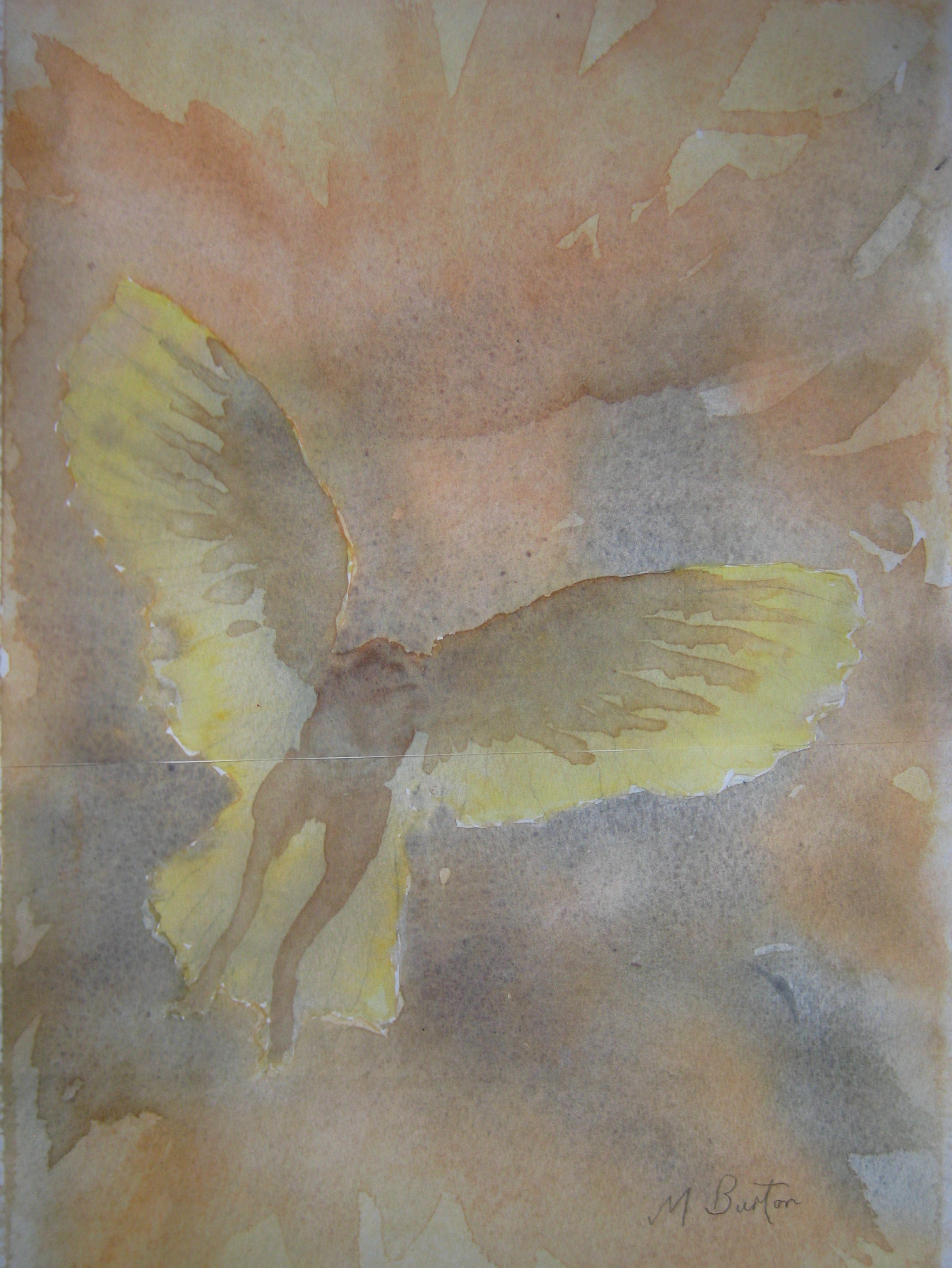
Copy of Wet on Wet watercolour of Barn Owl, before I attempted the continuous line drawing. Mick Burton.

Copy of Wet on Wet watercolour of Barn Owl, before I attempted the continuous line drawing. Mick Burton.

Later, at home, I worked on the continuous line on top of the above copy.  I started by putting key lines along the outline of the owl, feathering and other features – to match the borders of colours as far as I could.  Then I added more connecting pattern and finally joined everything up and made sure I had a continuous line.

Once I was satisfied with this I traced the continuous line down onto my watercolour painting and drew over the lines in acrylic pen making final changes as I saw how the firm line was developing.

I think that the translucent effect of the feathering has worked well, although this view may not be appreciated by a victim mouse in its last moments.


Red Squirrel continuous line and Grey Squirrel photographs

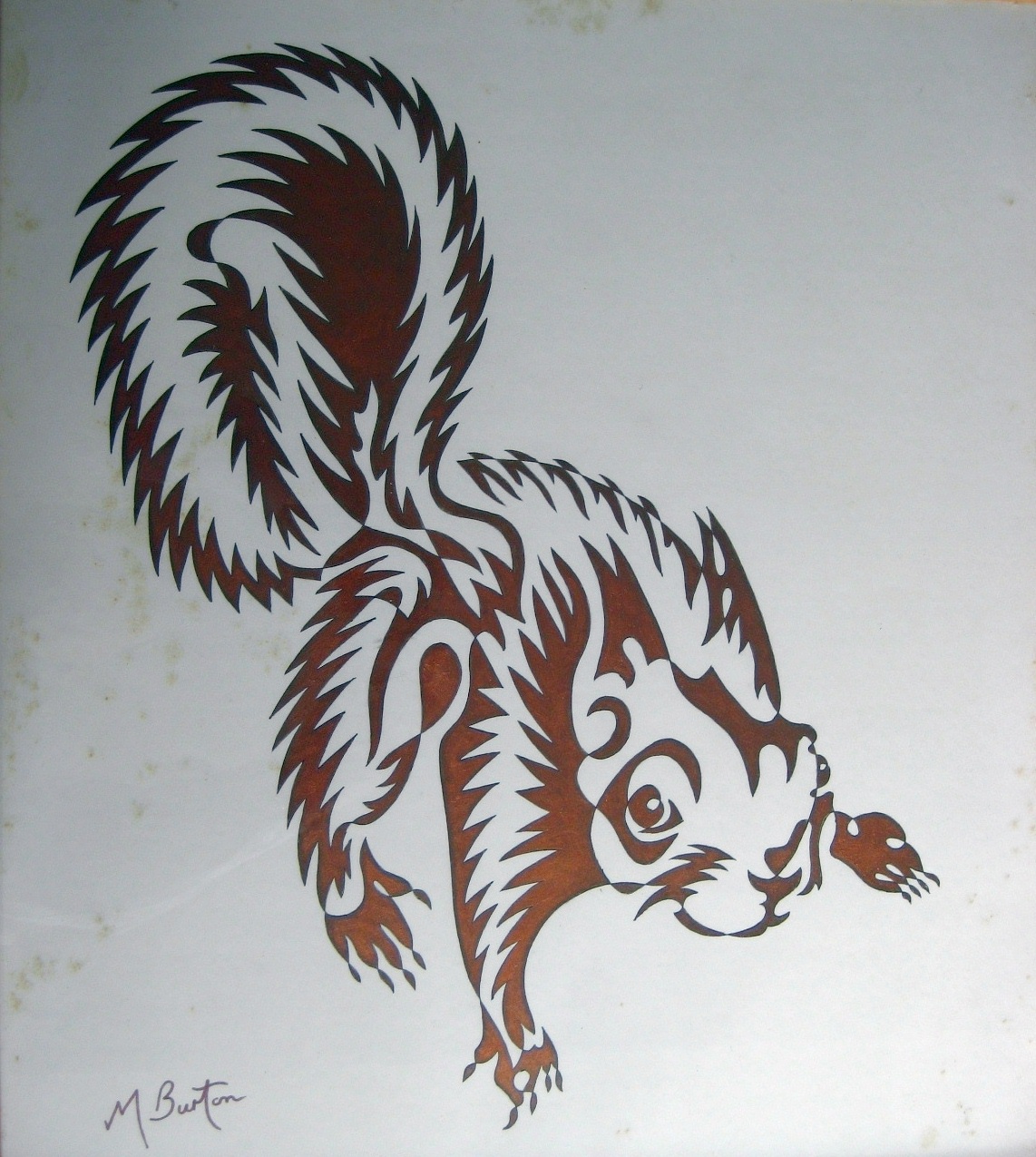
Red Squirrel, continuous line with colour sequence. Mick Burton, Leeds artist.

Red Squirrel, single continuous line drawing with colour sequence. Mick Burton, Leeds continuous line artist.

This continuous line Red Squirrel, completed with colour sequence, is one of my pictures to be hung at the Leeds Art Exhibition and Sale put on for the 15th year by St Gemma’s Hospice.

St Gemma's Leeds Art Exhibition. 29 - 31 October 2015

St Gemma’s Leeds Art Exhibition. 29 – 31 October 2015

This colour sequence squirrel is the last of a series which began with my attempt to produce a continuous line drawing with a shimmering fur effect for the squirrel.

Continuous line squirrel from 1970, with shimmering effect of fur. Mick Burton, Leeds artist.

Single continuous line drawing of squirrel from 1970, with shimmering effect of fur. Mick Burton, Leeds continuous line artist.

I have a treasured memory of seeing a Red Squirrel, when I was four, sitting on a wall next to our cottage at Arncliffe Hall, in the North Riding, where my Dad was Head Gardener to Sir Hugh Bell just after the War.  I thought that completing alternate shading with copper paint would best reflect this colour in this picture from 1970.  My daughter Kate said on the phone today that she remembered this picture being in the hall when she was young.

Red Squirrel with copper alternate shading from 1970. Mick Burton, Leeds artist.

Red Squirrel, single continuous line drawing with copper alternate shading from 1970. Mick Burton, Leeds continuous line artist.

I have many clear memories of living at Ingleby Arncliffe from the age of nearly two, to four and a half when we left.

Falling out of my pram outside the local shop and crawling up the step was the earliest. There was a three legged cat, then at Sunday School one of the stamps I collected was “The Light of the World” by William Holman Hunt (my first taste of the Pre-Raphaelites) and I won the child’s sprint on sports day on the cricket ground.

In the famous terrible winter of 1947, I remember Dad helping to dig a trench in the snow drifts down to the village.  It was amazing to walk along the trench and not be able to see out.

 I once watched a pig being killed in the yard by the cottage and the workman laughed as he squirted me with the pig’s bladder.  This memory came back years later when, as a young police constable, I attended my first post mortem (of a coal miner who had been in an underground tunnel collapse).  My sergeant stood with me and assured me that it would be just like a newly killed pig being cut up, if I had ever seen one.  I said “Yes, I saw one when I was four ! “

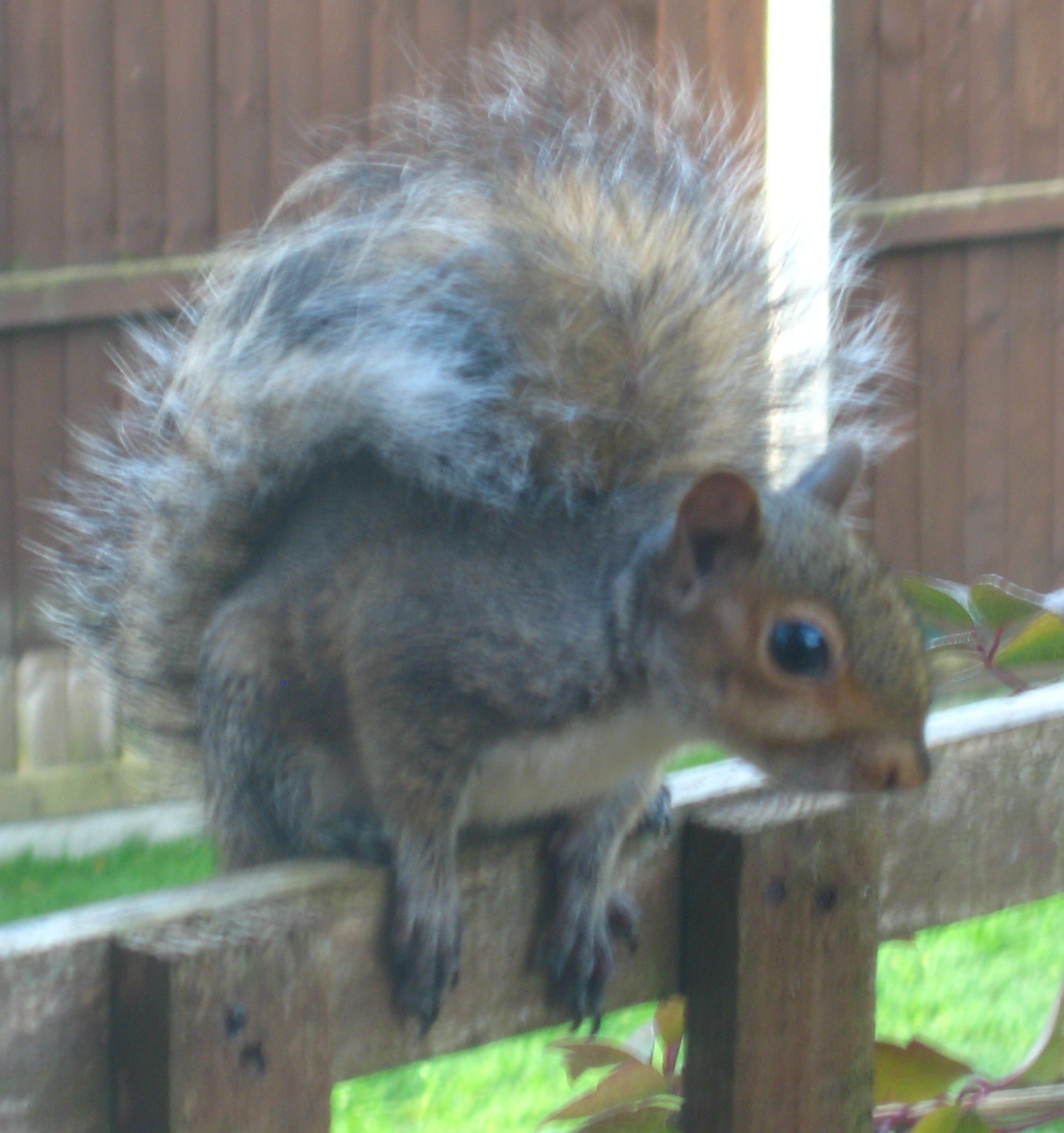
I only see grey squirrels now, mainly helping themselves to the bird seed Joan puts out.  With Gledhow Valley Woods at the end of the garden we can have five of them at a time.  Yesterday, a young squirrel was chased by a cat and ended up on the trellis a few feet from our dining room window.  Joan chased the cat away and called to me as the squirrel was too scared to move.

I took some quick photographs whist it was still there, but it became apparent that it was not going to move and was looking at me pleadingly.  So I went out and shepherded it into the bushes.  Here are some photos of a shimmering fur tail.

Young Grey Squirrel from Gledhow Valley Woods. Three feet from my window after being chased by a cat. Mick Burton, Leeds artist.

Young Grey Squirrel from Gledhow Valley Woods. Three feet from my window after being chased by a cat. Mick Burton, Leeds artist.

Young Grey Squirrel not daring to move, even though Joan had chased the cat away. Mick Burton, Leeds artist.

Young Grey Squirrel not daring to move, even though Joan had chased the cat away. Mick Burton, Leeds artist.

Young Grey Squirrel, imploring me to stop taking photos and do something about the cat. So I went out and shepherded it to the bushes. Mick Burton, Leeds artist.

Young Grey Squirrel, imploring me to stop taking photos and do something about the cat. So I went out and shepherded it to the bushes. Mick Burton, Leeds artist.

Leeds Carnival 2015 with photos by Mick Burton, continuous line artist.

Red Indian head dress costume, Leeds Carnival 2015. Photo by Mick Burton continuous line artist.

Red Indian head dress costume, Leeds Carnival 2015. Photo by Mick Burton continuous line artist.

This was the first costume in the parade, preceded by one of several mobile steel drum bands. We stood on the first bend, near Gledhow Valley, after the parade’s initial stretch from Potternewton Park.

Cockapoo with wet paws waits for the Leeds Carnival parade to approach. Photo by Mick Burton, continuous line artist.

Cockapoo with wet paws waits for the Leeds Carnival parade to approach. Photo by Mick Burton, continuous line artist.

It was a dull afternoon and drizzling. The Cockapoo loved the fuss from the crowd and waited for some action.

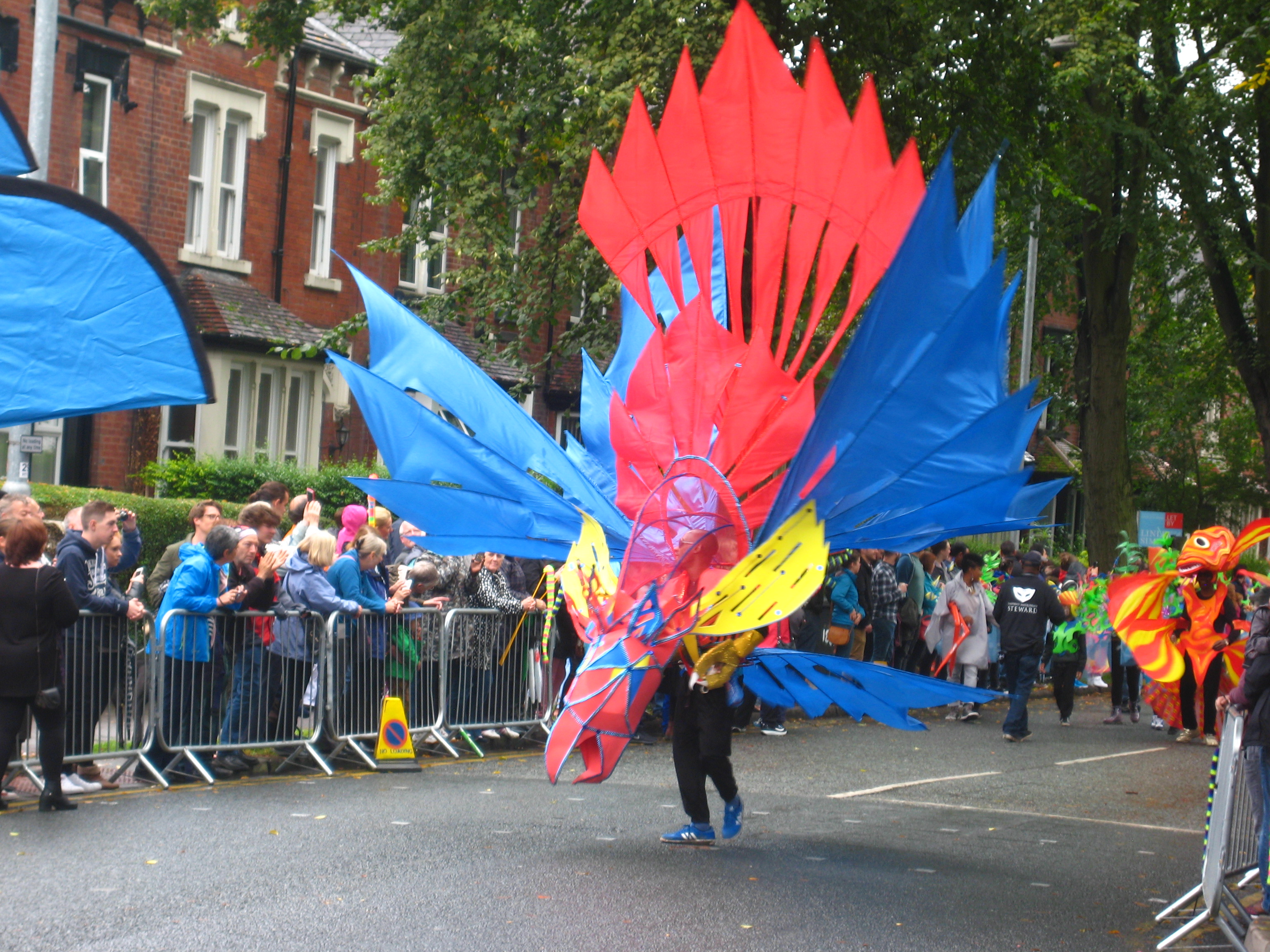
Red and blue costume in the Leeds Carnival matched the drizzle. Photo by Mick Burton, continuous line artist.

Red and blue costume in the Leeds Carnival matched the drizzle. Photo by Mick Burton, continuous line artist.

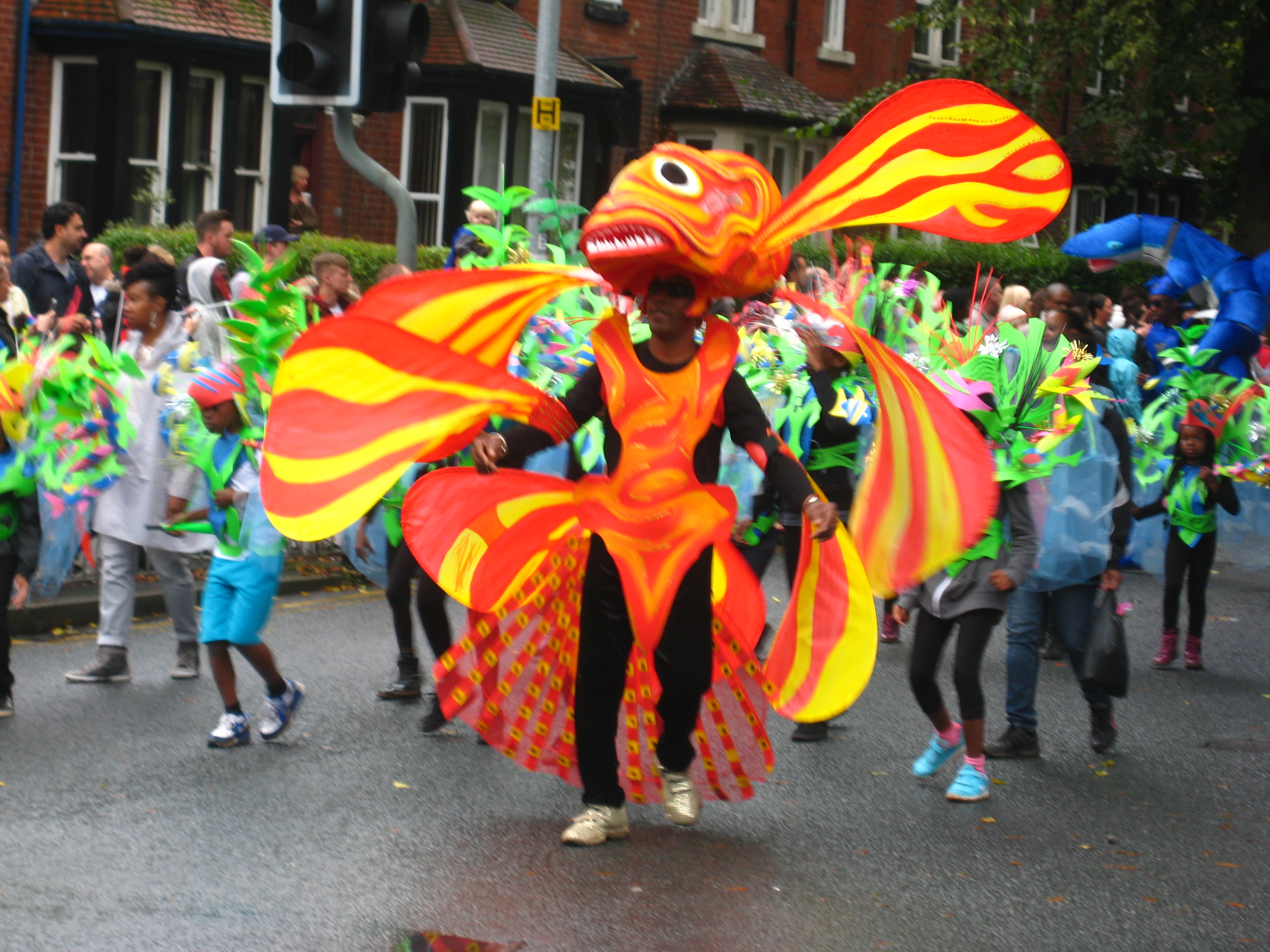
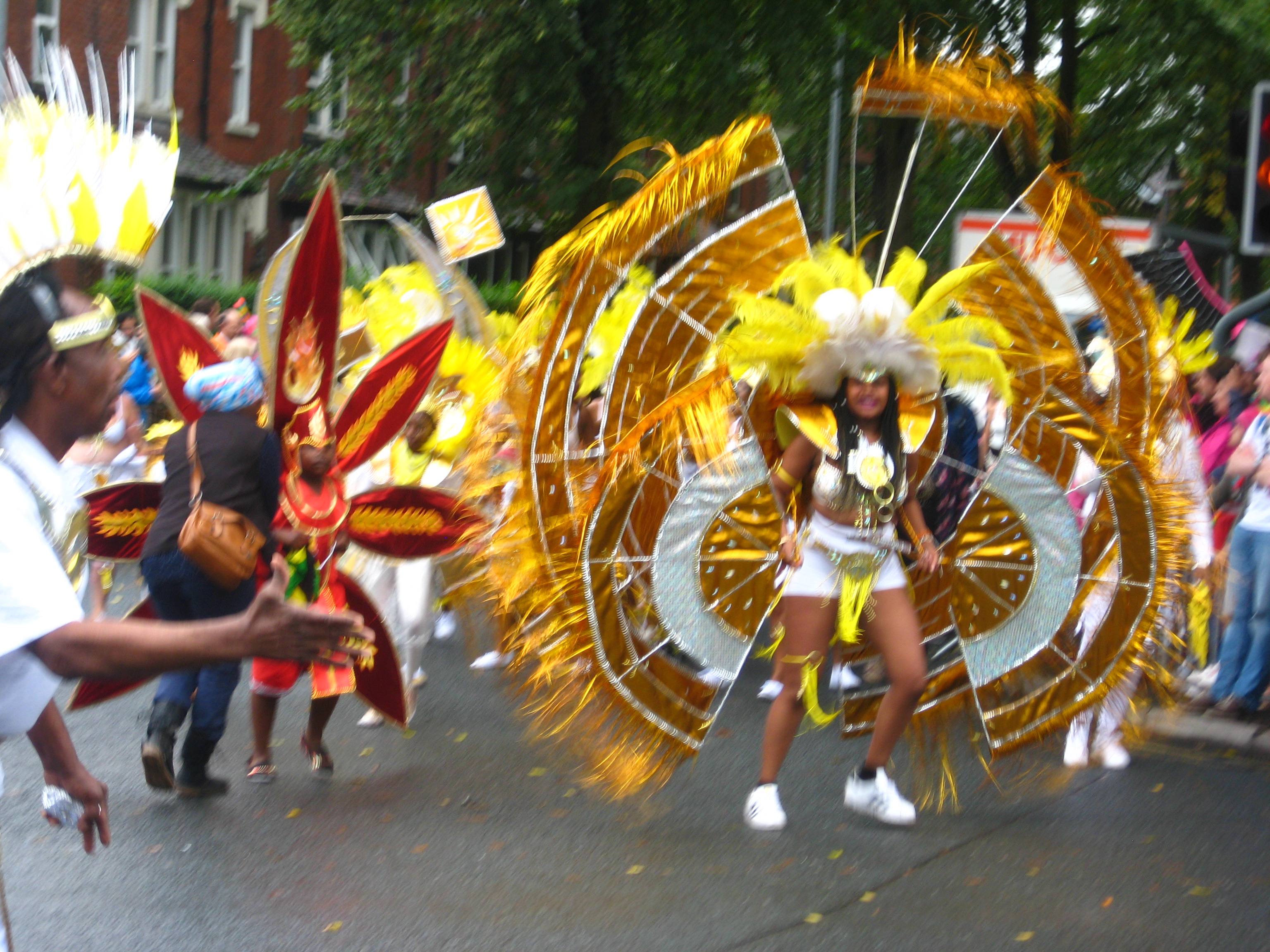
Yellow and orange costume which lit up the parade at the Leeds Carnival. Photo by Mick Burton, continuous line artist.

Yellow and orange costume which lit up the parade at the Leeds Carnival. Photo by Mick Burton, continuous line artist.

The drizzle had stopped and this costume, really lit up the parade.

Violet and yellow costume at the Leeds Carnival. Photo by Mick Burton, continuous line artist.

Violet and yellow costume at the Leeds Carnival. Photo by Mick Burton, continuous line artist.

Razzle and Dazzle at the Leeds Carnival. Photo by Mick Burton, continuous line artist.

Razzle and Dazzle at the Leeds Carnival. Photo by Mick Burton, continuous line artist.

Gold costume at the Leeds Carnival. Photo by Mick Burton, continuous line artist.

Gold costume at the Leeds Carnival. Photo by Mick Burton, continuous line artist.

Lion King at the Leeds Carnival. Photo by Mick Burton, continuous line artist.

Lion King at the Leeds Carnival. Photo by Mick Burton, continuous line artist.

Catherine wheel costume at Leeds Carnival. Photo Mick Burton, continuous line artist.

Catherine wheel costume at Leeds Carnival. Photo Mick Burton, continuous line artist.

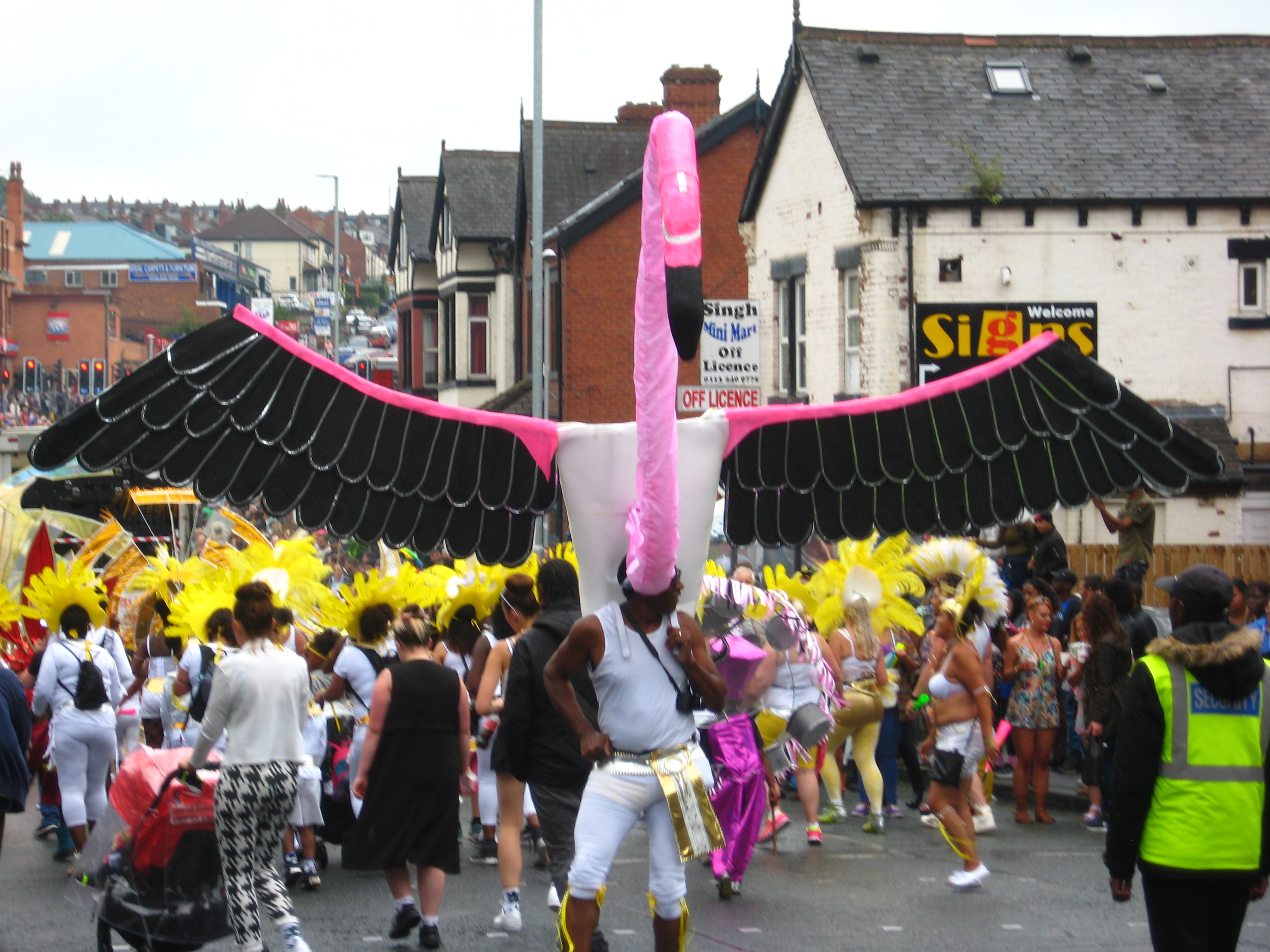
Flamingo costume at Leeds Carnival. Photo by Mick Burton, continuous line artist.

Flamingo costume at Leeds Carnival. Photo by Mick Burton, continuous line artist.

Bolivian costumes, back view, at the Leeds Carnival. Photo Mick Burton, continuous line artist.

Bolivian costumes, back view, at the Leeds Carnival. Photo Mick Burton, continuous line artist.

Jamaican costume at Leeds Carnival. Photo Mick Burton, continuous line artist.

Jamaican costume at Leeds Carnival. Photo Mick Burton, continuous line artist.

Blue and Green costume at Leeds Carnival. Photo Mick Burton, continuous line artist.

Blue and Green costume at Leeds Carnival. Photo Mick Burton, continuous line artist.

Pink costume at Leeds Carnival. Photo Mick Burton, continuous line artist.

Pink costume at Leeds Carnival. Photo Mick Burton, continuous line artist.

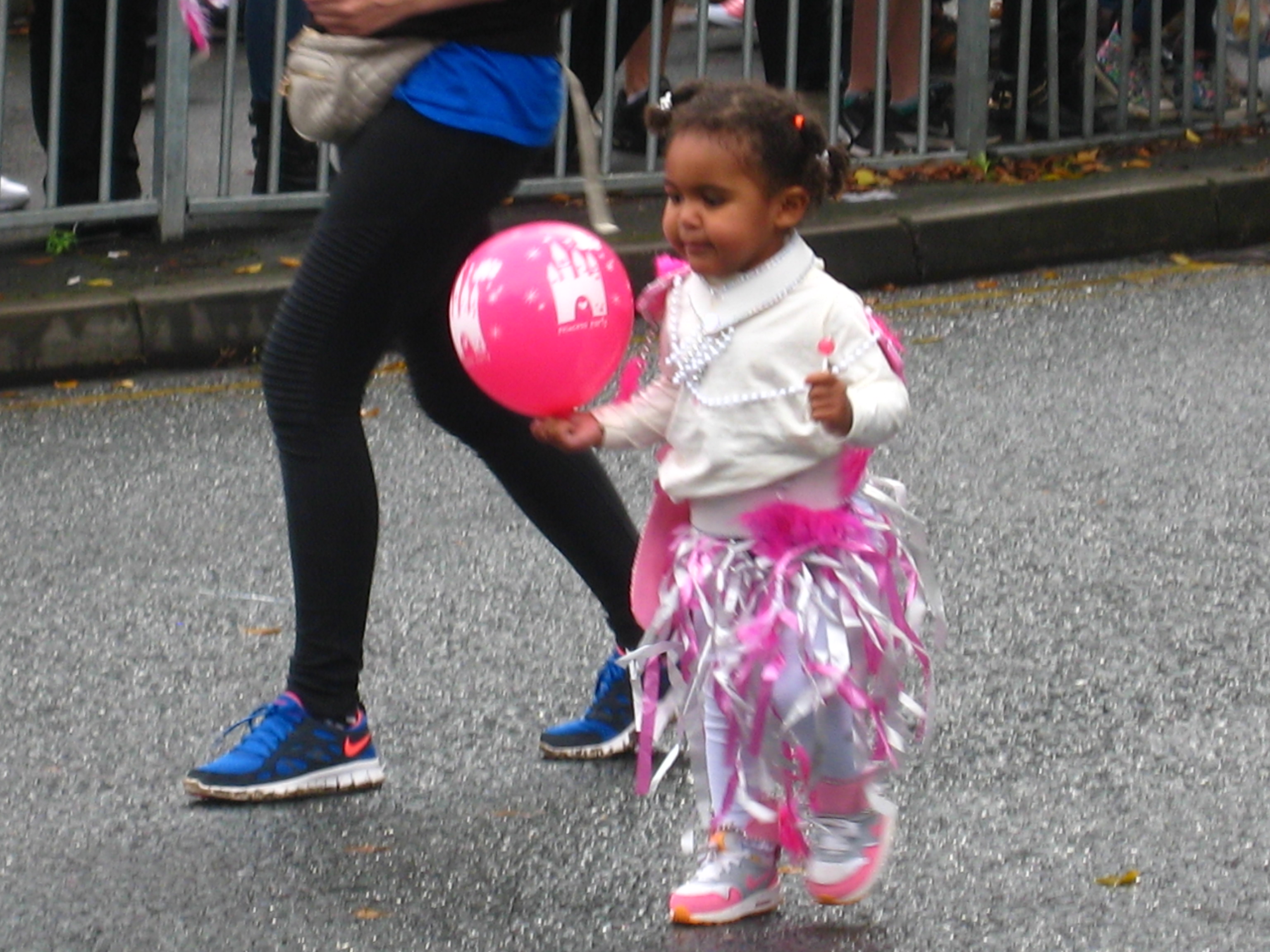
Child with balloon in Leeds Carnival parade. Photo Mick Burton, continuous line artist.

Child with balloon in Leeds Carnival parade. Photo Mick Burton, continuous line artist.

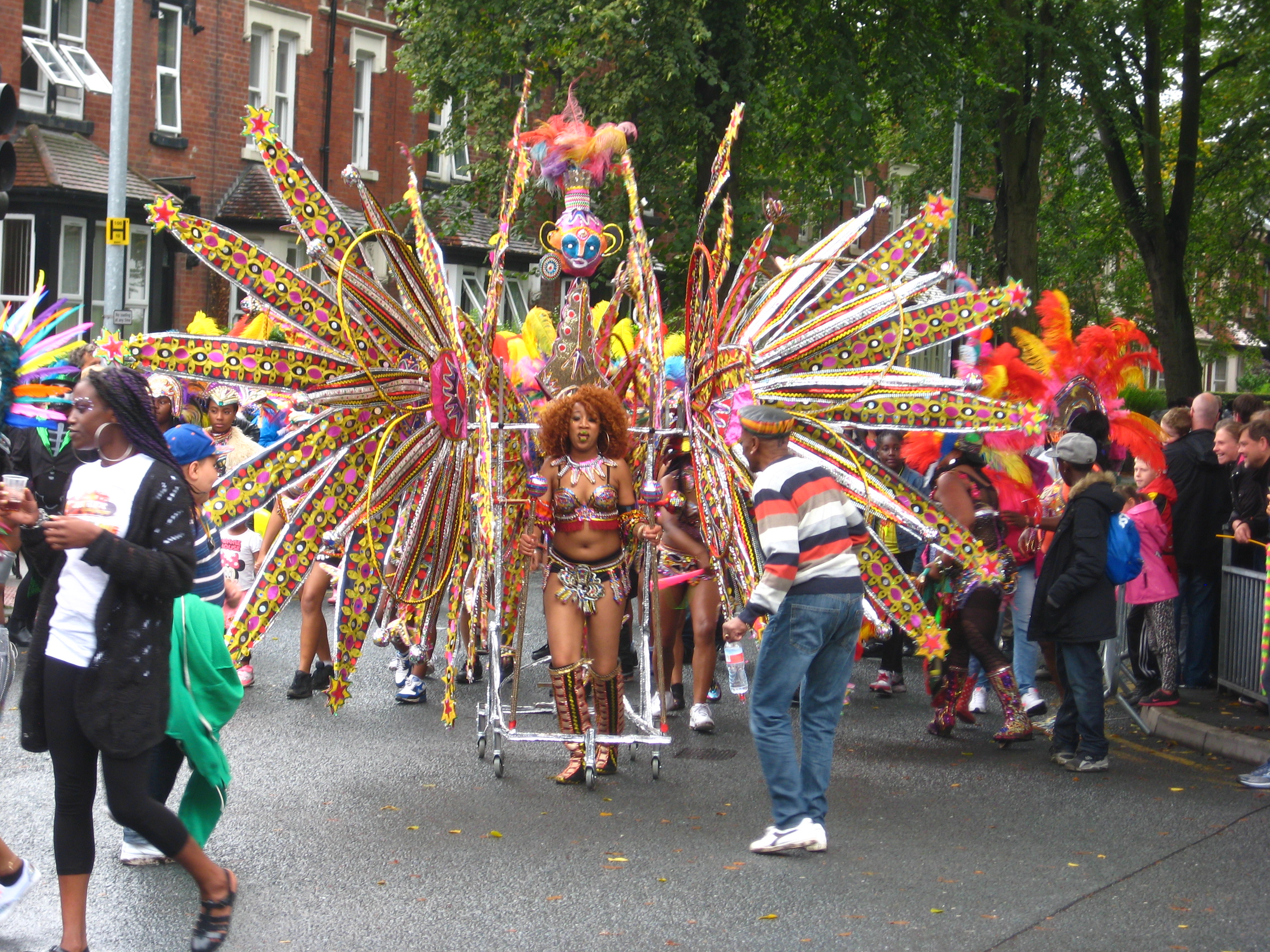
Multi petal costume at Leeds Carnival parade. Photo Mick Burton, continuous line artist.

Multi petal costume at Leeds Carnival parade. Photo Mick Burton, continuous line artist.

So there we are. Another very entertaining Leeds Carnival parade. The colours lit up a dull afternoon until the sun came out.


Gledhow Valley amazing cobwebs.

I must apologise for a silly thing that I did yesterday.  I photographed a spider using the sun to obtain glistening images of the spiders web.  Only when I had set it all up and published it did I remember that one of my main supporters does not like looking at spiders and may never, ever, look at my web site again if I left them up.

So I have removed them all and I hope that I have not upset search engines too much.  It should be alright to leave images of cobwebs only so here are some images from 2009.

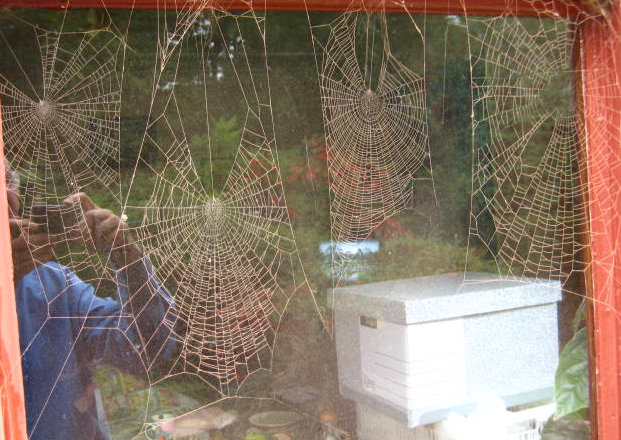
Previously I have had the assistance of red brick dust when our kitchen was extended in 2009.  A total of eight cobwebs on three separate dining room window panes. 

Four cobwebs on dining room windows covered in red brick during work on kitchen extension in 2009. Mick Burton, continuous line artist.

Four cobwebs on dining room windows covered in red brick during work on kitchen extension in 2009. Mick Burton, continuous line artist.

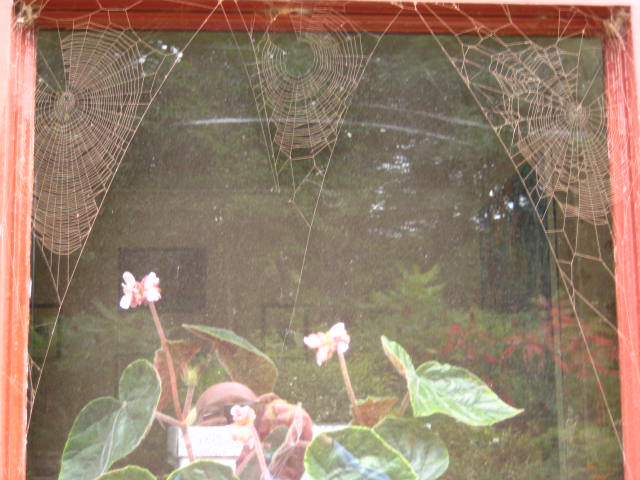
Three cobwebs, on another dining room window, covered in red brick dust in 2009. Mick Burton, continuous line artist.

Three cobwebs, on another dining room window, covered in red brick dust in 2009. Mick Burton, continuous line artist.

Large cobweb, on third dining room window, covered in red brick dust after work on kitchen extension in 2009. Mick Burton, continuous line artist.

Large cobweb, on third dining room window, covered in red brick dust after work on kitchen extension in 2009. Mick Burton, continuous line artist.

Eventually the window cleaner came and sorted all the cobwebs out.

Twisting, Overlapping, Envelope Elephant. Continuous Line Drawing colouring.

“Fluorescephant”, the original version of “Elephant Grass” which is at the top of this continuous line blog, was my first successful Colour Sequence painting.  The sequence ran from yellow through greens to blues in steps of colour and tones which gave a natural three dimensional effect and dynamism.  Part of this was the overlapping nature of continuous lines which was reflected by the successive darker colouring.

The painting was accepted for the International Amateur Artist exhibition, in Warwick Square London, in February 1973 and then a month later in the National Society annual open exhibition in the Mall Galleries.

Fluorescephant. Continuous line drawing with colour sequence. National Society Open Exhibition, Mall Gallery, London, 1973. Mick Burton.

Fluorescephant. Continuous line drawing with colour sequence. National Society Open Exhibition, Mall Gallery, London, 1973. Mick Burton.

I was never totally happy with the colouring.  I thought that there was an extra natural effect, on top of the overlapping, which I was missing.  When I started my art again in 2012, after a gap of nearly 40 years, I once more tried to sort this out.  I realised that I could enhance the twisting of the design and highlight gaps where the outside would show through.

Here is the result, “Twisting, Overlapping, Envelope Elephant”.  Imagine that the continuous lines are describing a sheet of plastic, which is coloured Blue on the front and Red on the back.  Each time a twist occurs, against the outside background, then I colour it Red.  When the overlaps build up, the shades of the blue front go darker blue, and the shades of the twisted areas become darker red.  Where the blue front and the red back occasionally overlap, then I use violet to reflect the mix.

This continuous line drawing is coloured to represent a

This continuous line drawing is coloured to represent a “Twisting, Overlapping, Envelope Elephant”, which is Blue on one side and Red on the other. Mick Burton, 2013.

You can see considerable areas of background colour within the animal showing through. This looks natural within the form of the elephant.

The blue areas, including darker blue overlaps, are the same as the blue areas in the “Fluorescephant”, so it is good to keep a large part of the original colour sequence in this change of style.

Sod’s Law tempered by Nature in Action

I have been improving the lawn.  A bit of filling a deeper area with soil and re-seeding.  It took a few weeks and the green grass had appeared and it looked good.

At this point, the roofer came to re-cover the top of the back bedroom bay window.  We first asked a builder friend of ours to do the job last autumn and he said that his business partner was a roofer and he would do it.  We had to get rid of the wasps first.  Then there were delays due to the frost – the resin reacts badly to frost.  We kept chasing and then a third person was now going to do the job.  Finally I rang my friend, who was upset at his associates for letting us down.  Later that day the third person rang and he would do the job in two days, and actually arrived (I found out later the gist of the conversation that had taken place, builder to builder ! ).

He brought two young blokes who actually did the job.  They had not been up on the roof long when I noticed a white plastic lid spinning down from the roof.  It landed slap bang in the middle of my newly seeded grass, which was about 10 yards from the house, inside downwards.  I told the lads and one dashed down the ladder to grab the lid back, saying that “everything would be ok”.  They completed the job and went.

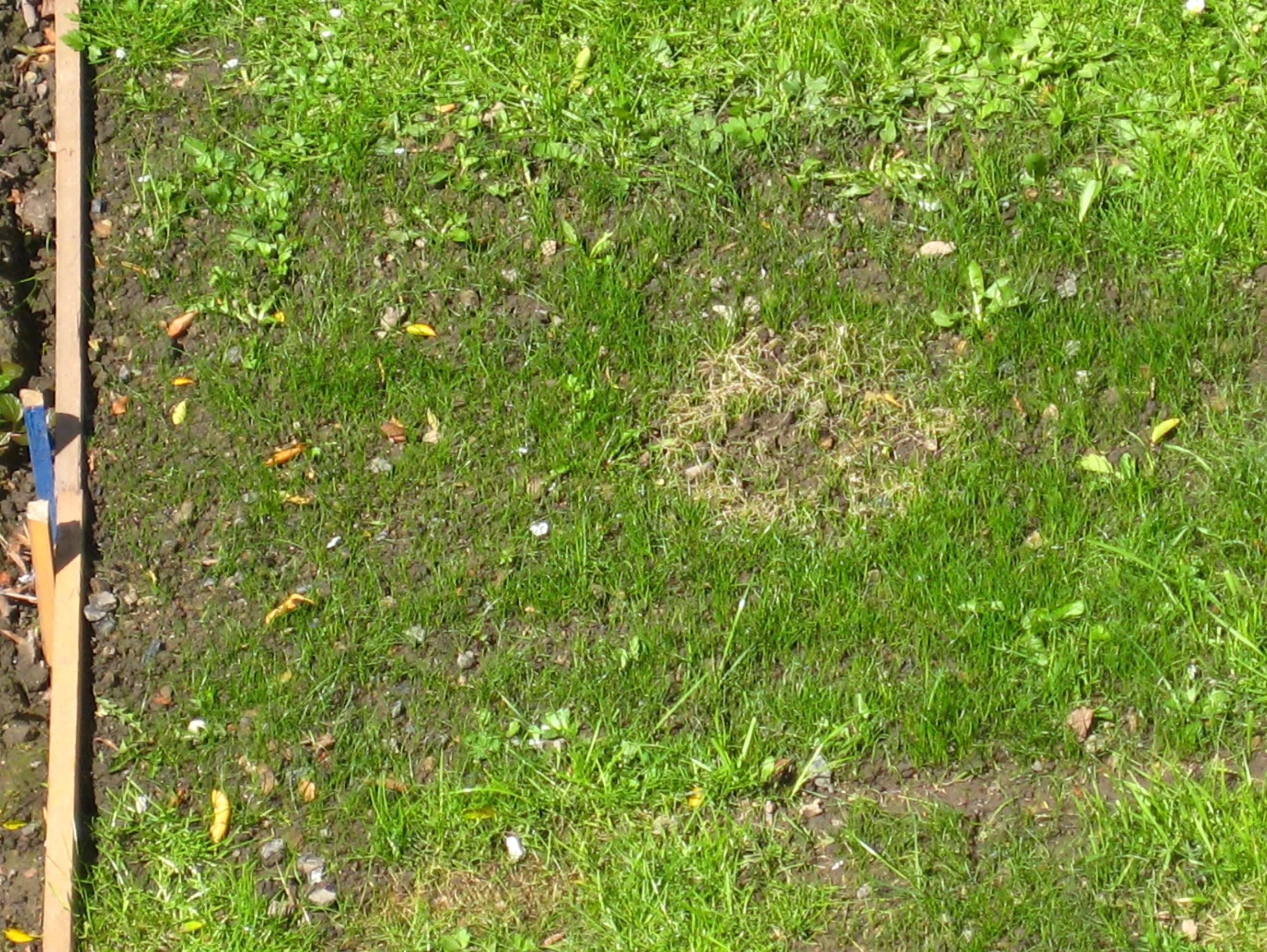
Three days later we looked out of the bedroom window and saw a round white patch in the middle of the newly seeded area of lawn.  The grass blades had all turned white.

White patch on newly seeded area of lawn, caused by resin from roof.  Mick Burton photo.

White patch on newly seeded area of lawn, caused by resin from roof. Mick Burton photo.

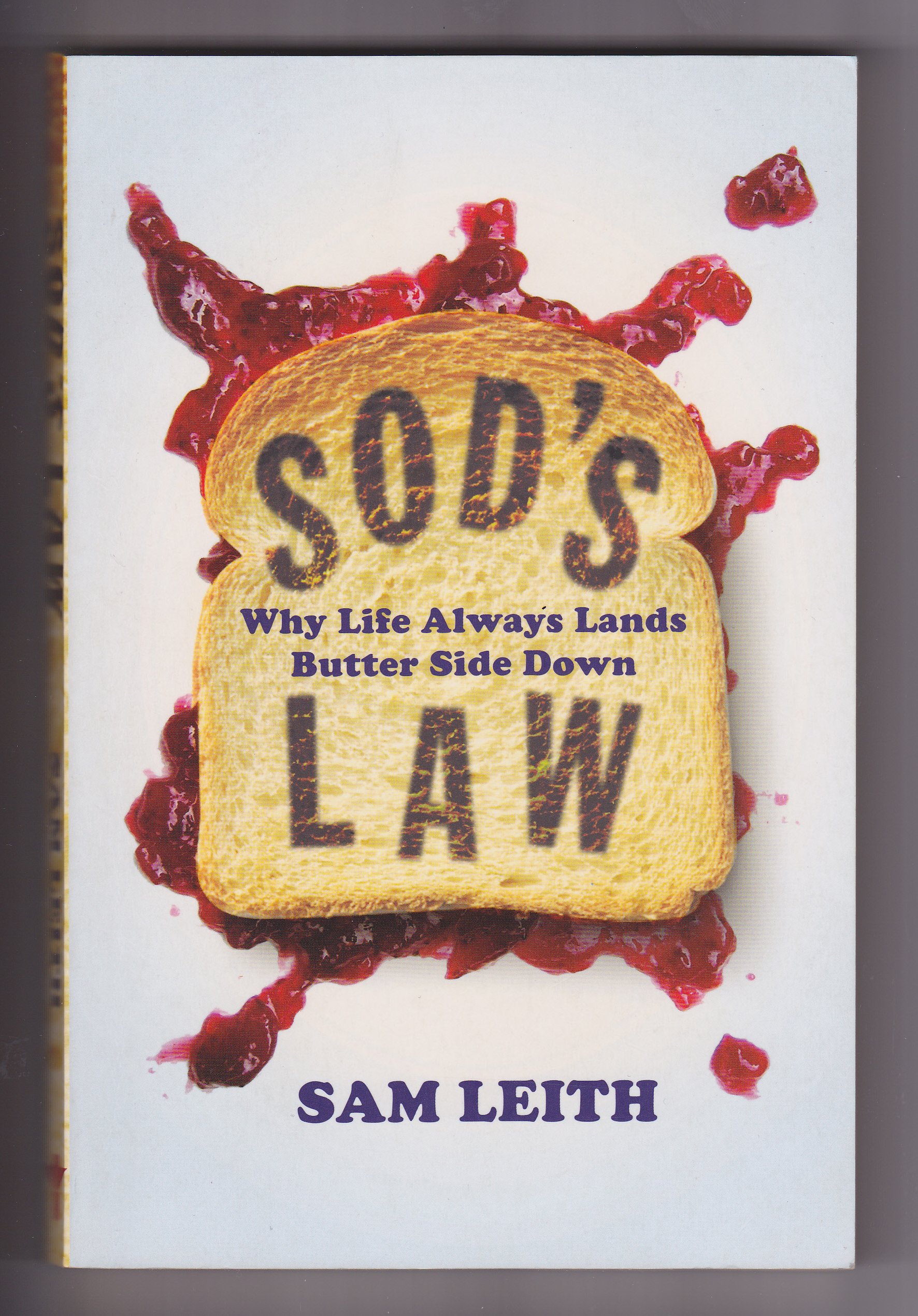
We realised that although the resin may be vulnerable to frost it could be lethal to grass.  At the time I was reading a book entitled “Sod’s Law”, sub-titled “Why life always lands butter side down”.  I was also reading a book I had borrowed called “Time” by the nature and landscape sculptor Andy Goldsworthy.  He sets up sculptures in natural surroundings and watches how they cope with the elements.  In his early days it might be a “frost shadow” or a continuous line drawn with a stick on the beach.  I wondered whether Sod’s Law or nature would win in the battle for my new grass.

“Sod’s Law” by Sam Leith, Atlantic Books.

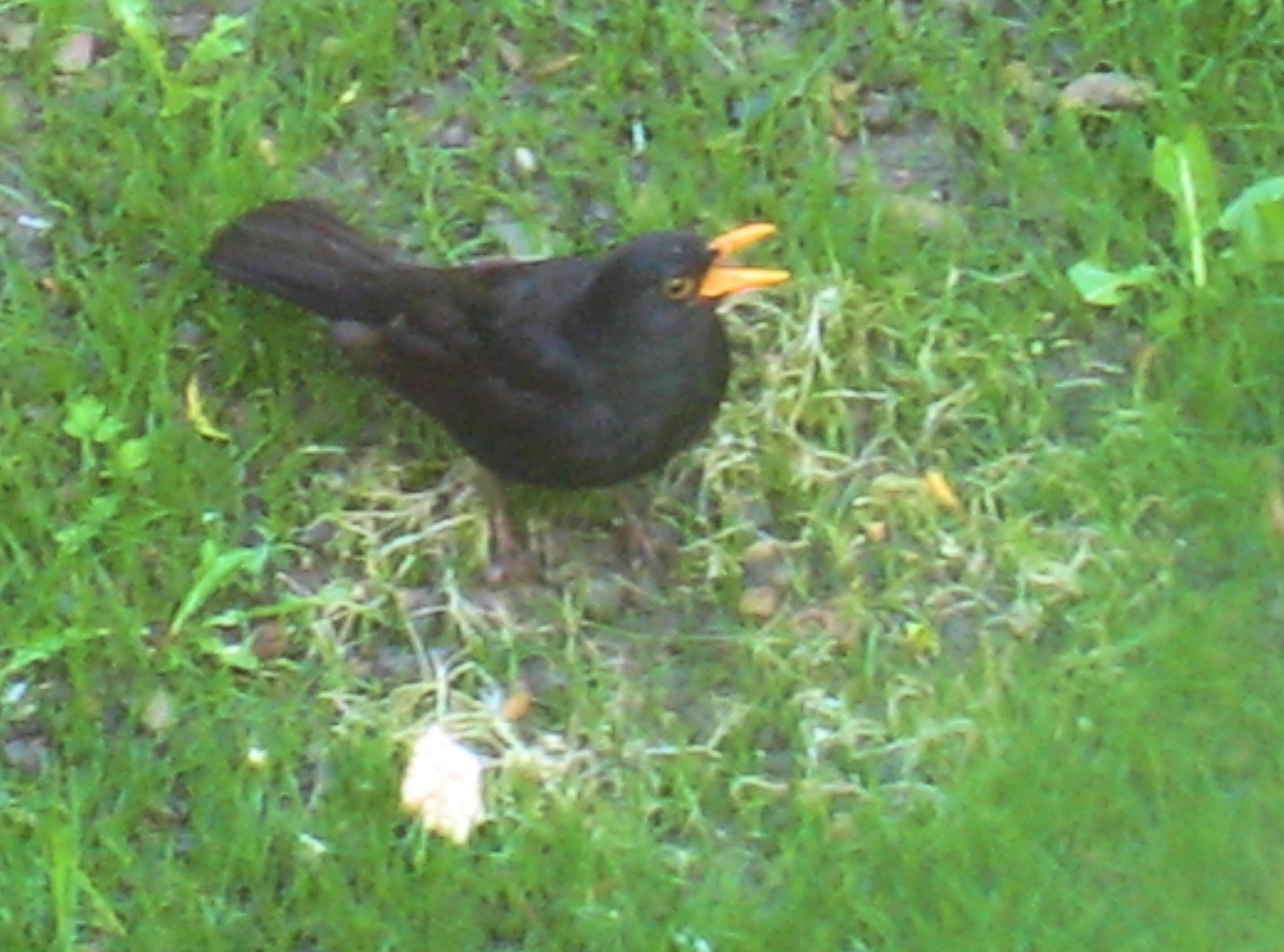
Two days later, Joan called me to the window.  Standing in the middle of the white patch on the lawn was our local blackbird.  It had brought a piece of bread and had dropped it.  He spent 10 minutes on the patch pecking away.  Had the resin lured all sorts of bugs and worms to the surface?  Could I class this as another of my Black and White creations?

Blackbird standing in white patch for 10 minutes, finding all sorts of treats.  Mick Burton photo.
Blackbird standing in white patch for 10 minutes, finding all sorts of treats. Mick Burton photo.
The blackbirds have been busy recently. They built a nest behind the small willow under the eves of the garage 10 feet from the kitchen window.  We were looking forward to the view of the chicks, but next door’s cat kept sitting on the garage roof just above the nest.  So they built another nest in the holly bush higher up the garden.

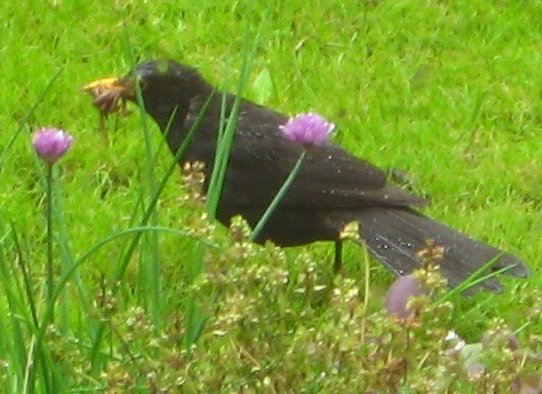
The blackbirds always provide much entertainment.   Last year we saw one fill its mouth full of worms in the front garden.

Blackbird last summer with a mouth full of worms.  Mick Burton photo.

Blackbird last summer with a mouth full of worms. Mick Burton photo.

Rhinoceros and Ostrich continuous line drawings

Rhinoceros, continuous line drawing with colour sequence.  Based on Mick Burton demonstration.

Rhinoceros, single continuous line drawing with colour sequence. Based on Mick Burton demonstration.

I did a demonstration and workshop at Horsforth Arts Society, in Leeds, in January 2015.  It was a freezing evening and I parked outside in a narrow back street.  This club is an end terrace house, extended into the next house I think, and they have sole use.  No one had arrived, but I was encouraged by a notice in the window “Demonstration of Continuous Line Drawing by Mick Burton at 7.30pm”.  Shirley, who arranged demonstrations, arrived but could not unlock the door.  I managed to open it.

So we were in and I could cart all my kit and pictures up the stairs and decide on my set up.  Joan came with me to help and the room soon filled up with friendly, expectant, members.  Shirley had seen me demonstrate at another club and gave an encouraging introduction.

After showing several pictures of my animals, mentioning a bit about my past and going through the basics of how to do a continuous line animal, it was time to do my first drawing before the members had a go themselves.

Firstly I put my key marks on a sketched Rhinoceros, showed how to join up the marks in the main areas such as the head and legs and asked the members to start on their own subjects whilst I connected up more lines.  I completed a rough and ready version of the Rhino, which a few weeks later I spruced up and added colours as above.  It is in the Harrogate and Nidderdale Art Club spring exhibition this weekend.

The members of the club completed pictures of animals or people with lines, but with a great variety of styles.  I did not insist on complete continuous lines, as the main idea was that their drawings could flow, and many good results emerged.  Several coloured in their creations.

Whilst they continued with their pictures, or started new ones, in the second half I started an Ostrich.  I did the head and neck and put some key marks elsewhere and invited members to come up and have a go at parts of the ostrich with my thick marker pen.  Several did and we arrived at the result below.  It has about three different lines going and a few dead ends.  This is fine at an early stage of my continuous line drawings, before loose ends are then connected up and one continuous line arrived at along with modifications to pattern and smoothing.

Ostrich continuous line, demonstration drawing by Mick Burton, with the assistance of members of Horsforth Arts Society.  January 2015.

Ostrich single continuous line drawing, demonstration by Mick Burton, with the assistance of members of Horsforth Arts Society. January 2015.

I thanked them for their help and in later weeks produced the picture “Ostrich Egg” below.  It has two continuous lines, one of which is the coloured Egg.

Ostrich Egg, continuous lines.  Based on Mick Burton demonstration.

Ostrich Egg, single continuous line drawing. Based on Mick Burton demonstration at Horsforth Arts Society.

A black pen version of the Ostrich is currently in the Association of Animal Artists annual exhibition.

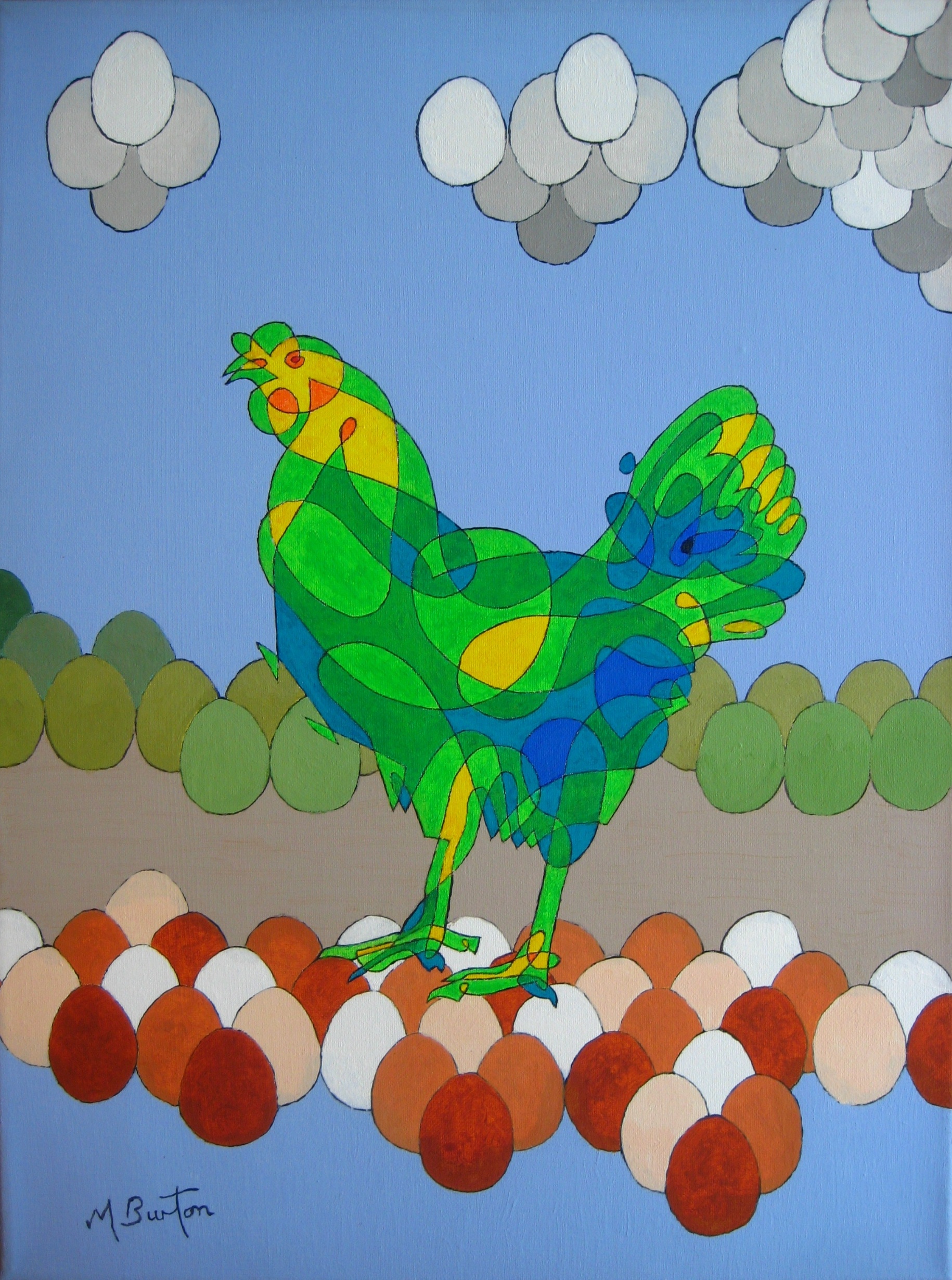
I quite like including eggs in pictures.  “Harriet’s Busy Day”, which now resides in Worcestershire, was a finalist in Britain’s Got Artists in July 2012.

Harriet's Busy day.  Continuous line with colour sequence.  Background based on eggs.  Mick Burton, 2012.

Harriet’s Busy day. Single continuous line drawing with colour sequence. Background based on eggs. Mick Burton, continuous line artist 2012.

 When I showed the Hen picture to my sister Wendy she said  “Why have you stuck all those eggs to the ceiling”.

Continuous Line Drawings at “British Wildlife” Exhibition, Martin Mere.

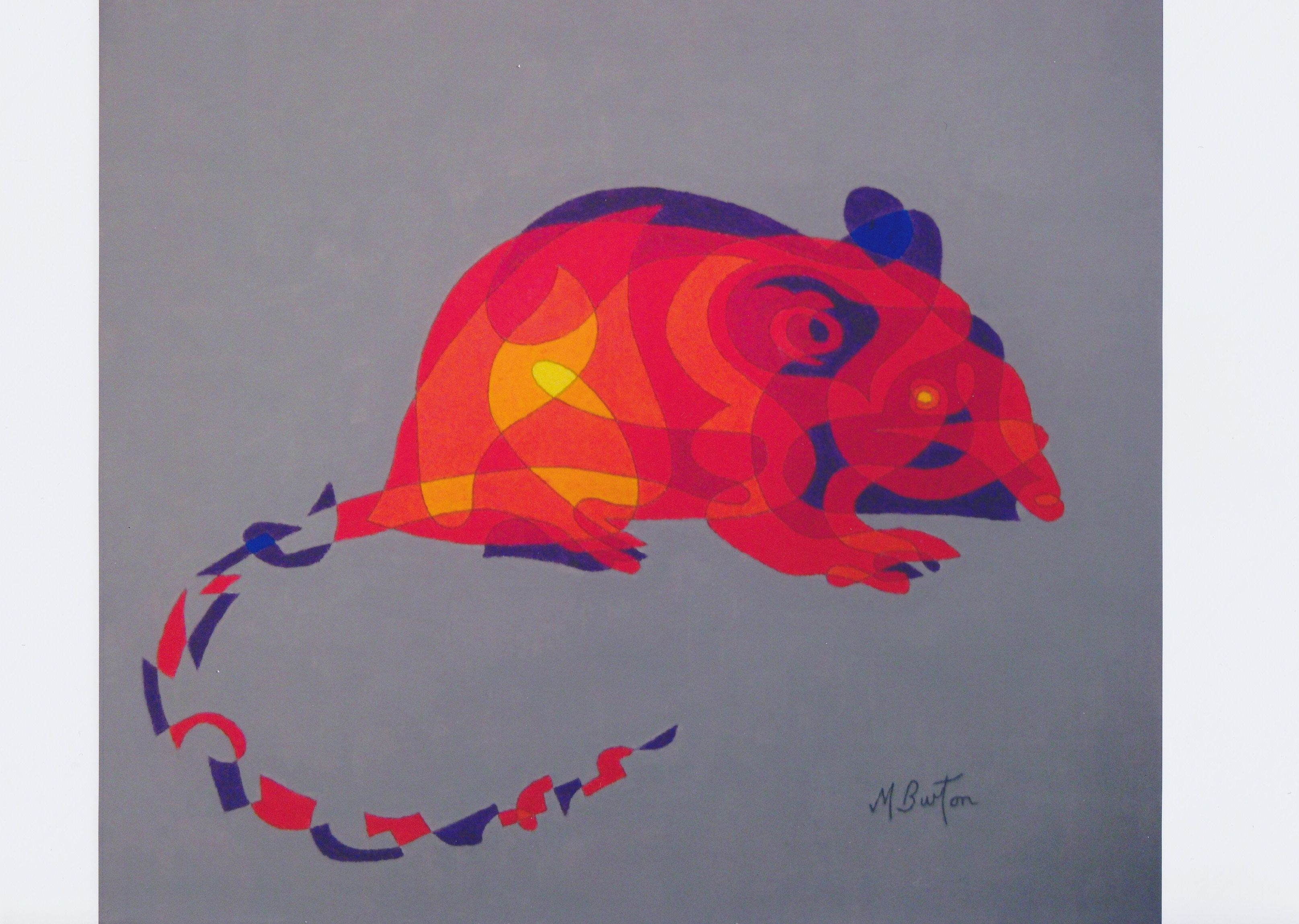
"Mouseman Mouse" based upon Robert Thompson carved mouse.  Association of Animal Artists  "British Wildlife" Exhibition, Martin Mere, February & March 2015.  Mick Burton, Continuous Line Drawings.

“Mouseman Mouse” single continuous line drawing based upon Robert Thompson carved mouse. Association of Animal Artists
“British Wildlife” Exhibition, Martin Mere, February & March 2015. Mick Burton, Continuous Line Artist.

This is my second year taking part in the Association of Animal Artists exhibition at Martin Mere Wetlands Centre, Lancashire.  “British Wildlife” runs until 29 March 2015.  My chosen wildlife submissions are “Mouseman Mouse and “Gledhow Foxes Sunbathing”.

My grandad George Burton was born in Kilburn, North Yorkshire, and when I was young my Dad took me to the Church in Kilburn and pointed out the carved mice which appeared on the church furniture.  They were carved by Robert Thompson, who was at school with Grandad, and his family still run the furniture business in Kilburn which is now world famous.

As time went on I found out so many things about Robert “Mouseman” Thompson and his mouse trademark.  It seemed natural that I should do a  mouse in my continuous line drawing style and colour sequence.

Robert "Mouseman" Thompson's trademark carving on the Altar rail in Kilburn Parish Church, North Yorkshire.  Picture by Dave Sumpner at English Wikipedia.

Robert “Mouseman” Thompson’s trademark carving on the Altar rail in Kilburn Parish Church, North Yorkshire. Picture by Dave Sumpner at English Wikipedia.

Dad told me that Grandad and Robert were drinking companions in the late 1890’s and he passed on some stories of those times.

A man went to the pub in Kilburn with his groceries every day before setting off home.  He always went home over the “beck” footbridge, which had vertical rails with strappings through them.  The man habitually stopped half way across, sat on the straps and lit his pipe.  Grandad and others loosened the straps one day and the man later fell into the water.  There was a lot of “fuss” about that.

Another regular at the pub always parked his horse and trap outside and, of course, regardless of how much he had had to drink the horse could find its way home.  One night he came out of the pub and boarded the trap, not realising that the horse had been turned around between the shafts.  He drove off backwards to crash into the church wall.

I attended a talk by one of the Thompson family over 40 years ago in Leeds Central Library and spoke to him later.  He said that each wood carver had his own style of mouse.  Old Robert’s mouse had become very simple, like a wedge of cheese, and they called it “grand prix” mouse.

"Gledhow Foxes Sunbathing".  Association of Animal Artists "British Wildlife" exhibition, February & March 2015.  Mick Burton, Continuous line drawing.

“Gledhow Foxes Sunbathing”. Association of Animal Artists “British Wildlife” exhibition, February & March 2015. Mick Burton, Single Continuous line drawing.

I saw a fox cub at the east end of Gledhow Valley Woods when walking the Airedales over 30 years ago.  Since moving here foxes have regularly been in the garden in the day time.  Last summer they took up sun bathing at the top of the lawn virtually every day for a period.  This usually included a prolonged period of scratching.

When we were completing the patio, with the help of Helen, Janet and Richard, a fox came and sat at the top of the garden and watched.  He had the demeanour of an “overseer” or a General overlooking a battle.  On another day there were two of them sitting up there and they reminded me of the “King and Queen” sculpture by Henry Moore which I saw up on the hill at Yorkshire Sculpture Park in 1987.

Poster for Henry Moore exhibition at Yorkshire Sculpture Park, 1987.

Poster for Henry Moore exhibition at Yorkshire Sculpture Park, 1987.


Continuous line blog by Mick Burton.

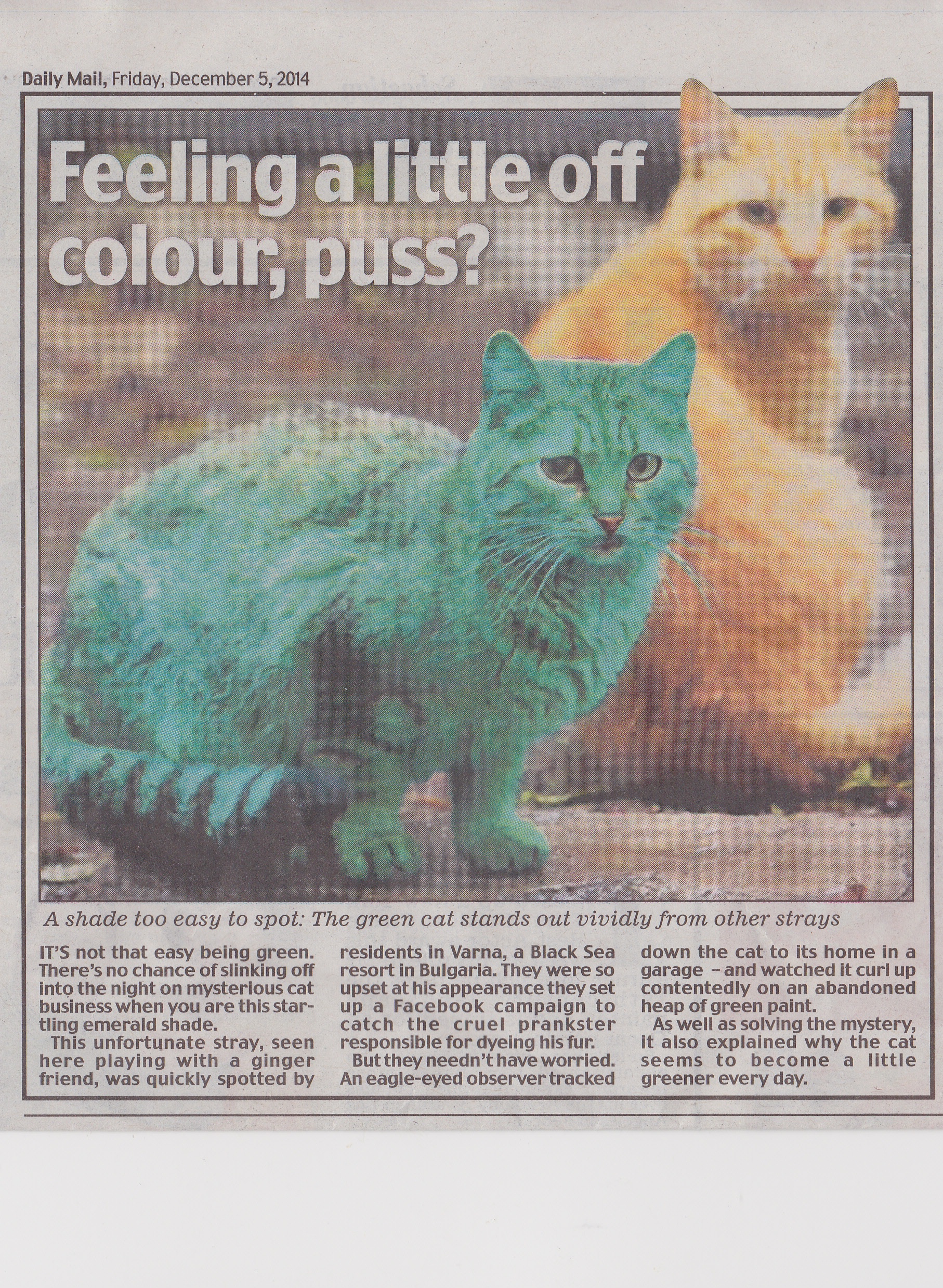
Show me a real Green Cat.


Cat who slept on a heap of old green paint. Daily Mail, December 5, 2014.  Mick Burton, continuous line drawing.

Cat who slept on a heap of old green paint. Daily Mail, December 5, 2014. Mick Burton, continuous line drawing.

I always thought that Green was a natural colour for a cat done with my continuous line drawing, but I never realised that one would appear. Here we are, in the Daily Mail report on a cat who is actually green and wandering around quite happily. It turns out that the cat slept in a garage on an abandoned heap of green paint.

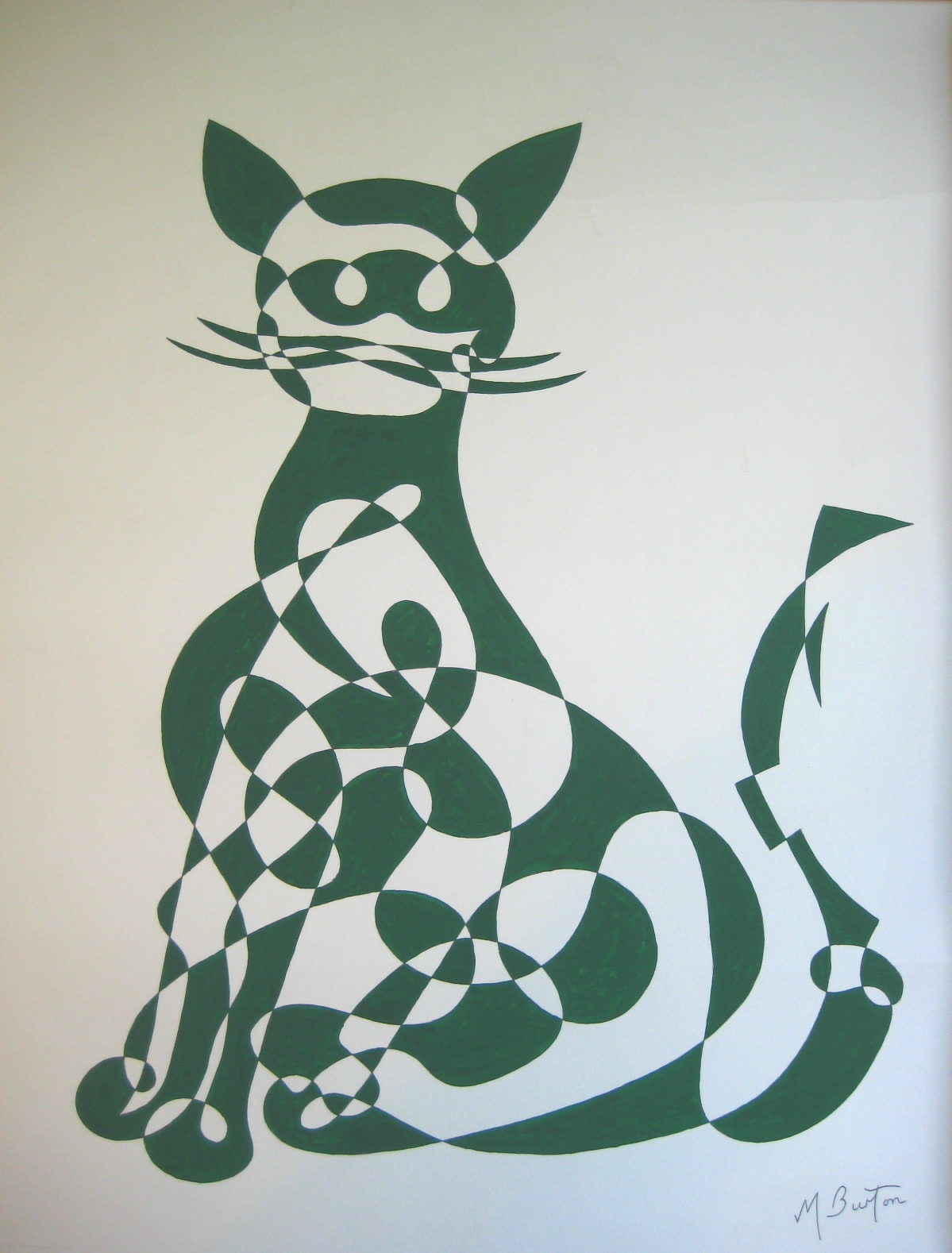
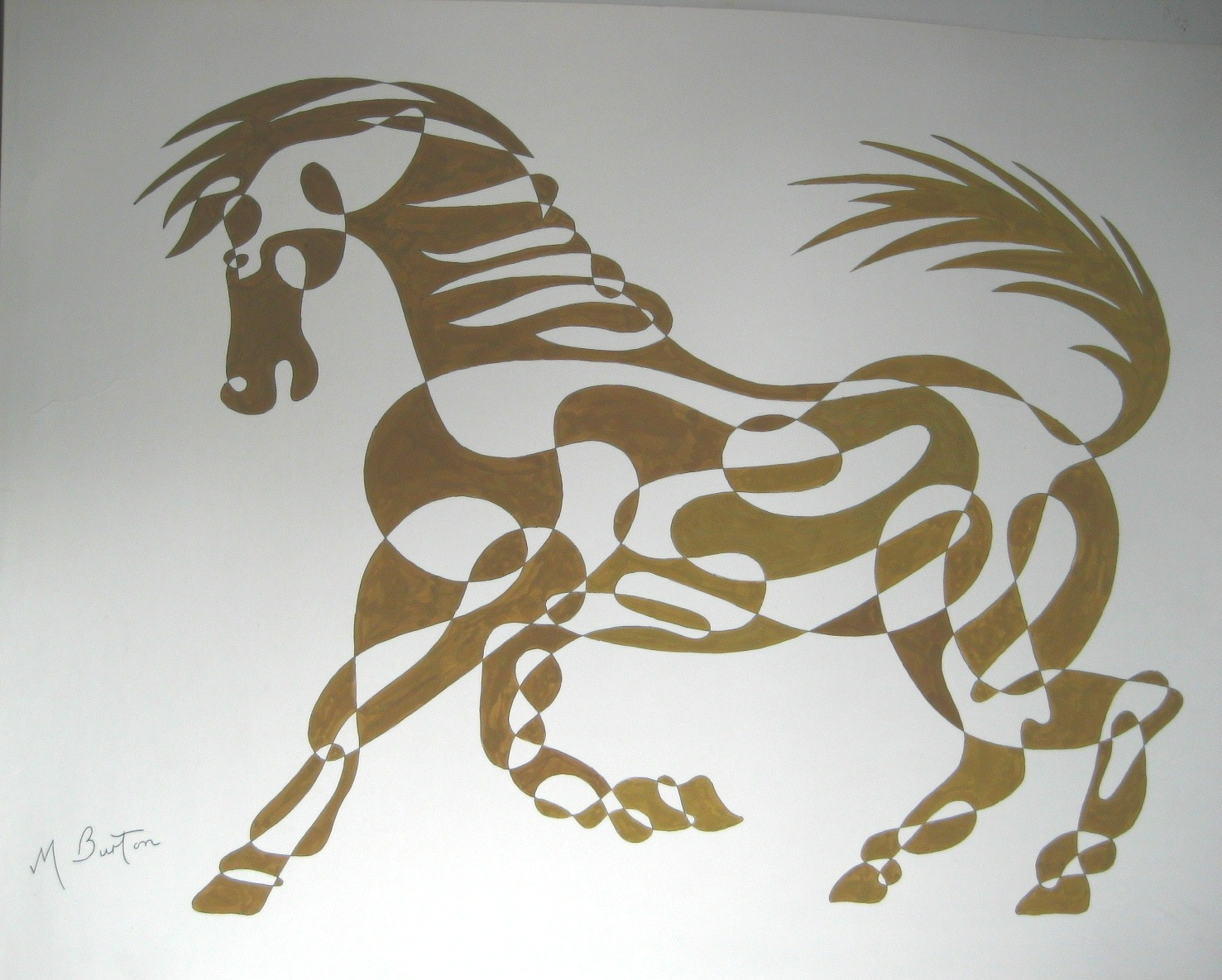
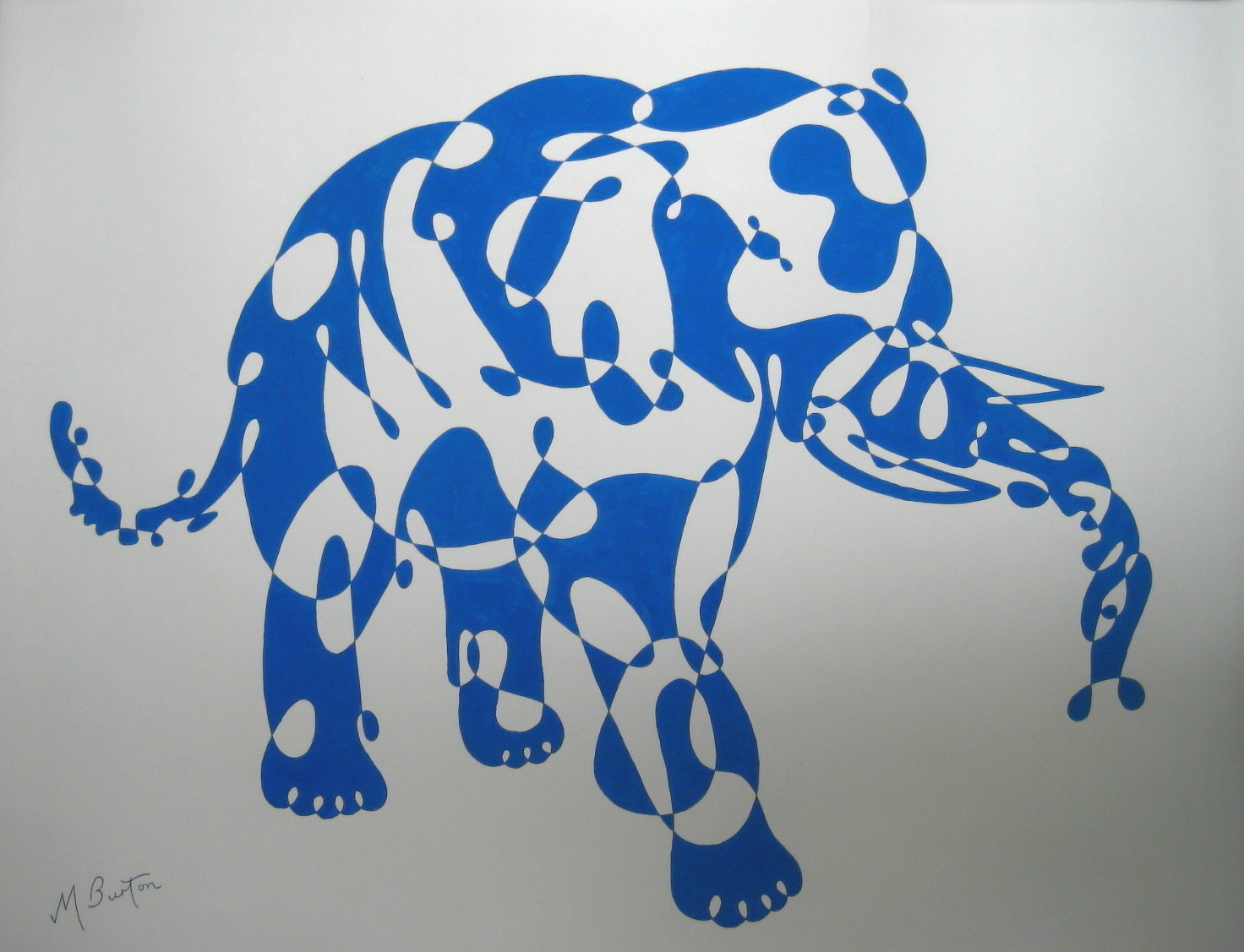
My original Green Cat was created in 1969 as one of four animals sold to J Arthur Dixon Ltd., a greetings card company that was based on the Isle of Wight.  They produced sets of Notelets with them on, sold in little cardboard boxes.  Here are the four designs.

Green Cat, continuous line drawing and alternate shading, by Mick Burton.  Notelet design for J Arthur Dixon Ltd, Isle of Wight, 1969.

Green Cat, single continuous line drawing and alternate shading, by Mick Burton. Notelet design for J Arthur Dixon Ltd, Isle of Wight, 1969.

Golden Horse, continuous line drawing and alternate shading, by Mick Burton.  Notelet design for J Arthur Dixon Ltd, Isle of Wight, 1969.

Golden Horse, single continuous line drawing and alternate shading, by Mick Burton. Notelet design for J Arthur Dixon Ltd, Isle of Wight, 1969.

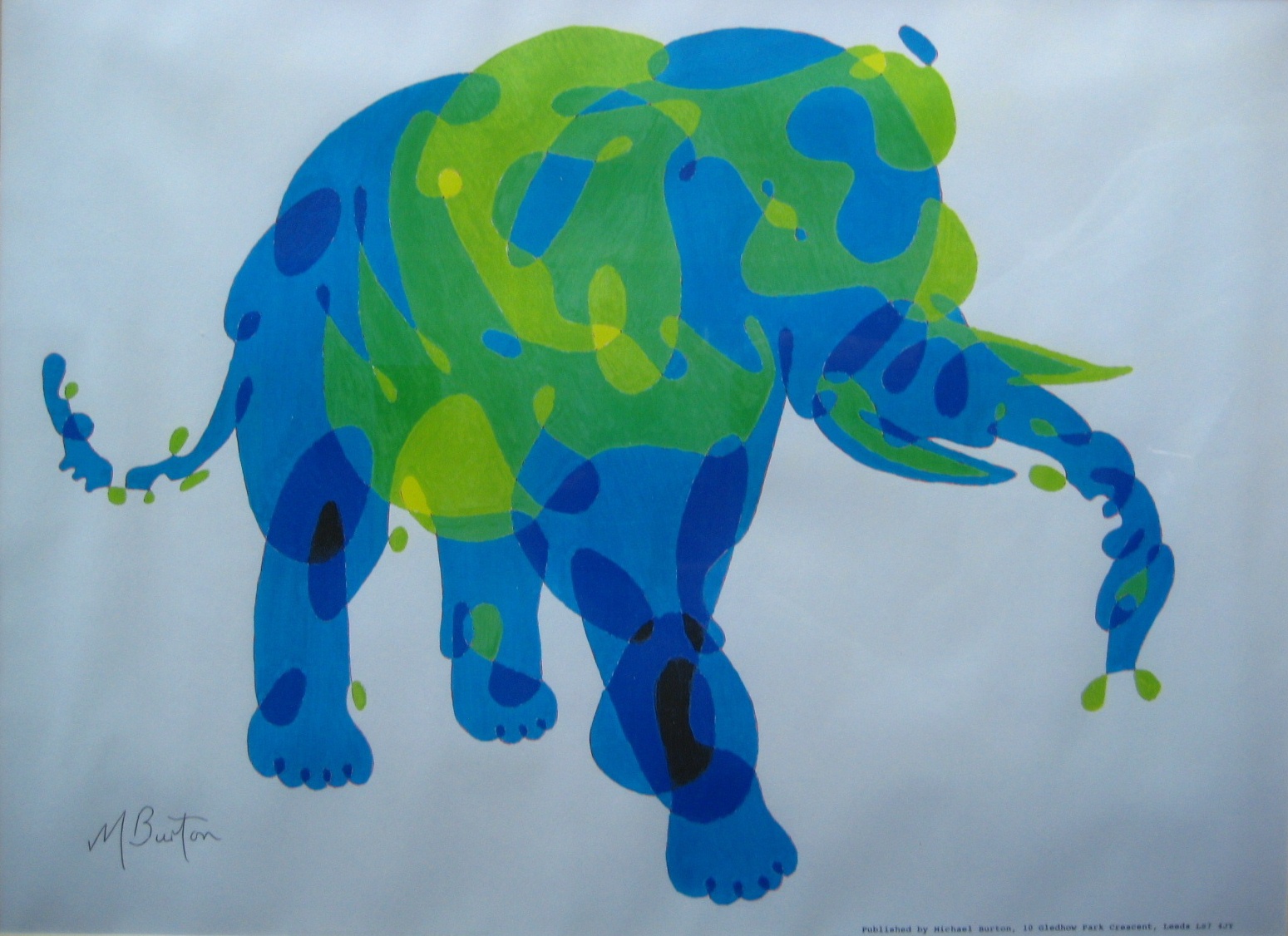
Blue Elephant, continuous line drawing and alternate shading, by Mick Burton.  Notelet design for J Arthur Dixon Ltd, Isle of Wight, 1969.

Blue Elephant, single continuous line drawing and alternate shading, by Mick Burton. Notelet design for J Arthur Dixon Ltd, Isle of Wight, 1969.

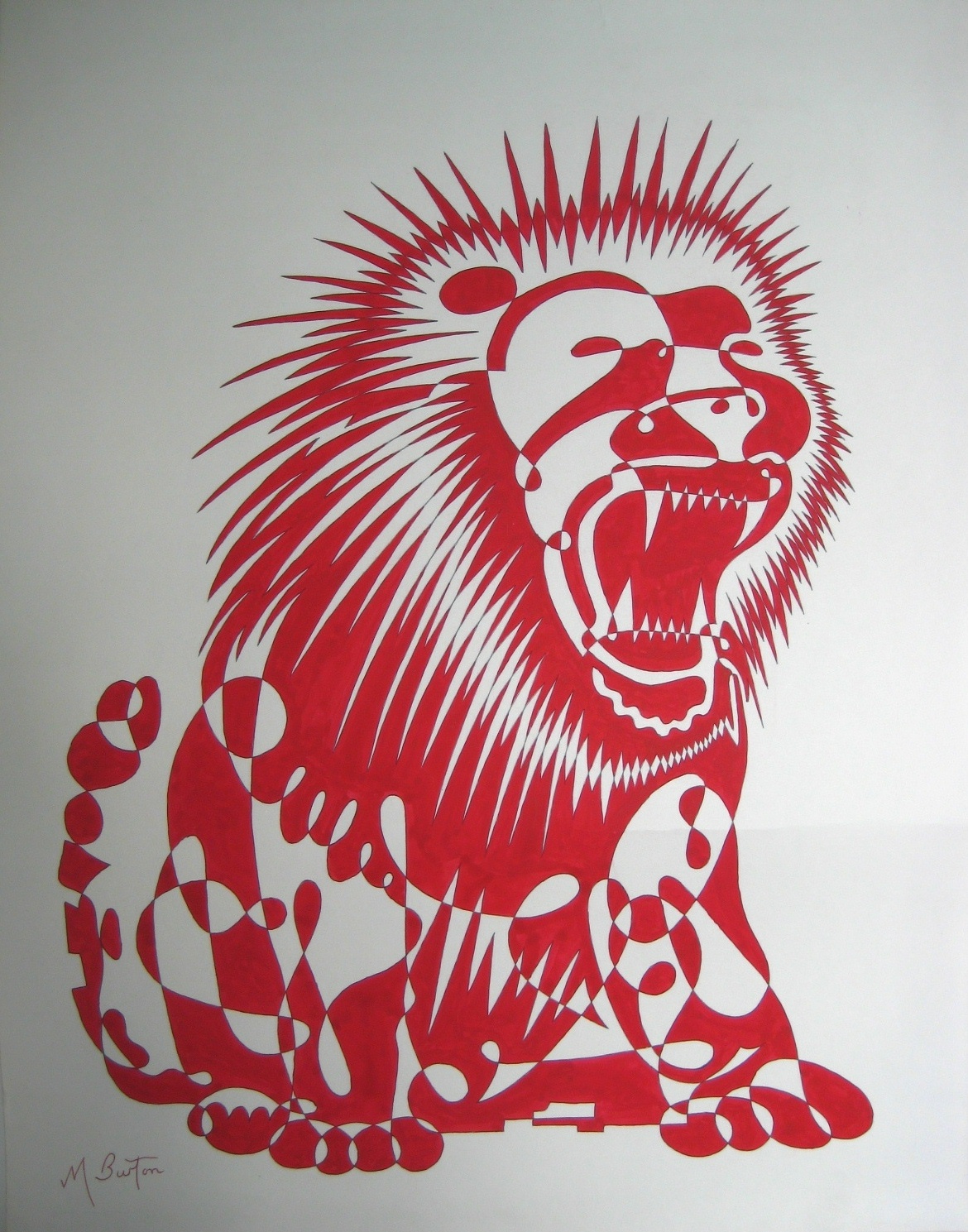
Red Lion, continuous line drawing and alternate shading, by Mick Burton.  Notelet design for J Arthur Dixon Ltd, Isle of Wight, 1969.

Red Lion, single continuous line drawing and alternate shading, by Mick Burton. Notelet design for J Arthur Dixon Ltd, Isle of Wight, 1969.


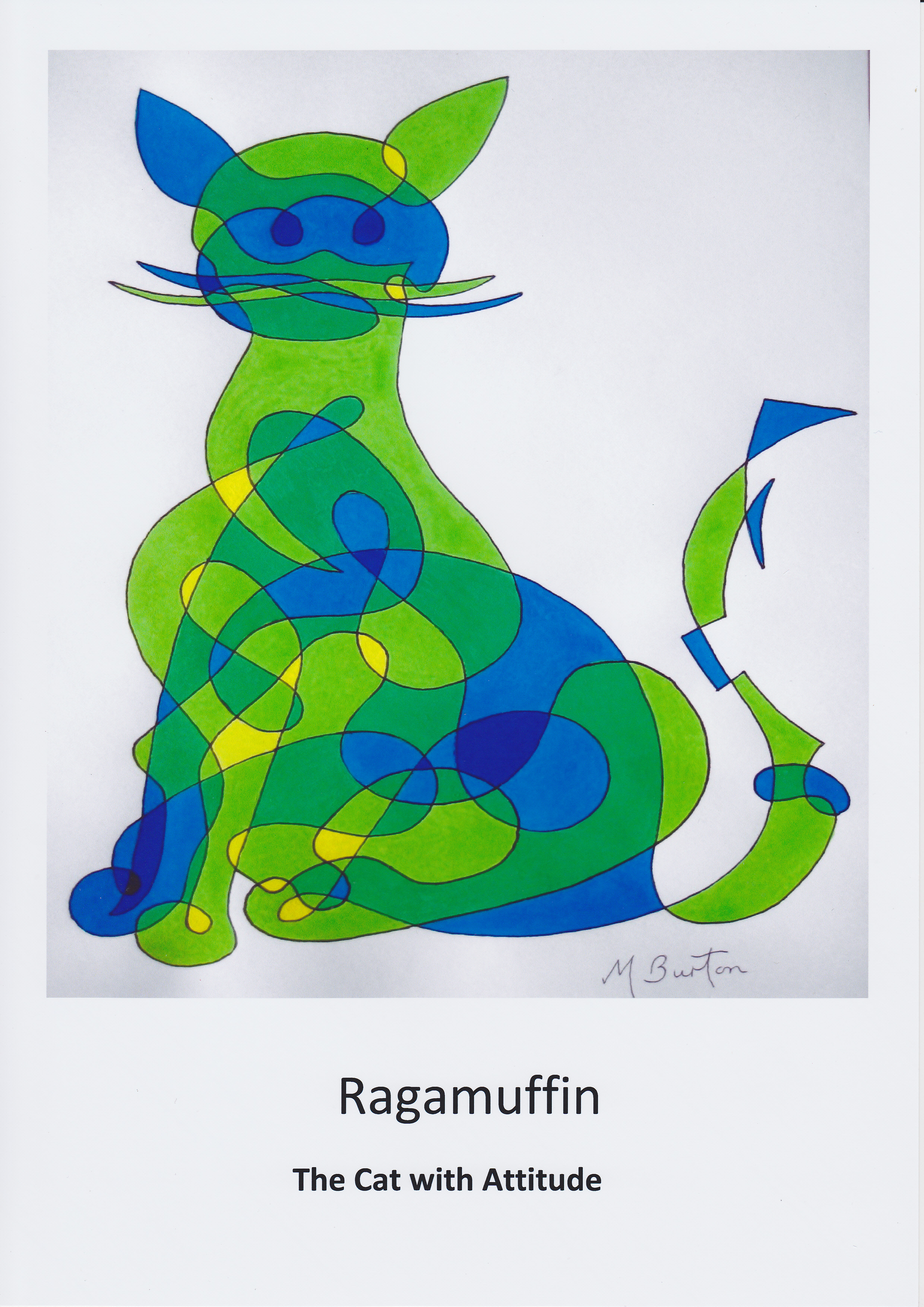
I continued the Green theme for a cat when I started producing my own greetings cards in 2013. This time I used colour sequence from yellow, through greens to blues.

The narrative on the card is about a cat that we had who used to get into all sorts of scrapes. His real name was Sandy and he looked a bit like the cat in the background in the Daily Mail photo above.</strong

Ragamuffin, green cat, continuous line drawing with colour sequence.  Greetings Card (front)  by Mick Burton.

Ragamuffin, green cat, single continuous line drawing with colour sequence. Greetings Card (front)
by Mick Burton.

Ragamuffin, continuous line drawing with alternate shading.  Rear of Greeting Card by Mick Burton.

Ragamuffin, single continuous line drawing with alternate shading. Rear of Greeting Card by Mick Burton.

>

Herons on Gledhow Valley Lake

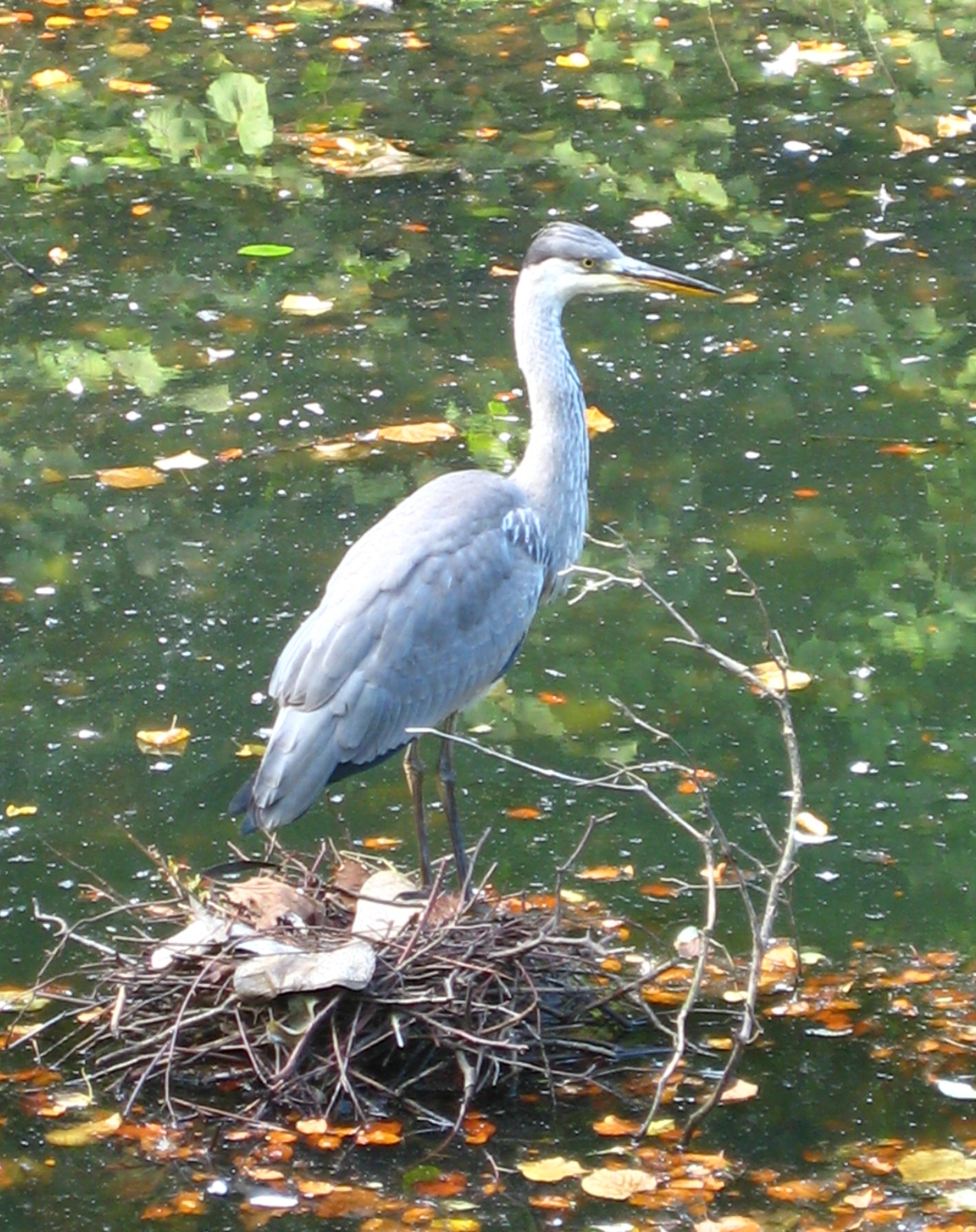
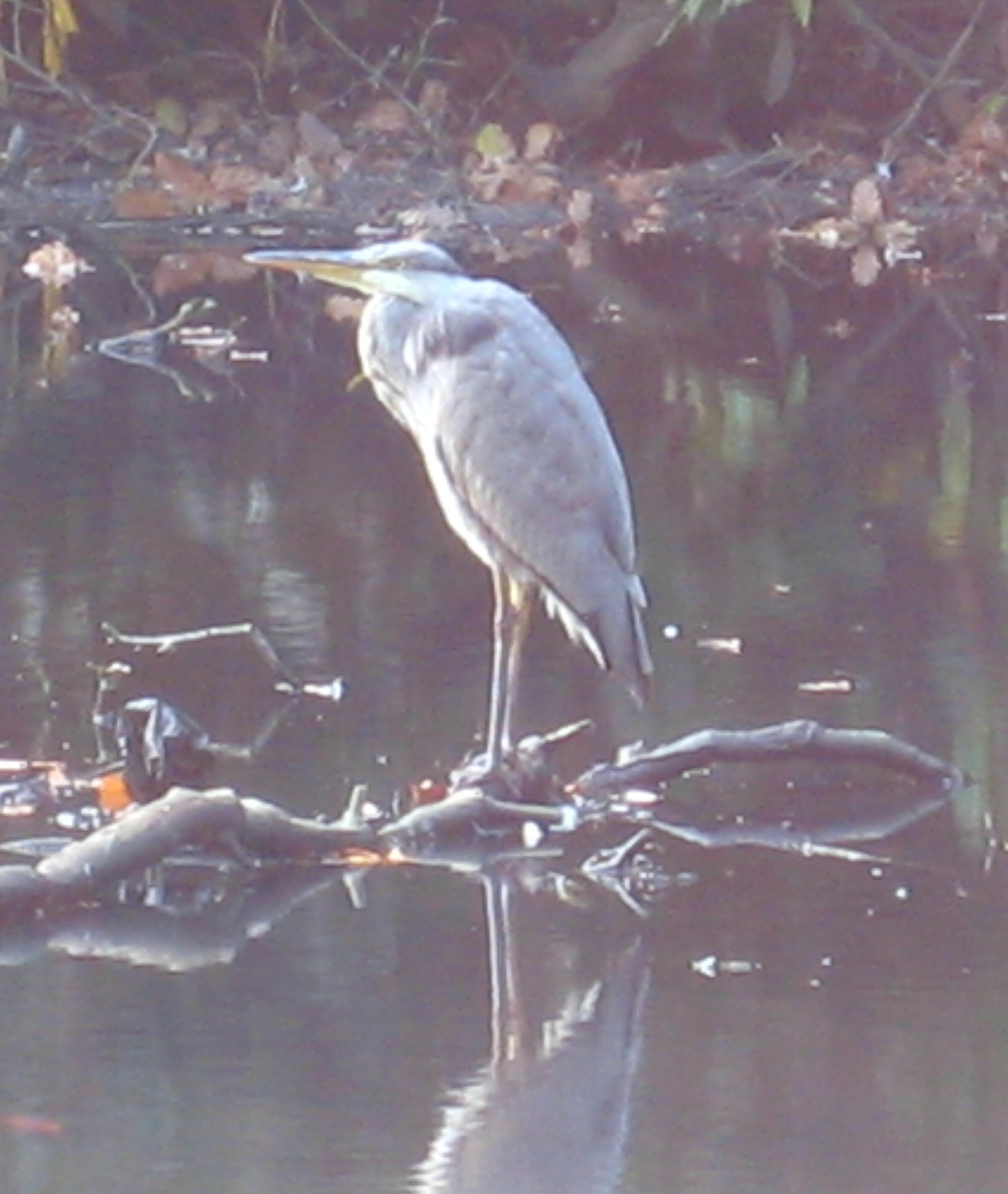
Young heron on Gledhow Valley Lake, Leeds, September 2014. Photo Mick Burton, continuous line artist.

Young heron on Gledhow Valley Lake, Leeds, September 2014. Photo Mick Burton, continuous line artist.

I am an artist who draws and paints quite a lot of animals and birds and it is great to live in a wooded valley which has a stream and a large lake and plenty of wildlife.

Our house is at the East end of the woods, which stretch for about  a mile.  There is a road running the length of the valley, which goes near to the edge of the lake.  Gledhow Beck feeds the lake from  the west  and a road from Chapel Allerton crosses the valley and stream and then winds up a steep south facing slope known locally as “Little Switzerland”.

I have lived in Gledhow Valley, at two different addresses, for nearly 40 years.

There have been swans on the lake for many years and of course ducks , moorhens and coots.  In recent years we have seen a heron, mainly on the other side well away from the main viewing stage.

Older Heron, Gledhow Valley Woods, Leeds, September 2014.  Photo by Mick Burton, continuous line artist.

Older Heron, Gledhow Valley Woods, Leeds, September 2014. Photo by Mick Burton, continuous line artist.

In the last couple of months there have been two herons and I took the attached photos a month ago.  The older heron (see left) was still quite a distance away but the young one (see above) was more accommodating and I took quite a lot of photos from the dam on the East end of the lake.  My bird watcher friend Bernard says that the young heron will be about a year old.  It seemed to be catching small fish in its beak.

About a week previously Joan had spotted a Heron sitting up in a tree in the next garden to ours.  I was too slow to get the camera before the bird flew off, but it seemed to be looking down into the beck which runs past a neighbour’s garden.  This would probably have been the young heron.

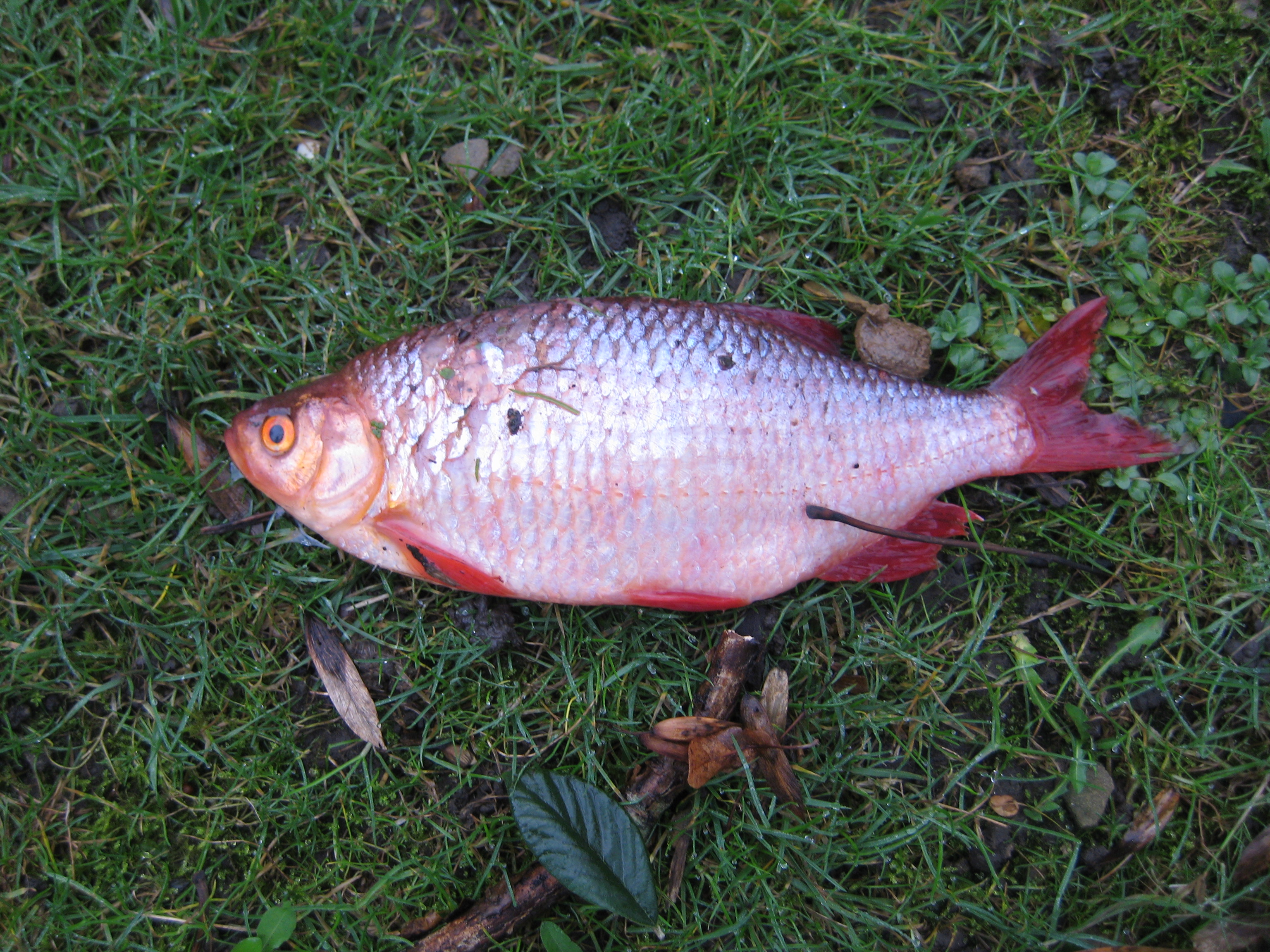
I then remembered an incident  earlier in the year, in January, when Joan found a fish on the back lawn.  It was 9″ long and I photographed it (see below).  We could not understand how it got there and our friend Jerry, who is a keen fisherman, said that it was either a Rudd or a Perch and it looked slightly damaged on its side.  Possibly a heron was passing by with the fish and dropped it !

Rudd or Perch fish, 9

Rudd or Perch fish, 9″ long, found on lawn. Maybe dropped by heron. Photo by Mick Burton, continuous line artist.

The photo shows a largish animal dropping above the tail, which could be from a Fox (we see one most days in the garden – even two at once last week) maybe claiming title to the fish.  We left the fish there and it disappeared.

Our enjoyment of the valley is greatly helped by the Friends of Gledhow Valley Woods who once a month organise volunteers (including Joan, and occasionally me) to collect litter and do all sorts of development work and repairs on paths, seats, signs, etc.  They hold an Annual Fair and an Open Day of the Well House, or Gipton Spar Bath House, which was built in 1671.