Author Archives: mickburton2

Unknown's avatar

About mickburton2

I am an Artist in Leeds, fascinated by Continuous Line Drawings. I first developed my style and ideas in the 1960's and early 1970's.

Definition of “Continuous Line Drawing”

As I mentioned in my first blog, there are many definitions of “Continuous Line Drawing”, most of which refer to a line which does NOT re-connect.

One of these is that the pen never leaves the paper and you draw until the picture is finished, but that you start and end where you like.  Also “Blind Contour Drawing” puts emphasis on looking at the subject throughout whilst you draw a single line.  These types may also have many merged lines and it may be unclear whether there is only one line, eg. when shading is done by repeatedly going over an area with the line.

To me, a line is only Continuous if it ends at the start point.  Lines that do not re-connect I call “One Line” or “Single Line”.  I only use the word “Continuous” if the line completes a circuit continually.   I own a book entitled “Picasso’s One Liners” which has over 50 of his great drawings, which all start and end in different places and, correctly, there is no mention of “Continuous”.
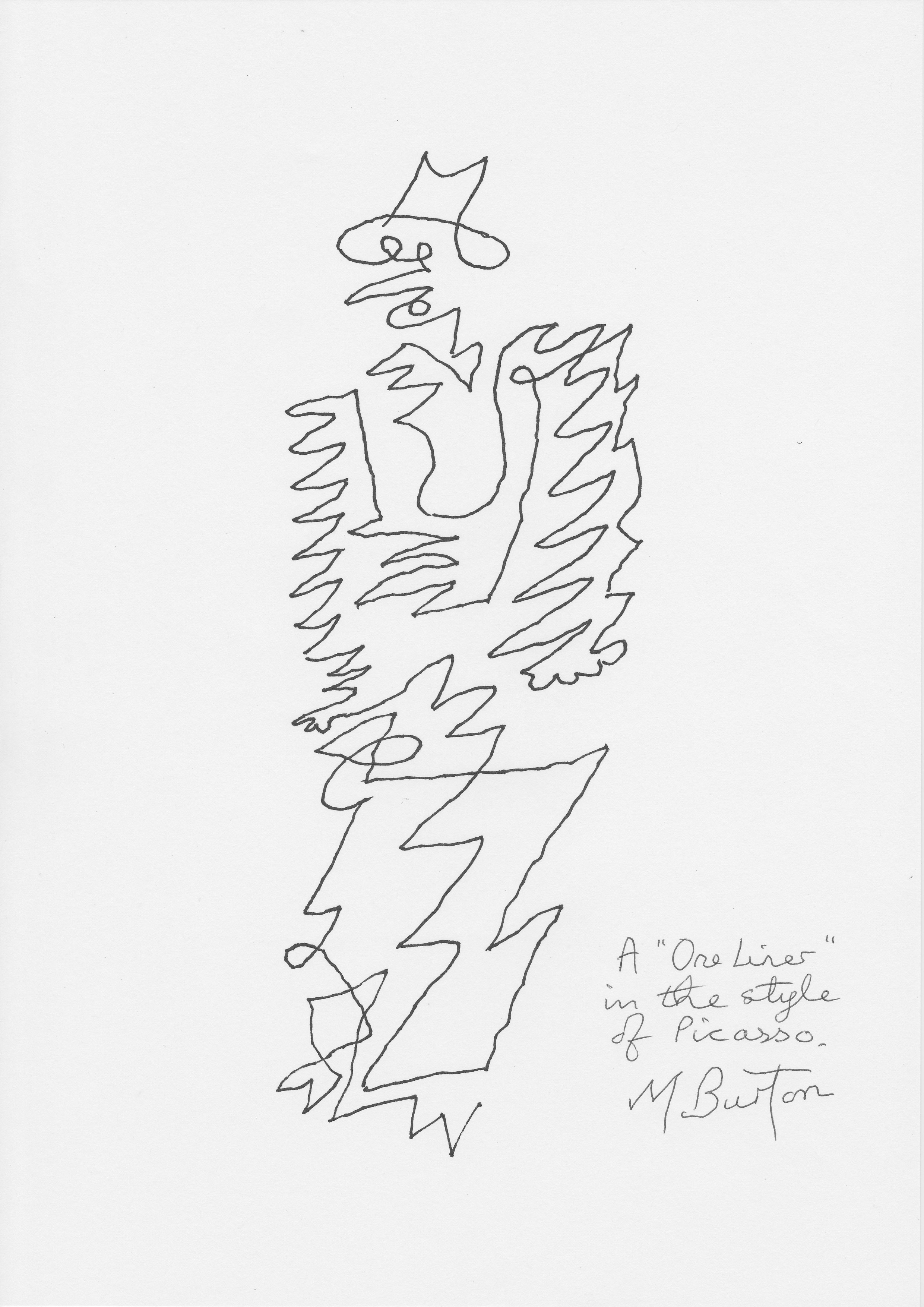
A One Liner in style of Picasso. M BurtonHere is a demonstration drawing I did last year based on a Picasso “One Liner”.  To be “Continuous” the line would need to return from the foot to the start point in the hat.


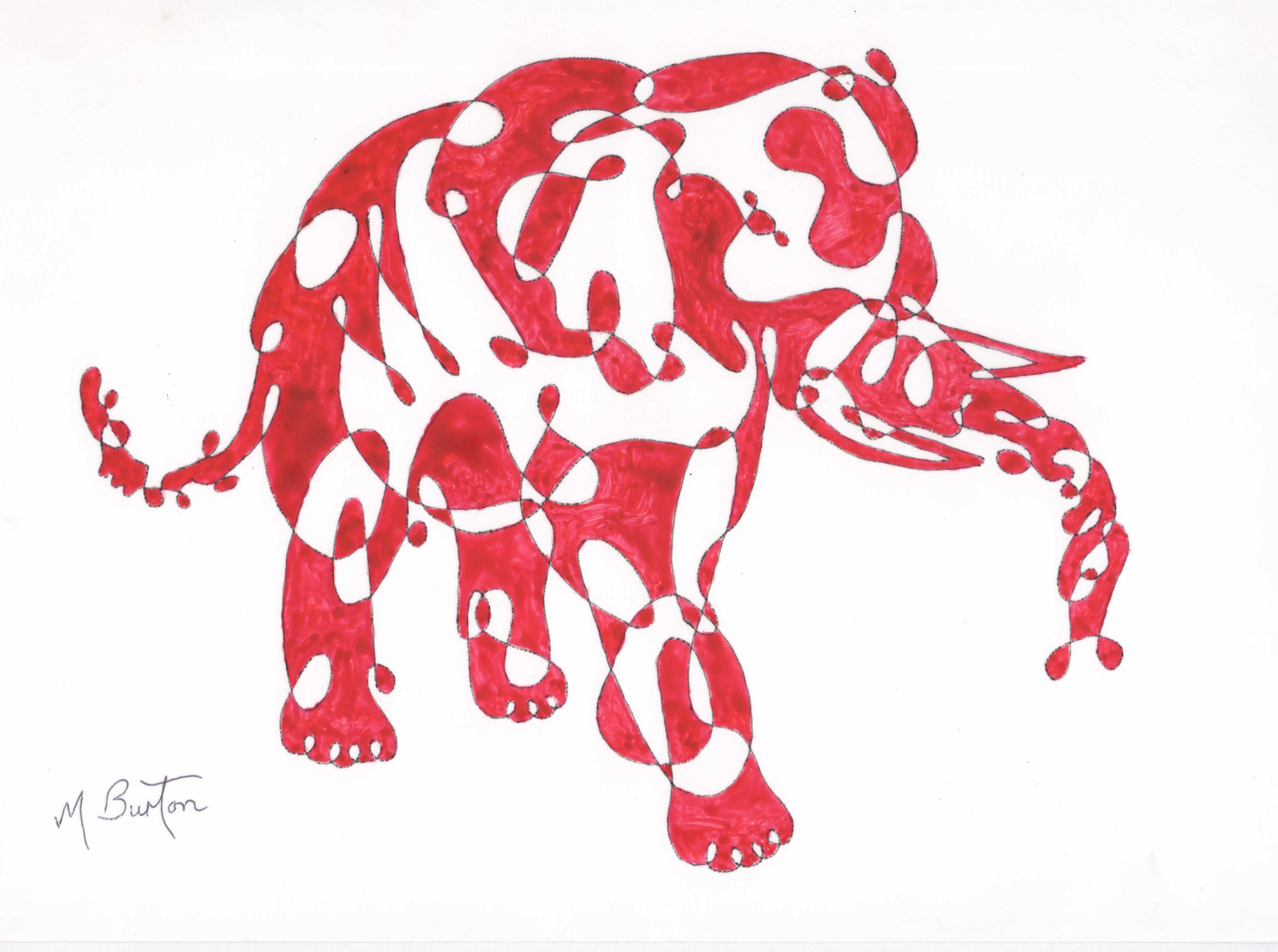
My definition of “Continuous Line Drawing” is one drawn line which ends back at the start point and the continuous route can be clearly followed throughout.Elephant,. Continuous  line drawing.

My basic style has lots of cross overs of the line, but some artists produce continuous lines which never cross over – which is fine.

Here are the “rules” of my basic style, where the line crosses over itself many times.


  • The finished continuous line has to cross over itself at least once, but must end where it starts.  It can be drawn in sections as long as the completed line is continuous (you don’t have to amaze everyone by doing it in one go without taking the pen off the paper !)
  • Where the line crosses itself it must be clear that there is only one line (not several merged lines).
  • A line can be drawn off the side of a sheet as long as it clearly re-enters the sheet at the corresponding point on the opposite side.  Similarly, if the line goes out at the top it must re-enter at the corresponding point at the bottom.  This enables the continuous route to be still clearly identified.  I call these “Spherical” drawings, in the way that an atlas map of the earth on a flat sheet denotes a globe.

So that is it !  I just wished to make it clear that most of the images which are referred to on the internet as “Continuous Line Drawings” are not really (to me).
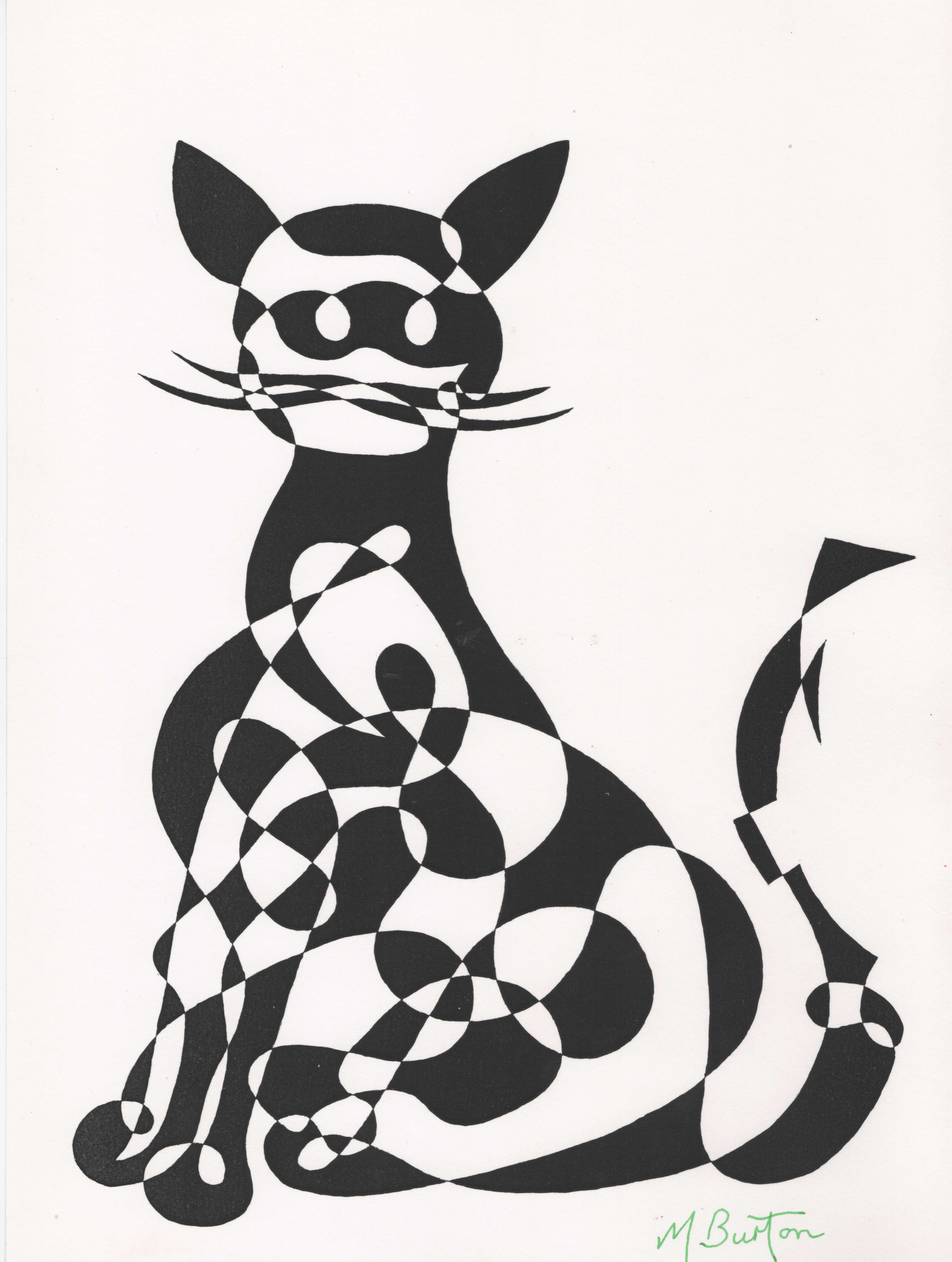
Black and White Alternate Shading

010. 1966-9. Cat, or Ragamuffin. Alternate shade, black. Whilst doodling at work (I was articled to a Chartered Accountant) I was already using alternate shading on some drawings.   I realised that if you initially shaded one outer area on a continuous line drawing, and then worked alternately through the doodle, all outside areas became shaded.   Bridget Riley’s Optical Art (or Op Art) in black and white, with its shimmering effect, suddenly appeared in the early 1960’s.   I started black alternate shading on some of my new figurative drawings.   I now realise that most of Op Art was abstract to make the most of the effect, whereas I was doing animals, people and landscapes.

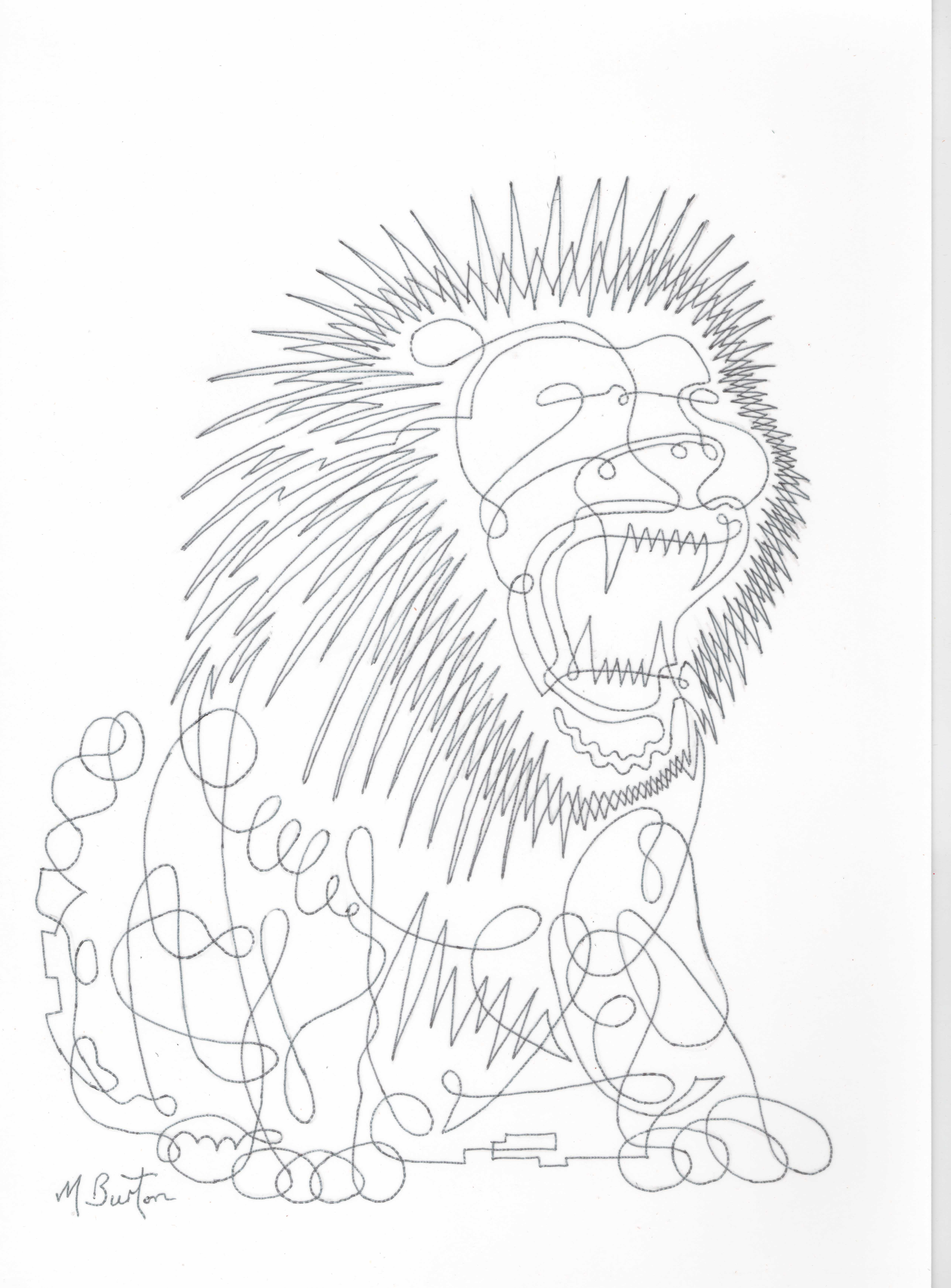
My Lion in particular produced its own shimmering effect.
016. 1967-9. Lion. Alternate shading, black.


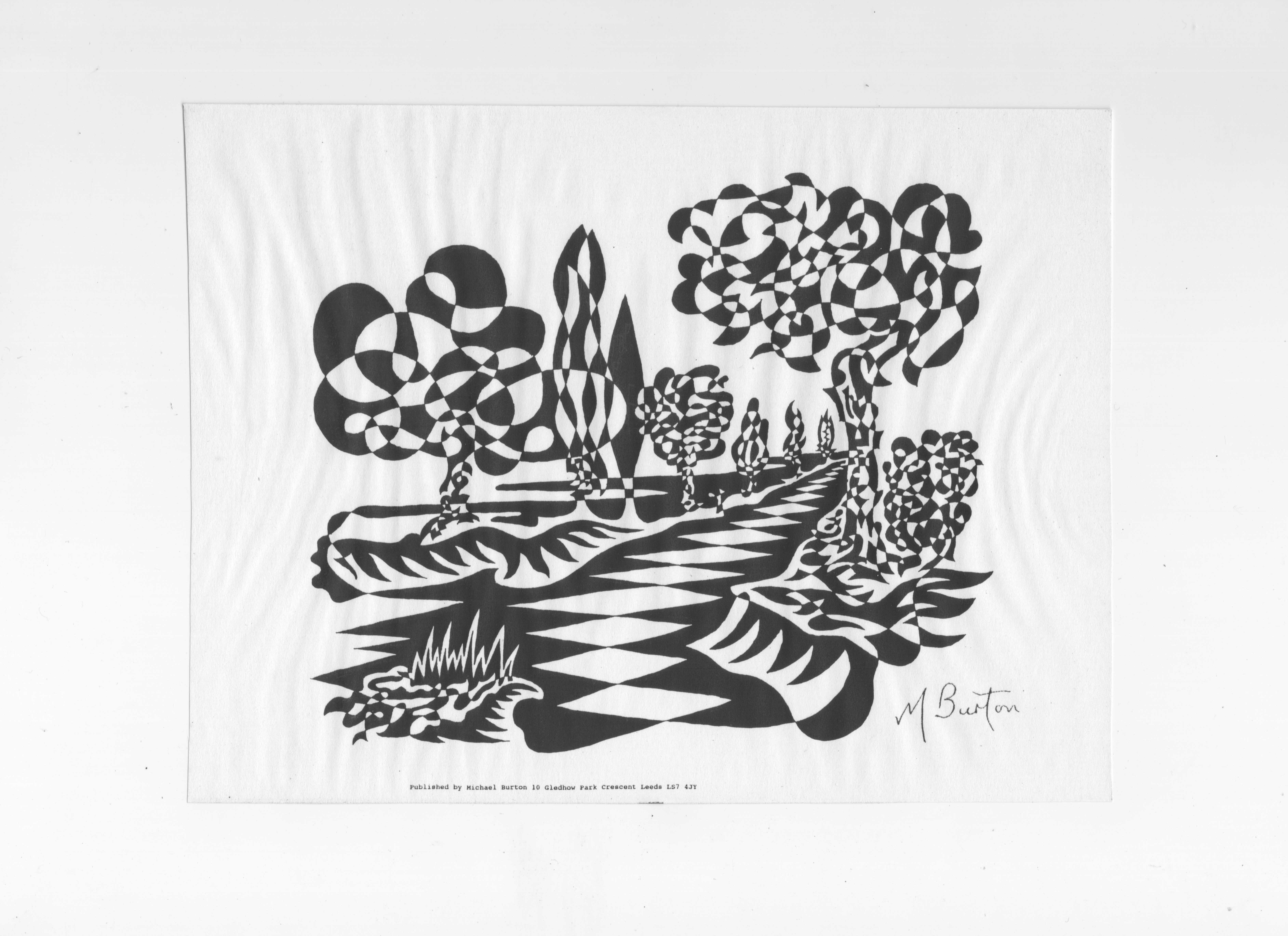
To extend the scope of my continuous line drawings, along with the alternate shading, I had a go at a landscape based upon the countryside where I grew up near Ripon and called it Skelldale.   I could walk along the banks of the River Skell upstream to Fountains Abbey.

006. 1966-7. River, Skelldale. Alternate shading, black.

An exception to the abstraction in Op Art was Zebras (in 1937) by Victor Vaserely, in which he used the black and white stripes of intertwined zebras, and it was one of the very first Op Art pictures.   He then became largely abstract in the 1950’s.   He was unknown to me until several years after I started in 1965.

This was In about 1971 when I walked past Christies Auction house in London, when taking my pictures to an exhibitions agent, and I saw through a window some black and white abstract drawings which had a similarity to mine.   I went in and was amazed at the variety of drawings, so many having aspects which I had experimented with.   The lowest estimate was £14 and I considered leaving a bid, but I decided that it was a lot of money (then) and that I had similar ones at home (stupid boy).   A week or so later I read in the newspaper that Vaserely had been selected to design the emblem for the next Olympic Games (1974).   I should have left that bid !


Association of Animal Artists Annual Competition Winner !

Mick Burton.  PANTHER (continuous line drawing).

I joined the Association of Animal Artists in November 2013 and have entered two of their exhibitions so far – at Martin Mere Wetland Centre, Lancashire from December to February, which was for British animals and birds, and now their Annual Exhibition at Castle Park Arts Centre in Frodsham, Cheshire which runs from 11 April to 18 May 2014, for world wide species.

Julie Cross, the AAA Secretary and Exhibitions Co-ordinator has just informed me that my ‘Panther’ drawing has been awarded winner of the ‘Creative Creatures’ category in the annual competition.  She said that the judge, Andrew Beckett, liked all my work, particularly ‘Mayer’ the lion, but plumped for ‘Panther’ because of the apparent simplicity and pared-down nature of the image.

Joan and myself are delighted with the news.  Also my daughter Kate Burton, who is a professional artist and short film maker, has said that the ‘Panther’ is her favourite of my pictures. 

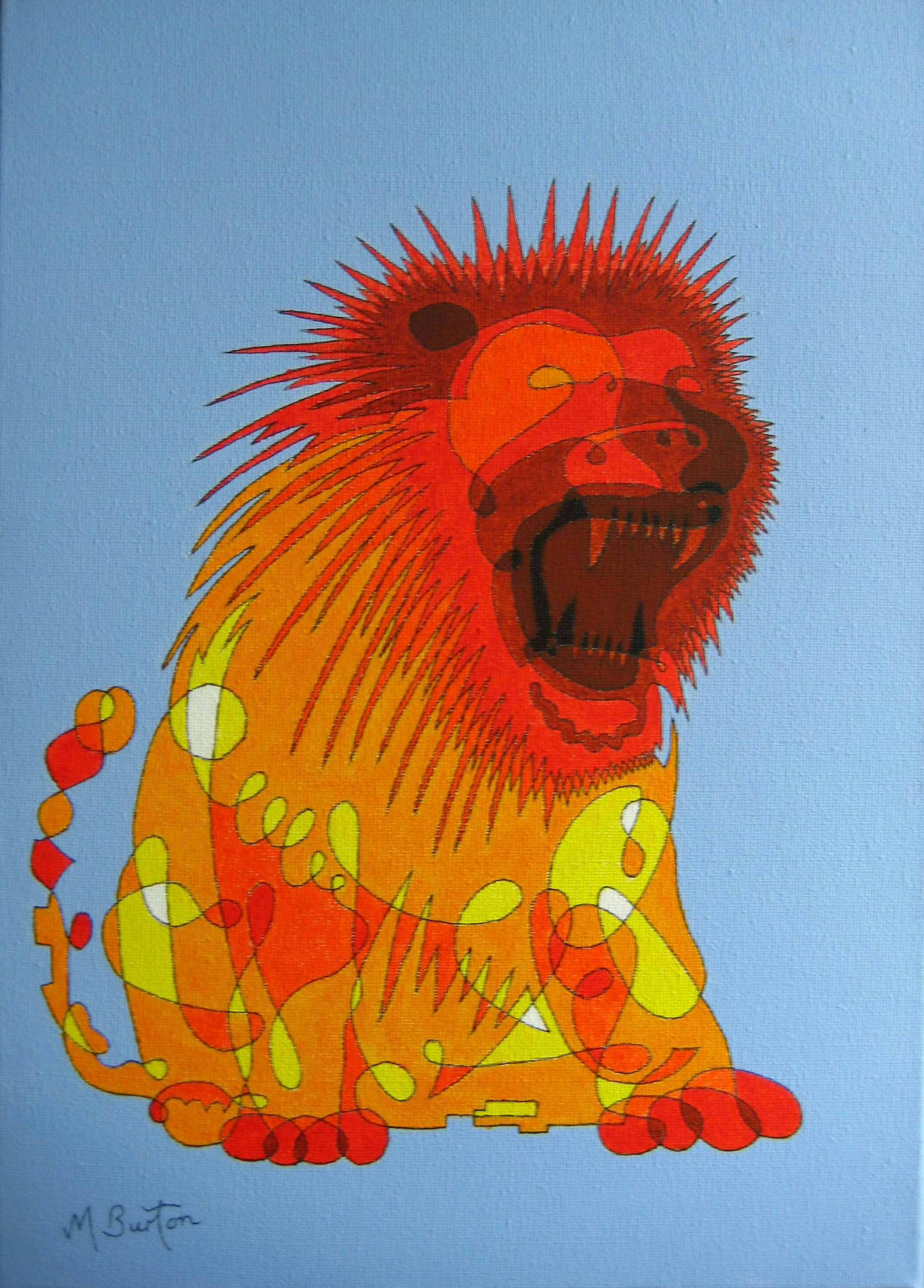
Here is ‘Mayer’ the Lion which I coloured in reds and browns 18 months ago, plus the poster for the current exhibition.

Lion in Continuous Line and Colour Sequence.  Mick Burton, 2012

Lion in Continuous Line and Colour Sequence. Mick Burton, 2012

AAA annual exhib Apr to May 2014.

Animals in My Art – How I Started.

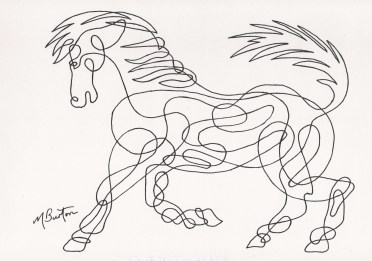
My first Animal drawn with a continuous line was the Horse, which was based upon a painting by George Stubbs, where a horse is savaged by a lion. I used the general image of the horse, but with a calm and flowing style (rather than it appearing to be scared witless).003. 1966-5. Horse. Cont line.The Cat was drawn quickly, in about 15 minutes, without reference to any picture. My main memories of cats in my childhood were at my Dad’s work, a market garden in Ripon where he was the foreman. There were always several cats around, which were kept to control the mice and rats in the gardens. Dad called every one “Tib”. The downside was the periodic drowning of kittens to keep the numbers in check. I particularly liked one cat which always appeared to have been in a fight, and so I drew a dislocated tail on my cat. This sort of tail became a trademark in some later animals.
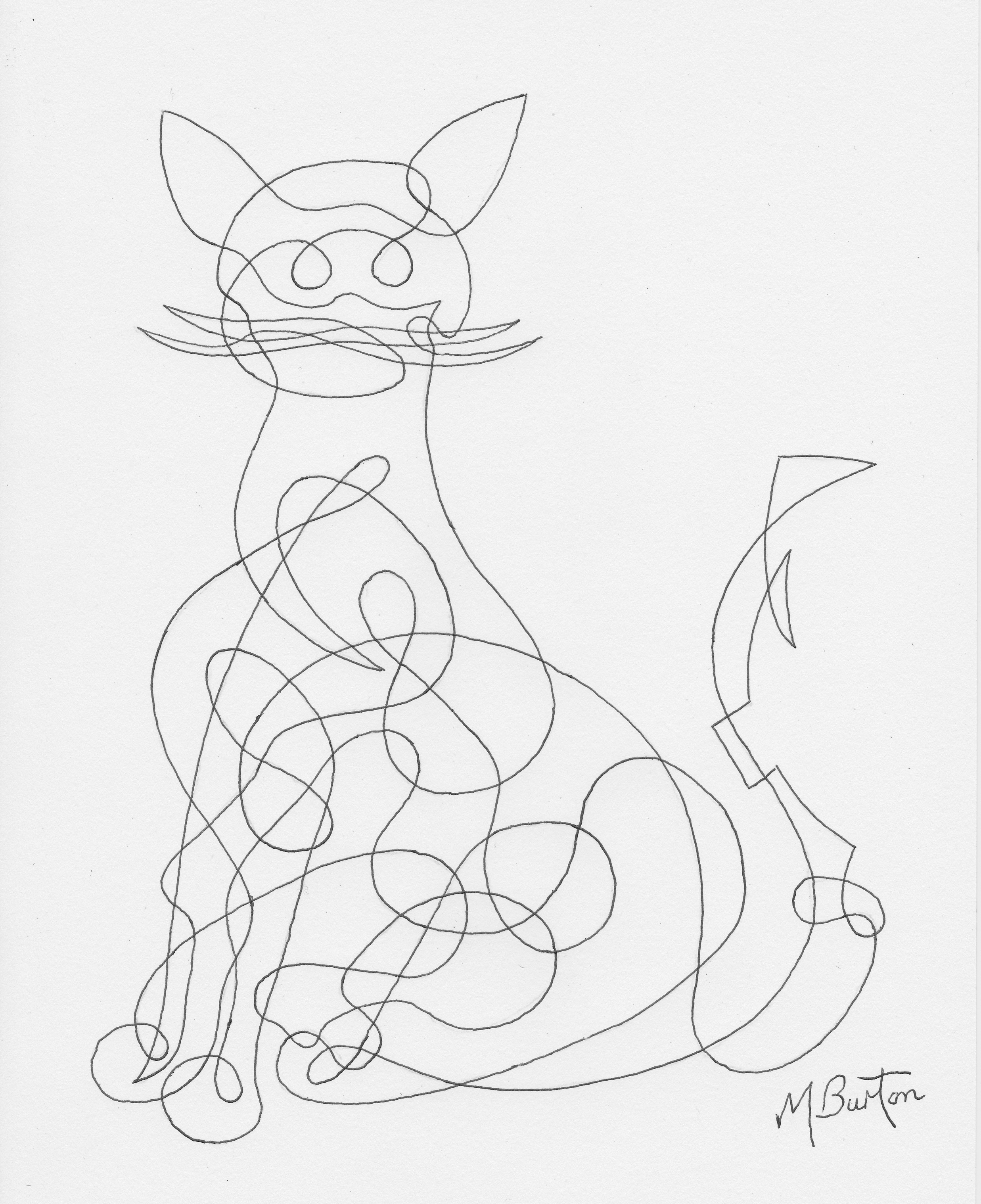
Cat, continuous line.

Following our April Fools Day party on 1 April 1966 (the day after the General Election) when I did my Harold Wilson continuous line, our next venture was a Pink Elephant party.  So I was asked to do another picture.  This elephant was based upon a drawing in a book of animals.  I added a dislocated tail and appropriate colour.012. 1967-3. Pink Elephant. Alternate shading.People said that the flowing lines on the Horse and the Elephant gave an appearance of elegance, whereas some animals were a bit more aggressive.  So I decided that I would draw a Lion in a seated position, with the lower part of its body at ease and relaxed, but with the head suddenly giving out a great roar.  The roar was based upon the opening sequence of Metro Goldwyn Mayer films, where the lion roars through a gap in the logo.

I have a strong memory of sitting with a blank piece of paper in front of me and thinking that I had done the Horse, Cat and Elephant and they had all turned out well.  I had not yet failed to create a picture better than I had anticipated.  Would the Lion work out ?  You just have to start and see what happens.             015. 1967-8. Lion, or Mayer. Cont line.

On the Internet, a couple of years ago, I saw a feature which allowed you to put your own face in the Metro Goldwyn Mayer logo.  Of course I chose to put my Lion’s head in there. Their Lion was called Leo, but I prefer Mayer.pixiz_4f02e0881fb14[1]


My sort of Continuous Line Drawing

Welcome to my Website and Blog.

My style has generated all sorts of reactions, often surprise and delight, and there have been many questions as to how I do my pictures.

There are many definitions of Continuous Line Drawing, and I will look at several of these in future blogs, but I will start with my own basic style.  I developed this style between 1965 and 1974 and then had a break for nearly 40 years.

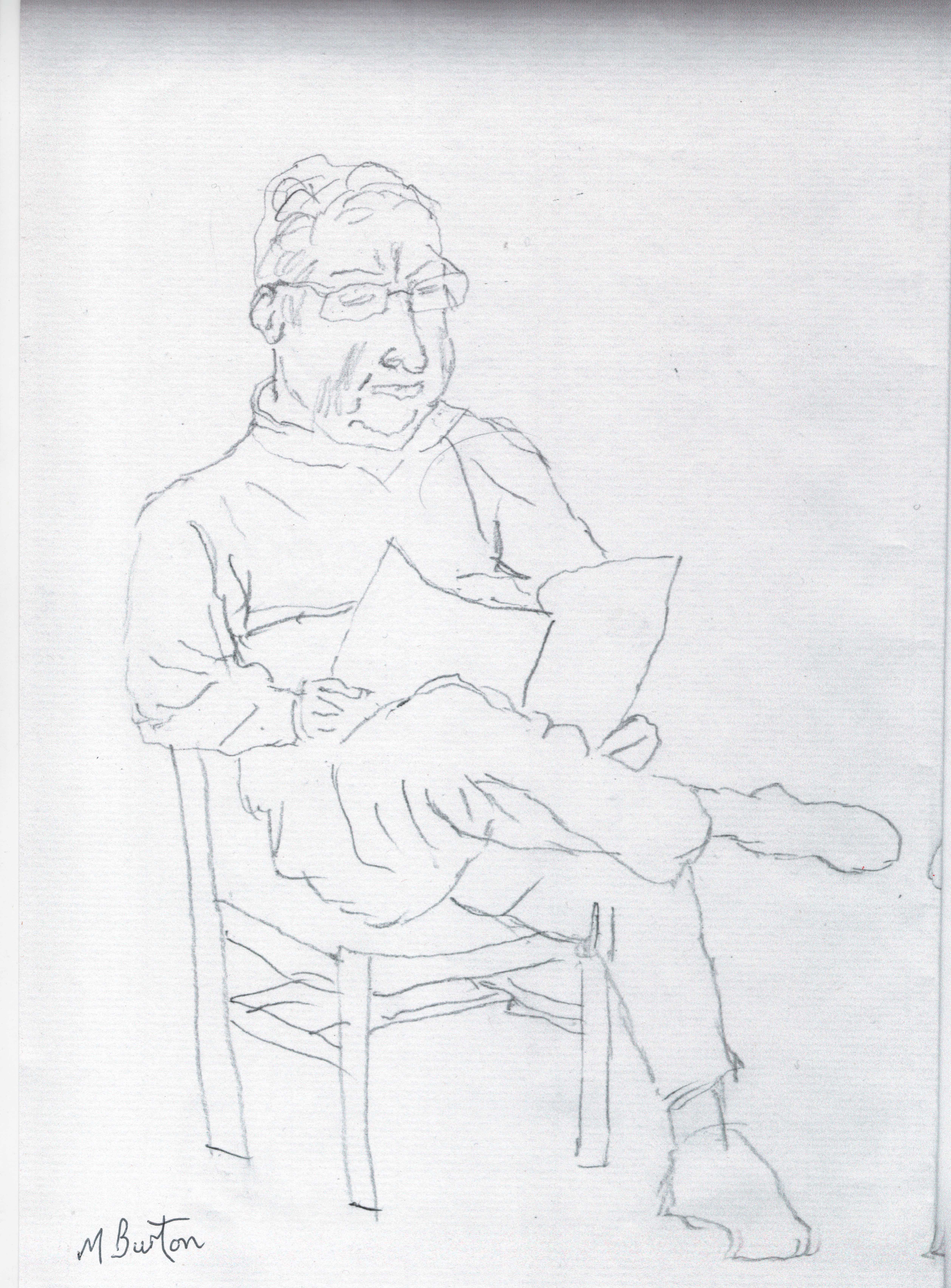
Here is a sketch I did in 2012 when first attending Stainbeck Arts Club in Leeds.  It was one of several 10 minute sketches that we did, taking it in turn to be the “model”.  This sitter, Barrie, did all the composition for me and I was fortunate with the viewpoint.  I did very little shading and no shadow, but was not considering a continuous line follow up at the time. 

Stainbeck Artist. One of several 10 minute sketches from one afternoon. Mick Burton, 2012.

Stainbeck Artist. One of several 10 minute sketches from one afternoon. Mick Burton, 2012.

At home later, Joan particularly liked this sketch out of the several I had done. She suggested that I do a Continuous Line of it as she had not seen a new one since we had met. In fact I had not done a Continuous line portrait of a person since 1966 when I drew Harold Wilson.

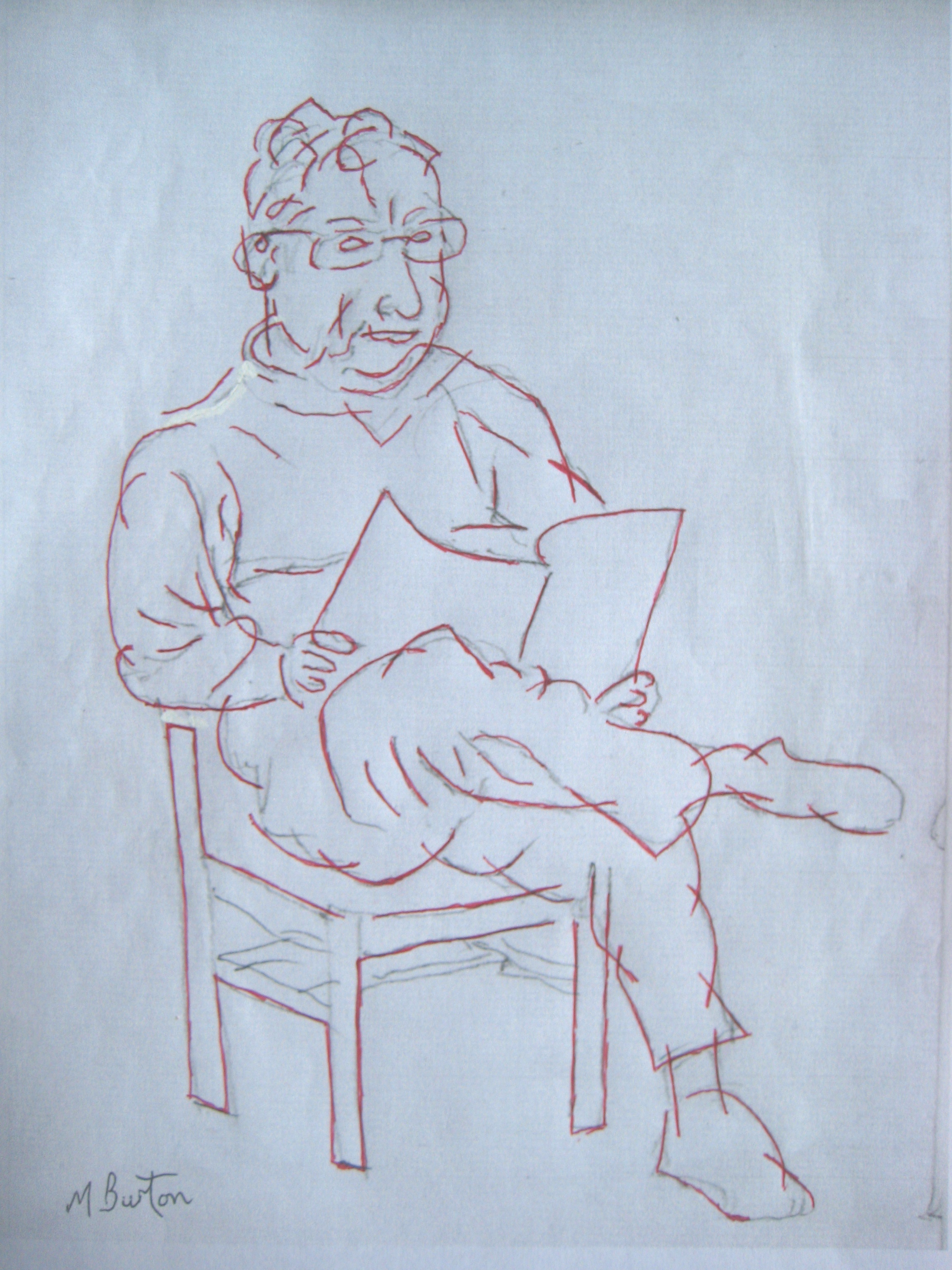
So, on a copy of the sketch, I have penned in Red the marks which I used as a start point for developing the key features and overall structure.

Marks for single line on Artist sketch.

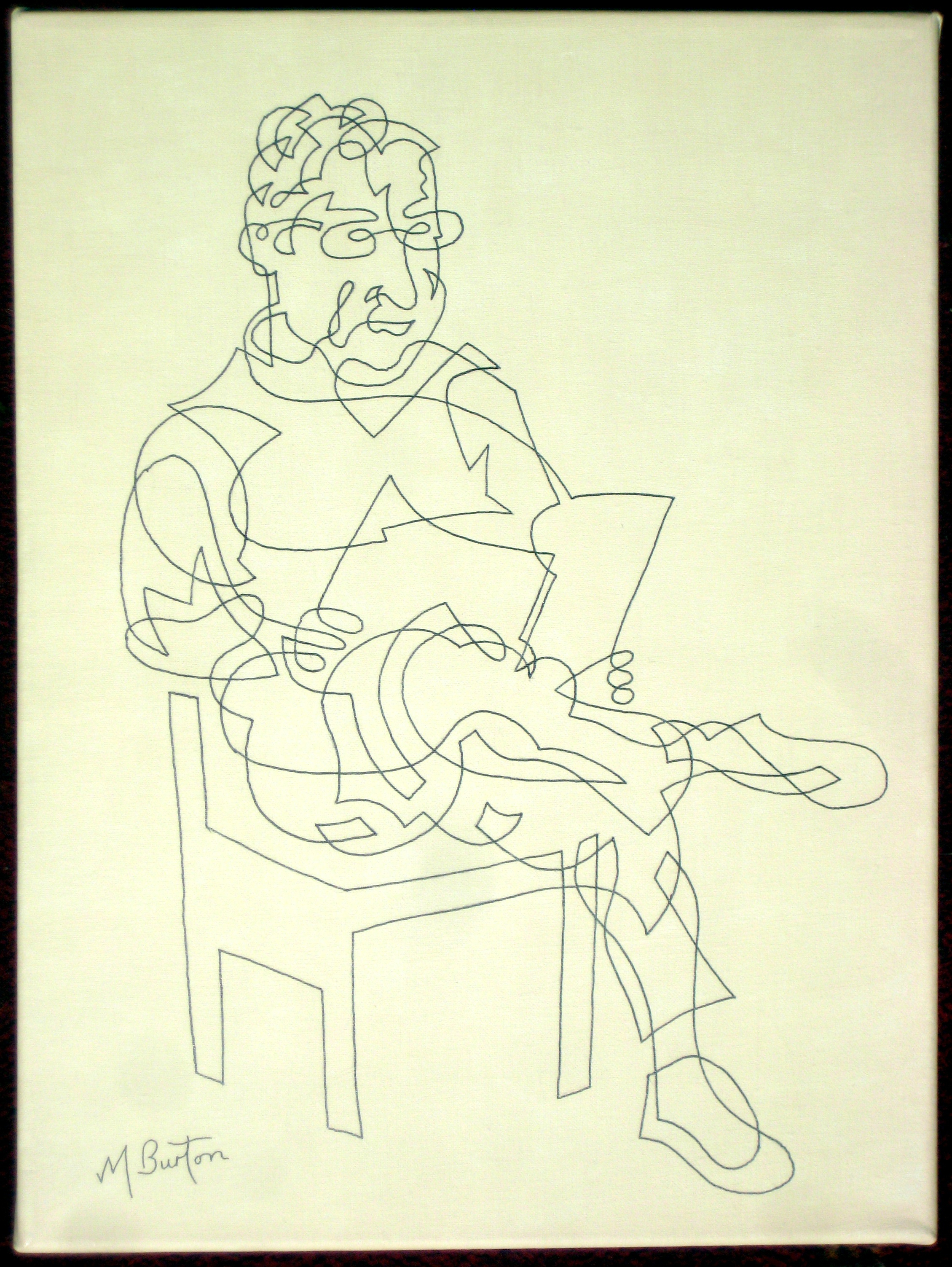
Then the key identifying features were done with groups of continuous lines.

Connecting up the initial feature areas was by using lines matching the structure and texture of the subject where possible. Some changes had to be made to make it work.

A general “tuning up” completed the whole Continuous Line Drawing effect.

Stainbeck Artist, a Continuous Line Drawing from a 10 minute sketch. Mick Burton, 2012.

Stainbeck Artist, a Continuous Line Drawing from a 10 minute sketch. Mick Burton, 2012.

I have always enjoyed the final stage, which includes the flowing decorative effect of the line, which has entranced me since I first saw Art Nouveau pictures when I was 9 years old.

I also show the picture after I have applied colours. My style of colours will be explained later, but this picture helps to demonstrate why I prefer to do a complete continuous line rather than starting at one place and finishing at another. The colours only work naturally if there is a complete continuous line where each crossing of lines is a clear junction.

Stainbeck Artist in continuous line and colour sequence. Mick Burton, 2012.

Stainbeck Artist, single continuous line drawing and colour sequence. Mick Burton, 2012.

This is my basic style. I have many related styles which have grown out of this, mostly related to my observations of how nature operates.

I hope that you found this first post to be useful and are looking forward to more from me.  Any comments, observations, questions or requests will be very welcome.